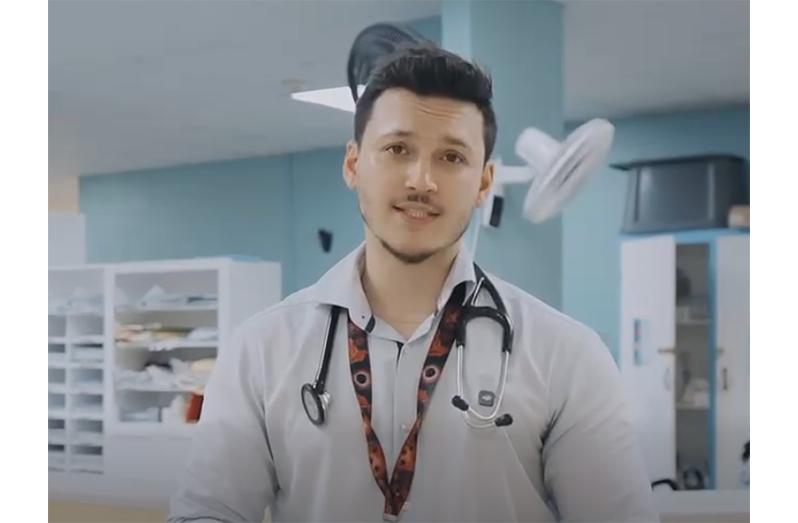
EARLY detection and treatment of sepsis can save lives, according to Medical Officer in Internal Medicine at the Georgetown Public Hospital Corporation (GPHC), Dr Matthew Xavier, who has emphasised that if someone with an infection develops signs of sepsis, they must seek medical attention as soon as possible.
He explained that sepsis is a medical emergency where every minute matters. It occurs when the body has an extreme and harmful reaction or response to an infection.
“Now instead of attacking the infection, the response that the body has is that it starts to injure the rest of tissues and organs of the body,” Dr Xavier explained.
He noted that almost every infection can lead to sepsis. However, the most common sites or sources of sepsis include infections of the lung such as pneumonia, infections of the urinary tract such as a UTI (Urinary Tract Infection), infections of the skin like abscesses, infections of the abdomen and infections of the bloodstream.
Highlighting the signs we should look for when someone is suspected of having sepsis, the doctor said that these patients can display severe weakness and may also have fevers and chills.
“They might have shortness of breath, and they might complain of cold and clammy extremities, and they might have extreme confusion,” he added.
He revealed that the reason sepsis is taken as seriously as it is, is because the potential complications may be life-threatening.
Sepsis, Dr. Xavier said, can cause abnormally low blood pressure, which is also called septic shock.
“It can also affect the kidneys so they can have kidney injury and these patients may go on to require dialysis if they have kidney failure, and sepsis may also cause the lungs to have difficulty in providing oxygen to the body so these patients may require oxygen and they may require a breathing tube attached to a mechanical ventilator for life support,” he stated.
Additionally, sepsis can also affect other organs of the body including the brain, liver, and heart.
In severe cases, these patients may develop a profound disability such as developmental or intellectual impairment, or they may develop a severe disability such as a long-lasting physical, mental, or cognitive impairment or die as a result of sepsis.
“Persons who are particularly susceptible to the effects of sepsis would be our elderly population, our very young children, persons with issues such as diabetes and high blood pressure and persons with weakened immune systems that may not be able to ordinarily fight off infections like a healthy individual,” he said.
The doctor affirmed that the important message is that early detection and treatment can save the life of someone who shows signs of sepsis.
Sepsis treatment at the GPHC is managed as a 24/7 time-critical medical emergency across the emergency, internal medicine, and critical care units.