.jpg)




THE Ministry of Culture, Youth and Sport is empowering a new generation of skilled workers through its training programme at the Georgetown Training Centre.
The programme targets participants between the ages of 16 and 30, providing practical skills in carpentry, masonry, electrical installation, plumbing, and welding and fabrication, creating gateways into various sectors through a variety of training courses.
Upon successful completion, each participant will receive a Caribbean Vocational Qualification Level One Certificate, with stipend support provided to them during their training.
Speaking in testimonials shared by the Ministry of Culture, Youth and Sport on social media, Annastacia Spencer and Nadia Singh are proving that technical trades can be done by everyone.
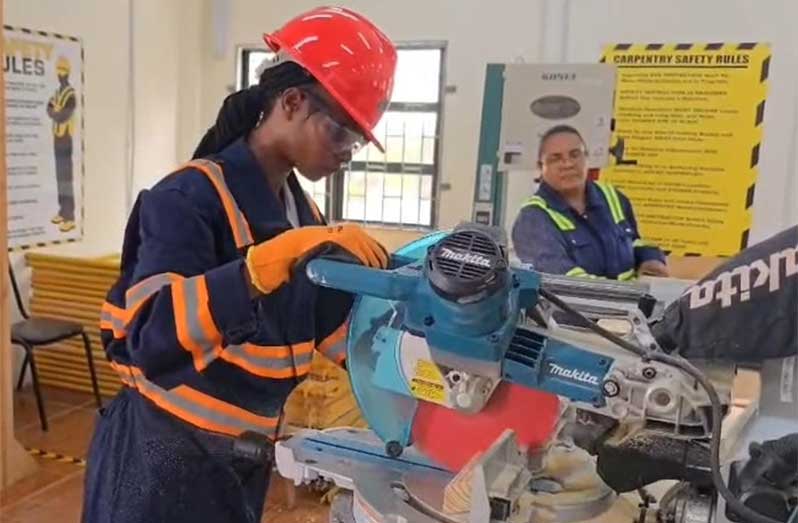
Spencer is currently enrolled in the carpentry course, a field traditionally dominated by men. Her participation in the programme reflects a broader, impactful shift towards gender diversity in technical vocations. The support she receives goes beyond just training, with the government providing a comprehensive package that includes daily meals and a monthly stipend to cover transportation costs.
Giving a testimonial of her experience in the course, Spencer shared, “I would like to say thank you to the government of our country for helping us in this field,” adding, “Also, in other ways too, that they also help provide lunch for us and also give us a stipend for passage if we cannot afford to come, it is a plus and I really appreciate it. Because without you I would not have been able to do this on my own and especially freely or this reasonable.”
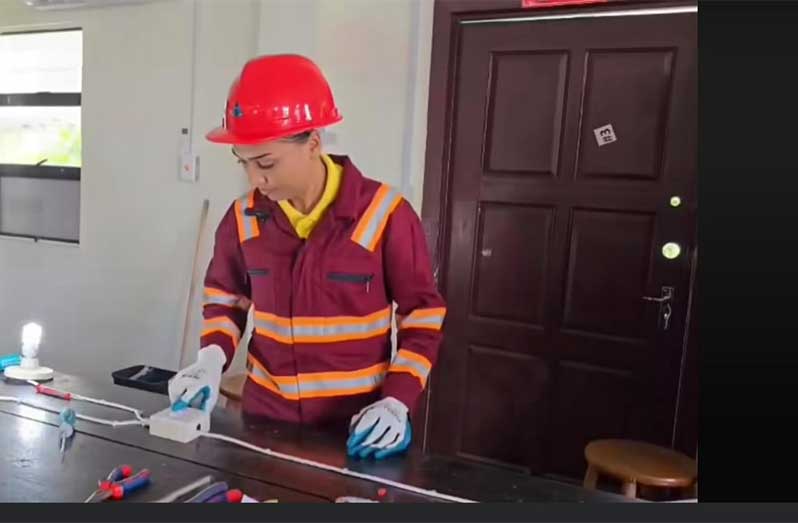
Singh has chosen to specialise in electrical installation, another technical field where women remain underrepresented. Working at the Georgetown Training Centre, Singh is mastering skills that will prepare her for a career in the electrical field.
She recently demonstrated her growing expertise by successfully setting up a double-gang switch with two sockets and a three-pin plug using 1.5 mm wire, stating, “I would like to thank the Ministry of Culture, Youth and Sport for giving me and all my colleagues and everybody in this training centre this opportunity.”
The programme also includes information and communication technology training, helping participants improve their digital skills and gain valuable abilities for today’s job market, while areas such as financial literacy training equips individuals with knowledge needed to make informed financial decisions. The training initiative represents a significant investment in youth development by the Government of Guyana.
By removing financial barriers through stipends and meal provision, the programme ensures that economic circumstances do not prevent young people from accessing quality vocational education. This approach has opened doors for individuals who might otherwise be unable to afford professional training.
The success stories of Spencer and Singh demonstrate the programme’s impact in creating opportunities for young Guyanese to build sustainable careers in skilled trades, while also challenging traditional gender norms in technical fields.