







GUYANA’S livestock subsector expanded by an estimated 17.5 percent in the first half of 2026, according to the Mid-Year Report of 2026.
According to the report produced by the Ministry of Finance, poultry meat, egg and pork production all posted double-digit growth.
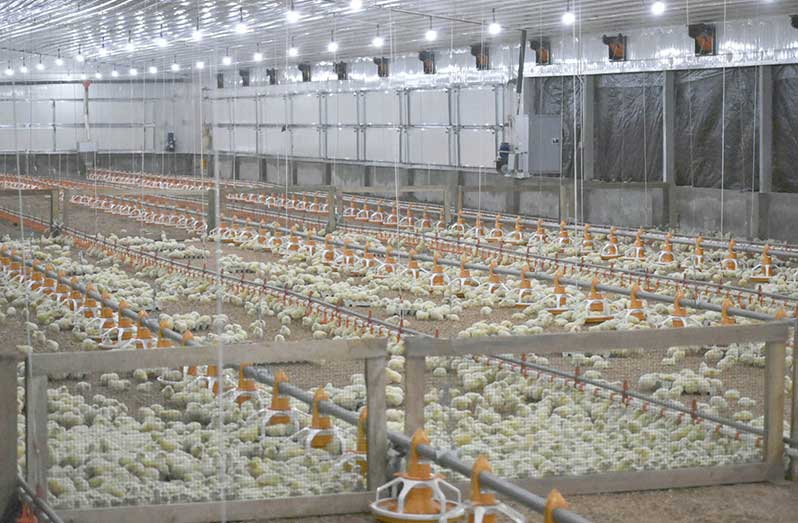
Poultry meat output rose 20.9 percent, the report states, helped by wider adoption of tunnel-ventilated pens that improved bird survival rates and by a reduced prevalence of Highly Pathogenic Avian Influenza in domestic flocks.
Egg production increased 11 percent, largely on the strength of layer eggs imported in the final quarter of last year, while pork output surged 88.7 percent as improved feed formulation lifted production efficiency.
Those gains more than offset falling output of beef, milk and mutton, and they stood out against a wider agriculture, forestry and fishing sector that contracted by 0.5 percent in the first half, held back by heavy rainfall that damaged other crops.
The outlook for livestock remains positive, the report said, with full-year subsector growth now projected at 3.7 percent for 2026.
That expansion is underpinned by significant public investment. Of the $1.9 billion budgeted this year to grow the livestock industry and develop the honey sector, $981.5 million had been spent by the end of June.
Six of 12 planned tunnel-ventilated poultry pens are complete under a public-private partnership aimed primarily at young farmers, with the rest due to be operational by year-end, while improved livestock breeds are to be distributed to farmers in the third quarter to further boost meat production.
The same funding is feeding a smaller but fast-growing beekeeping push. In the first half of the year, 44 beekeepers received startup kits and 499 hive boxes were distributed to communities including Lake Mainstay, Pomeroon, Santa Aratak, St. Cuthbert’s Mission, Sand Hills, Rock Stone, East Bank Berbice, New Amsterdam, and the Central, Upper Corentyne and Mahdia areas.
Another 228 people were trained to rear bees, and 18 more in capturing wild swarms for relocation, widening honey production beyond its traditional base.



