-online platforms will expand access, reduce corruption, boost accountability
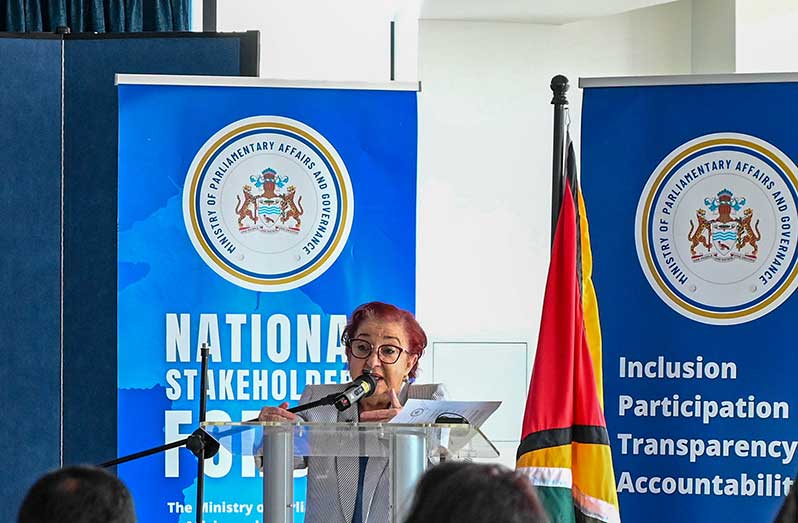
MINISTER of Parliamentary Affairs and Governance Gail Teixeira has noted that the government’s digital transformation agenda is accelerating rapidly to remove long-standing barriers to public services, improve transparency and strengthen accountability.
The minister made this known while addressing a national stakeholders forum, which was hosted by her ministry, focused on strengthening access and accountability through digital platforms.
Teixeira outlined a sweeping push to modernise how citizens interact with the state, reducing geographic and economic hurdles.
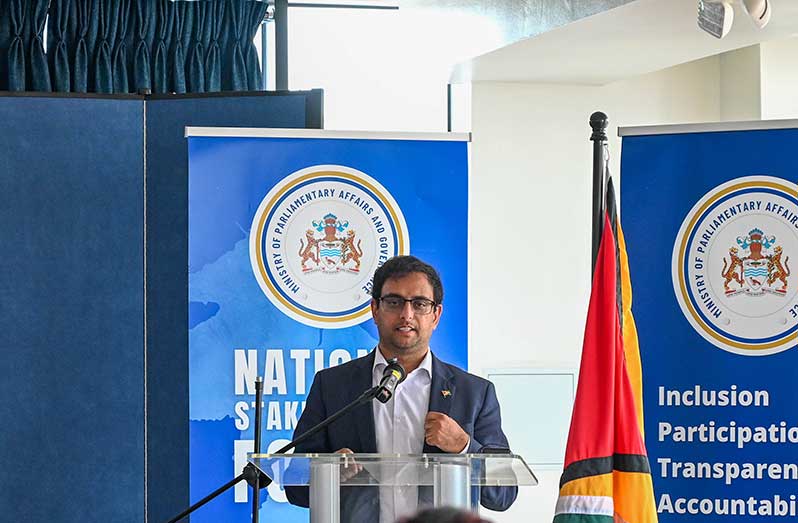
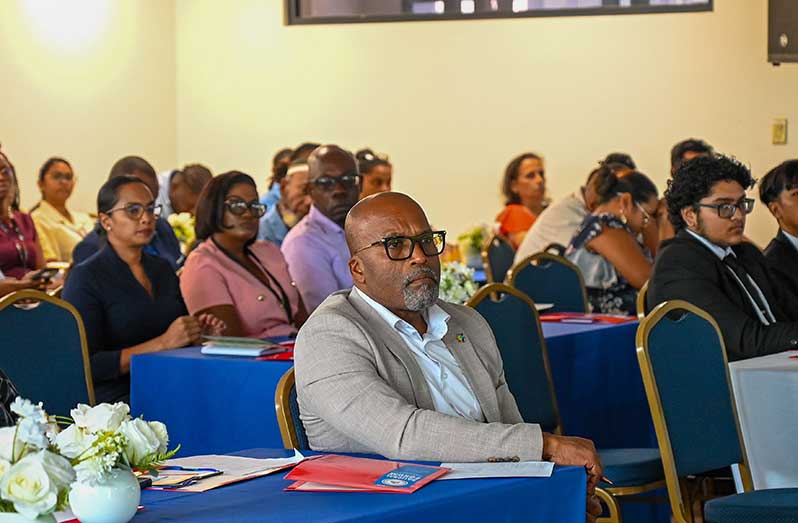
The forum, which was held at the World Trade Centre, Georgetown, brought together civil society organisations, religious bodies and trade unions to examine the ongoing efforts to improve access to public services and enhance government accountability.
The minister during her remarks stated, “We are removing the structural and geographic barricades or hurdles that people face across the country.”
She went on to note that as systems are expanded, citizens will increasingly be able to access services such as passport applications and official documents online.
Teixeira said the gradual rollout of digital platforms is already helping to address longstanding issues, including access to birth registration services, which historically required travel to central offices.
As systems improve, she added, more citizens, particularly in hinterland and remote communities, are being brought into formal structures and gaining access to essential documentation.
Further to this, the minister highlighted the role of technology in reducing opportunities for corruption, citing initiatives such as the single-window system, which has streamlined processes that previously required citizens to navigate multiple agencies.
“It has removed the opportunities, in the main, for persons to request bribes or to pay bribes,” she noted.
Importantly, Teixeira said digital platforms are also improving government responsiveness by allowing real-time data collection and analysis. This enables authorities to identify community-level issues more quickly and allocate resources more effectively, moving beyond reliance on anecdotal feedback from public meetings.
While emphasising that traditional outreach efforts will continue, she described digital systems as an additional layer that allows the government to engage citizens more consistently and efficiently.
Building on this vision, Minister of Public Service, Government Efficiency and Implementation Zulfikar Ally said the government has already rolled out several integrated digital platforms aimed at transforming public service delivery.
He stated that efforts are now focused on creating a more customer-oriented public service, where citizens can access services efficiently and with dignity.
“People must leave any government office in a very dignified manner,” he said.
Ally noted that key initiatives include platforms such as Citizen Connect, GovConnect, Skills Connect and an oversight monitoring dashboard, which provides real-time updates on thousands of government projects across the country.
Through this dashboard, he disclosed that officials can monitor progress, expenditures and project status without the need for costly site visits, improving both efficiency and transparency.
“We can now see in real time what is happening with projects across every sector,” he said.
He added that the decentralisation of services is also underway, with integrated service centres already operational in Regions Two, Three and Five, allowing residents to access services such as passport applications, tax payments and registration documents closer to home.
Minister Ally emphasised that these initiatives are being supported by major investments in education and digital literacy, including free training programmes and online learning platforms, to ensure that no citizen is left behind in the transition.
Further to this, Minister of Housing Collin Croal highlighted progress on the planning and development single-window system, describing it as a “transformative initiative” aimed at streamlining approvals and improving the ease of doing business.
Previously, applicants often had to navigate as many as 13 agencies, facing delays that could stretch for months. Under this system, approvals are being processed in a fraction of the time, with average timelines now just over a month.
Minister Croal said the platform also enhances transparency and accountability by enabling applicants to track the status of their submissions and ensuring that all stakeholders operate within clearly defined timelines.
While acknowledging challenges such as digital literacy gaps and incomplete submissions, he said the government has already reduced backlog levels significantly and continues to refine the system through ongoing monitoring and public engagement