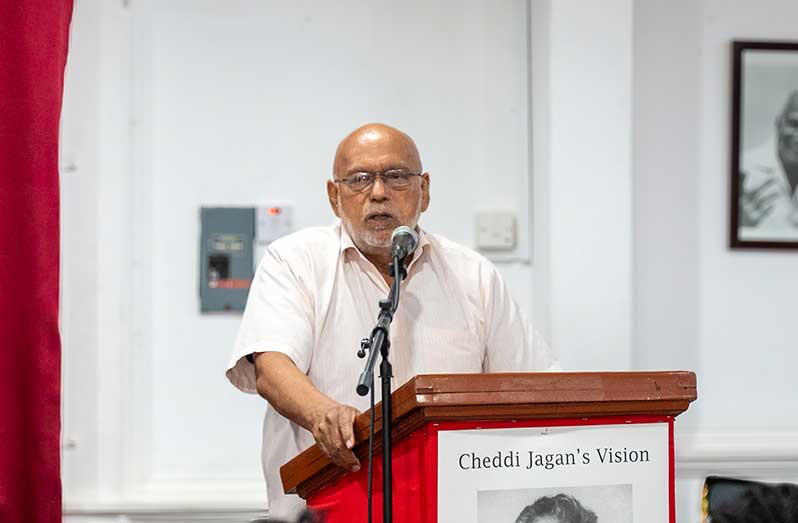
OCTOBER 5, 1992, was remembered as a defining moment in Guyana’s political history as former President and former General Secretary of the People’s Progressive Party (PPP), Donald Ramotar, and President of the Women’s Progressive Organisation (WPO), Indranie Chandarpal, reflected on the decades of political struggle that preceded the return to democratic rule.
Speaking at a seminar hosted by the Cheddi Jagan Research Centre to examine the significance of the October 5 election, Ramotar said the date represented more than an electoral victory, describing it as the culmination of generations of struggle for political freedom and democratic governance.
“I do not think that the significance of the date October 5th is yet appreciated for its significance and its importance,” Ramotar said.
He credited generations of Guyanese with contributing to the political struggle and highlighted the role of former President Dr Cheddi Jagan in the movement that ultimately led to the restoration of democratic rule.
Ramotar traced the roots of the struggle to the formation of the Political Affairs Committee and the subsequent establishment of the PPP, recalling the opposition faced by the organisation from the colonial authorities.
He pointed to the PPP’s electoral victory in 1953 and the subsequent suspension of the Constitution and removal of the government after 133 days in office. He also recalled the imprisonment of members of the party’s leadership and the organisation’s efforts to build international solidarity as it continued its political activities.
“One of the characteristics of the PPP was always international solidarity where we were giving support because we were already by 1953 known to be an internationalist party supporting the fight in the Congo, supporting the fight in Kenya, supporting the fight in other parts of the world,” Ramotar said.
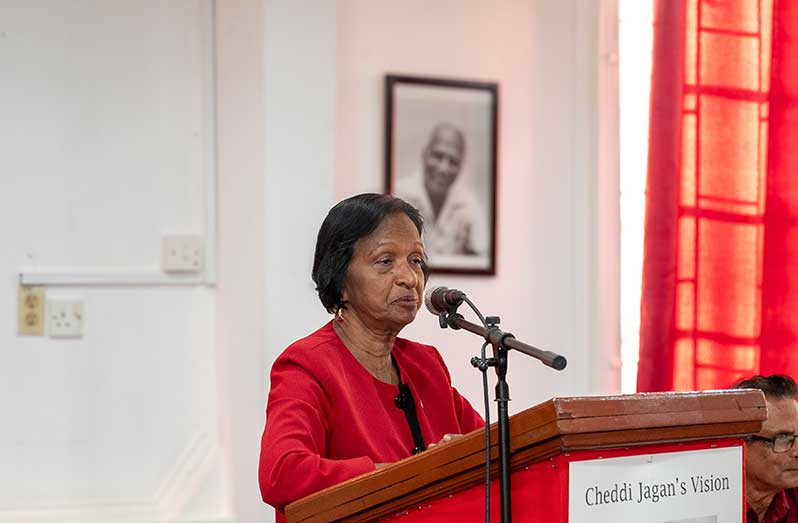
He said the political challenges extended beyond elections and included efforts to weaken the party’s organisation and its support among workers and farmers.
Chandarpal, meanwhile, offered a personal recollection of October 5, 1992, including the atmosphere at Freedom House as election results were received and the eventual swearing-in of Dr Jagan as President.
She said the return to democratic government carried deep emotional significance for members of the political movement who had spent decades campaigning for free and fair elections.
“But I would say the police did a good job on that day and prevented the people who wanted to riot to come any closer to State House,” Chandarpal recalled.
She described the swearing-in ceremony as an emotional moment for those who had worked for years towards the restoration of democratic rule.
“When you think of that day, that Monday afternoon, and you see the swearing-in, there was not a dry eye,” she said.
Chandarpal said the events of October 5 could not be separated from the grassroots political work undertaken over decades, recalling how organisers travelled throughout the country to educate communities, hold meetings and mobilise support.
“We had to educate the masses,” she said, describing house-to-house visits, street-corner and bottom-house meetings, public meetings and rallies.
“We worked in the office from 8 to 4 and then from 4 to 9 or 10 we were in the fields. It was hard work. You were working for a pittance because this was not about yourself. This was about the greater good. This was about the cause for the party and for the country,” she said.
She also recalled difficulties encountered by political organisers seeking to reach hinterland communities, including restrictions requiring official permission to enter certain areas.
Both speakers emphasised the importance of understanding the political and social circumstances that preceded the 1992 election.
Chandarpal recalled restrictions on political activity, access to information and movement, as well as economic difficulties experienced by Guyanese during the period preceding the return to democratic rule.
Ramotar placed the 1992 election within the wider history of Guyana’s independence movement, the political divisions that emerged during the 1950s and the subsequent decades of political and electoral conflict.
Chandarpal said Guyanese should reflect on the country’s history while recognising the changes achieved since 1992.
“All of us, it is necessary to reflect on where we come from, but now we have to celebrate our achievement as a nation,” she said.
Looking ahead, Chandarpal said the lessons of Guyana’s political history remained relevant as the country undergoes significant economic and social changes.
She cautioned against measuring national development solely through economic indicators, arguing that broader progress requires collective effort and cooperation.
“Having a GDP that is so high does not mean that your problems will be resolved. There will be problems, but we have to work together,” she said.
“That is the key. We have to work together as one people to ensure that we can develop our country.”
The seminar provided an opportunity to reflect on the experiences and struggles surrounding October 5, 1992, while highlighting the importance of preserving the lessons of Guyana’s political history as the country continues its development.