AS Guyana accelerates the transformation of its healthcare sector, the country has achieved another major milestone, with medication coverage now reaching between 90 and 95 per cent nationwide.
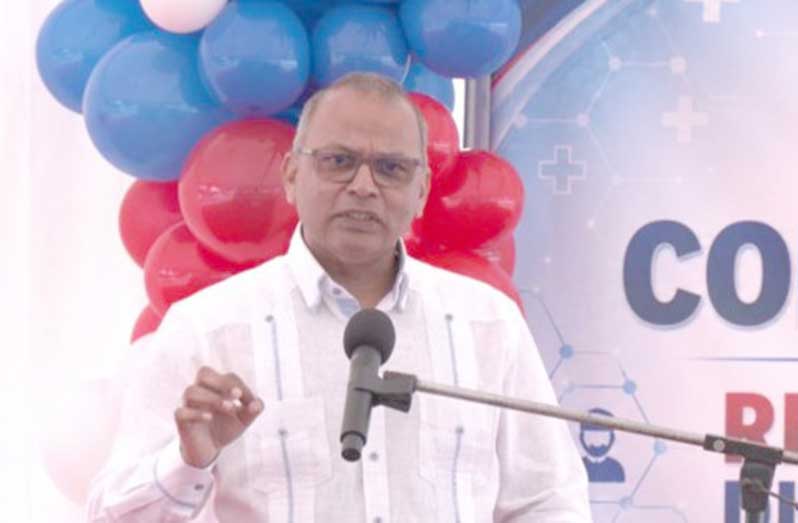
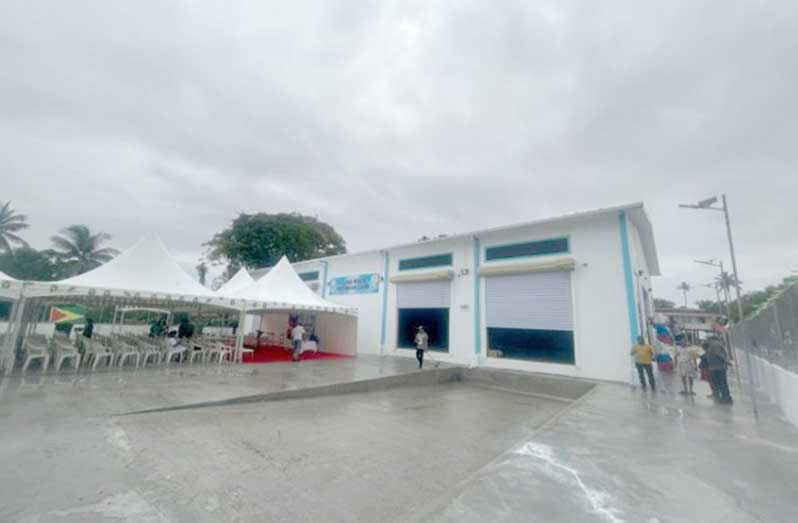
Speaking at the commissioning of the new regional pharmaceutical bond and Materials Management Unit (MMU) in Region Two, Minister of Health, Dr Frank Anthony, described the facility as another major investment aimed at ensuring patients receive timely and uninterrupted access to essential medicines.
“We are building a world-class healthcare system. This new bond will become the logistics hub for medicines, ensuring that nobody will be short of any medication that they need,” the minister affirmed.
Dr Anthony explained that the government has gone beyond simply increasing medicine availability.
He said the government is now focused on guaranteeing that patients, particularly those living with chronic diseases such as hypertension and diabetes, receive up to a three-month supply of medication at a time.
He noted that this initiative follows a directive from President Dr Mohamed Irfaan Ali to eliminate the burden of patients making frequent trips to health facilities for life-saving medication.
The newly commissioned pharmaceutical bond forms part of a nationwide expansion of regional Materials Management Units designed to decentralise the storage and distribution of medicines.
Previously, Region Two relied on pharmaceutical supplies from Georgetown, often limiting the quantity of medicines that could be stored and distributed.
With the new facility offering significantly larger storage capacity, the region will now be able to maintain an annual stock of medicines while ensuring more reliable and efficient distribution to health institutions.
The minister said the bond will also feature modern cold storage facilities for vaccines and temperature-sensitive medical supplies, safeguarding the integrity of critical pharmaceuticals.
In addition, a new digital inventory management system will track every medication entering and leaving the facility, allowing health officials to monitor stock levels, locate medicines instantly, and trace supplies directly to individual patients.
According to Dr Anthony, the technology will improve accountability, minimise losses and ensure medicines reach those for whom they are intended.
Dr Anthony noted that the region has progressed from having only a handful of doctors decades ago to now employing between 75 and 80 medical practitioners across multiple specialties, including surgery, internal medicine, paediatrics, obstetrics and gynaecology, and neonatology.
Residents now have access to advanced diagnostic services, including mammography, CT scanning, 24-hour laboratory services and digital X-ray facilities across several health institutions, reducing the need to travel outside the region for specialised care.
The minister also announced that before the end of the year, the government will commission a new health training complex on the Essequibo Coast, where more than 20 Ministry of Health training programmes will be offered.
Dr Anthony said these investments are part of the government’s broader vision to decentralise healthcare and medical education while ensuring every Guyanese has access to quality health services regardless of where they live. [DPI]