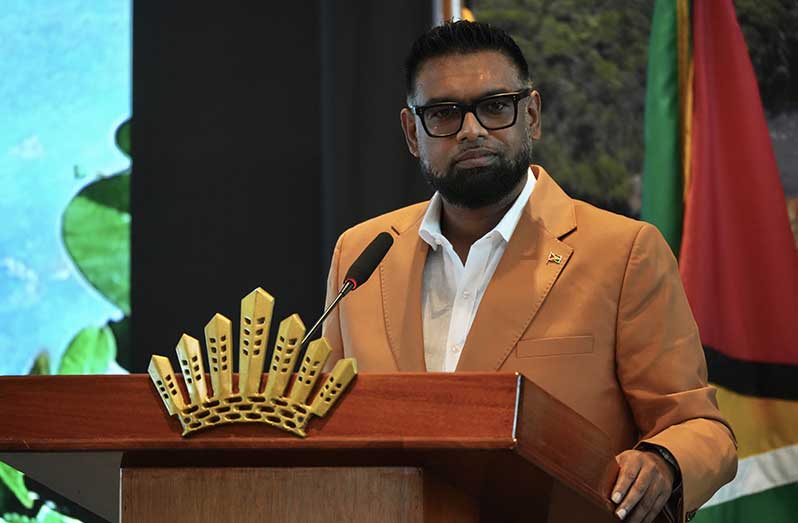
PRESIDENT Dr Irfaan Ali has called for disaster preparedness and business continuity provisions to be built into tourism investment agreements from the outset, warning that governments and businesses must be ready before a crisis hits.
Addressing the opening ceremony of the Caribbean Tourism Organization’s State of the Tourism Industry Conference (SOTIC) 2026 on Wednesday, President Ali said contingency planning should form part of negotiations over tourism projects and should not be left until a natural disaster occurs.
‘An important part of positioning this asset is resilience. From the time a project is conceptualised in our region today, we need to think about disaster preparedness, business continuity,’ he said.
‘In those negotiations, there must be a clause to deal with contingencies and situations that we face, [including] natural disasters,’ he said. Such provisions, he stressed, should take effect when a disaster occurs, rather than be negotiated under pressure afterwards.
Dr Ali said resilience was not solely a government responsibility. Businesses, he said, should also prepare for disruptions by planning how they would continue operating and recover.
He pointed to the COVID-19 pandemic as evidence of tourism’s ability to rebound, saying the industry recovered more quickly than many had expected. He also referred to a recent natural disaster in Jamaica, asking what contingency plans were in place.
The President called on the Caribbean Tourism Organization (CTO) to lead work on regional mechanisms for disaster preparedness and business continuity. He also identified resilience financing, insurance and pre-arranged credit as areas requiring attention.
The remarks formed part of a wider call for the Caribbean to rethink tourism investment. President Ali said projects should be designed with resilience in mind, alongside market needs and visitor experience. He also urged governments and investors to strengthen regional transport links and diversify supply chains.
‘I believe that it is at this point that we need to very clearly articulate that for tourism to succeed, compete, and stay alive in this region, we have to scale up our thinking, scale up our infrastructure, scale up our commitment, and for people within the region, we need to scale up our approach,’ he said.
Dr Ali’s proposed approach would require preparedness to be considered not only in public-sector planning, but also when private investment is arranged, so that businesses and communities are better positioned to respond to future disruptions.
‘Many people just think about disaster preparedness as a government responsibility in its narrow sense, but it is a business responsibility in its expanded sense,’ he said.