THE Government of Guyana is placing greater emphasis on carefully managing new financing and boosting productivity as it seeks to sustain economic growth and ensure that increased investment translates into long-term development.
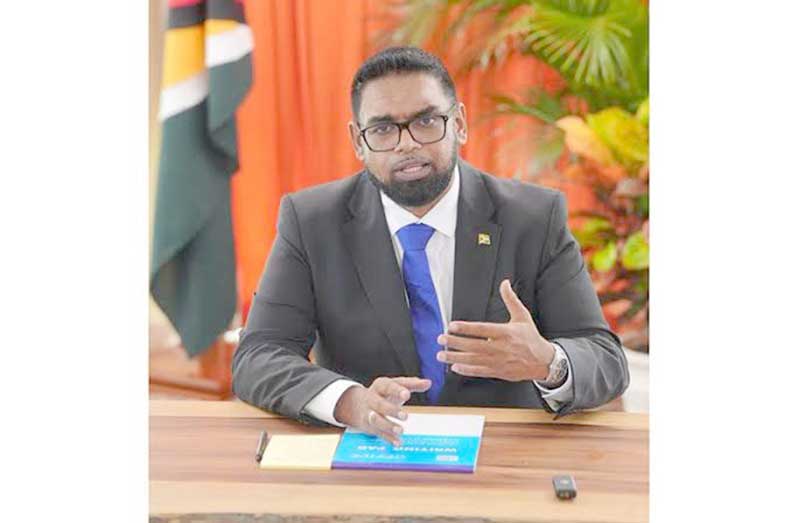
President Dr Irfaan Ali has said Guyana must maintain its focus on productivity as oil revenues support investment and economic growth.
Speaking about what he described as the country’s “oil era”, Dr Ali said public and publicly guaranteed debt had fallen from 47.4 per cent of gross domestic product (GDP) in 2020 to 24.3 per cent in 2024. He said revenue held in, and projected for, the Natural Resource Fund could help cover external debt, creating more room for investment.
Dr Ali said that investment could support health, education, social welfare, infrastructure and agriculture. However, he cautioned that economic expansion should not come at the expense of productivity.
“We have to focus heavily on linking productivity to investment, and on ensuring that the growth of the private sector continues to be expansive, allowing the private sector to create those job opportunities. This is important for us in this new era, what we call the oil era, where we see all our indicators, all our indicators,” he said.
He also stressed the role of private-sector growth in creating jobs, saying the sector should continue to expand as Guyana’s economy develops.
He noted that oil-fuelled growth has improved Guyana’s debt indicators and expanded the resources available for public investment. He also warned that the country must manage new financing carefully and focus on productivity.
Dr Ali pointed to the IMF’s 2025 debt sustainability analysis, which classified Guyana as facing a lower risk of external and overall debt distress than in its 2023 assessment, when the risk was rated moderate. The IMF’s baseline projection, as cited by President Ali, anticipates that public debt will begin declining after 2026 and stabilise at about 25 per cent of GDP through 2034.
“That is important for us to understand because it demonstrates our creditworthiness. It demonstrates our ability to repay our debt. It demonstrates the country’s capacity and capability to have more opportunities in terms of different investment vehicles and lending vehicles, whether it’s the US Exim, UF, the Qatari investment fund, or other investment funds,” President Ali explained, adding:
“Guyana moved from default in one of the world’s most severe debt burdens to comparatively low debt through economic reform, credit and rescheduling, large-scale debt cancellation, and economic growth. Now, oil has further reduced the ratio by rapidly expanding GDP and government resources.”
The President said the assessment reflected Guyana’s capacity to repay debt and could support access to a wider range of financing opportunities. He added that, although Guyana was not in an IMF programme, the government continued to engage with the Fund and undergo its risk assessments.