–stresses need to allow amendments before striking out claims, remits case to High Court for reconsideration
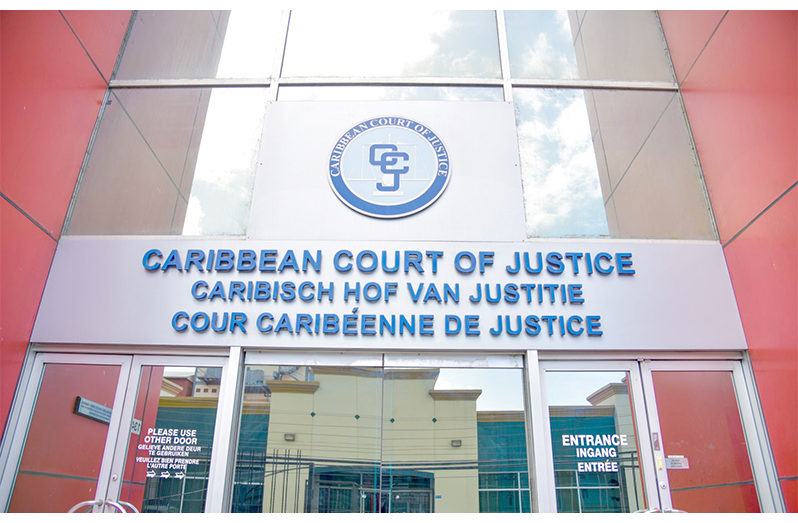
THE Trinidad-based Caribbean Court of Justice (CCJ) has unanimously overturned decisions from Guyana’s lower courts in a long-running family dispute, ruling that judges erred in striking out a Statement of Claim without first considering whether it could be amended.
The matter was heard by Justices Denys Barrow, Peter Jamadar, Chantal Ononaiwu, Chile Eboe-Osuji and Arif Bulkan.
Attorney Ronald Burch-Smith appeared for the applicant, Harry Panday, while attorney Rajendra Jaigobin represented the first respondent, Malcolm Panday. Attorney-at-law Nirvan Singh appeared for the second respondent, Deosaran David.
In its Reasons for Decision published on Tuesday, the CCJ examined rulings originating from the High Court and Court of Appeal of Guyana in a case involving businessman Harry Panday and his brother, Malcolm Panday, over more than US$733,451 in recovered funds, plus interest.
The brothers have been business partners since the 1980s. The applicant contended that the funds recovered are the property of the said business partnership and that David acted as a nominee or agent for the partnership.
The applicant further contended that the respondents have recovered/are recovering a judgment sum in a High Court action dated June 23, 2008, with part payment having been made in the sum of GY$150,000,000.
The regional court made it clear that the appeal raised an important procedural issue within Guyana’s civil justice system—namely, “whether a court faced with pleadings which it deems deficient for want of particularity ought to strike out the claim immediately or whether a more measured and curative approach…should be considered and applied.”
The dispute itself centres on a February 15, 2021, High Court claim by Harry Panday that funds recovered from a third party, Kayman Sankar Limited, were partnership assets.
He sought, among other things, a declaration that the judgment sums and any other consideration received by the respondents in the recovery action are held in trust for the partnership. The respondents, in their defence, denied that the judgment proceeds were related to the partnership.
However, the case never progressed to trial on its merits after Guyana’s High Court struck out the claim, initially finding it to be statute-barred.
Although the Full Court later disagreed with that finding, it still dismissed the case on the basis that the statement of claim disclosed “no reasonable grounds for bringing a claim.” The Court of Appeal of Guyana upheld that reasoning and refused leave to appeal to the CCJ.
Before the CCJ, the applicant argued that the Guyana courts acted prematurely and failed to consider whether deficiencies in the claim could be corrected through amendment.
The CCJ agreed, stressing that modern civil procedure—particularly under Guyana’s Civil Procedure Rules—requires courts to focus on resolving disputes substantively rather than dismissing them on technical grounds.
“Cases should wherever possible be determined on their substantive merits as opposed to being dismissed for curable procedural deficiencies,” the court stated.
STRUCTURED APPROACH
The judgment laid out a structured approach that Guyana’s courts should adopt when dealing with applications to strike out claims.
Judges must first determine whether the pleadings disclose a cause of action, whether the claim is frivolous or abusive, and whether sufficient facts have been provided.
Even where pleadings are deficient, the CCJ said dismissal should not be automatic. Instead, courts must conduct a balancing exercise, considering fairness, proportionality, and the efficient use of judicial resources.
The regional court emphasised that striking out a claim is a drastic step, warning that it should only be used in clear and obvious cases. It reiterated that courts in Guyana have wide case management powers, including the ability to order amendments—even on their own initiative.
“Striking out a claim is a ‘nuclear option’,” the CCJ noted, adding that less severe alternatives such as ordering further particulars or amendments should be explored first.
Applying these principles, the CCJ found that while Panday’s statement of claim lacked certain details, it did disclose a viable cause of action. The court pointed out that the pleadings identified a dispute over partnership funds and the recovery of money, which, if proven, could succeed.
“The current [Statement of Claim] sparseness may be curable,” the CCJ said, noting that with proper directions, the necessary details could be clarified.
As a result, the CCJ concluded that the decisions of Guyana’s Full Court and Court of Appeal were premature. It found that those courts failed to properly consider whether an amendment should have been allowed before striking out the claim.
This, the court held, amounted to “a misapplication of judicial discretion and /or an error of law.”
The CCJ also highlighted the broader implications for litigants in Guyana, warning that dismissing claims without considering amendment can undermine access to justice. It noted that such an approach may “prematurely” deny parties their right to a fair hearing.
The court further observed that the procedural handling of the case led to unnecessary delays, with the matter escalating through multiple levels of Guyana’s judiciary before reaching the CCJ.
“It would have been a more effective use of the court’s and parties’ resources to consider allowing an amendment rather than to strike out as is evident by this procedural issue progressing all the way to the final court only to be remitted for this consideration to be undertaken,” the judgment stated.
In addressing its own jurisdiction, the CCJ confirmed that it retains broad authority to hear appeals from Guyana, even where decisions are not strictly final, in order to prevent miscarriages of justice.
Having found that the applicant demonstrated a realistic prospect of success, the court granted special leave to appeal and allowed the appeal.
“The Court of Appeal’s refusal of leave constituted an error of law,” it held.
It ordered that the matter be sent back to the High Court of Guyana to continue before a different judge, giving the parties an opportunity to properly present their case.
Additionally, costs previously awarded against the applicant in the Guyana courts were vacated, with the CCJ directing that costs be treated as part of the ongoing proceedings.