






-lessons already timetabled, tailored for every level, Education Minister says
THE Ministry of Education (MoE) has begun rolling out civic and moral education as stand-alone subjects in schools across the country, with lessons already timetabled and tailored to suit leaners at each level.
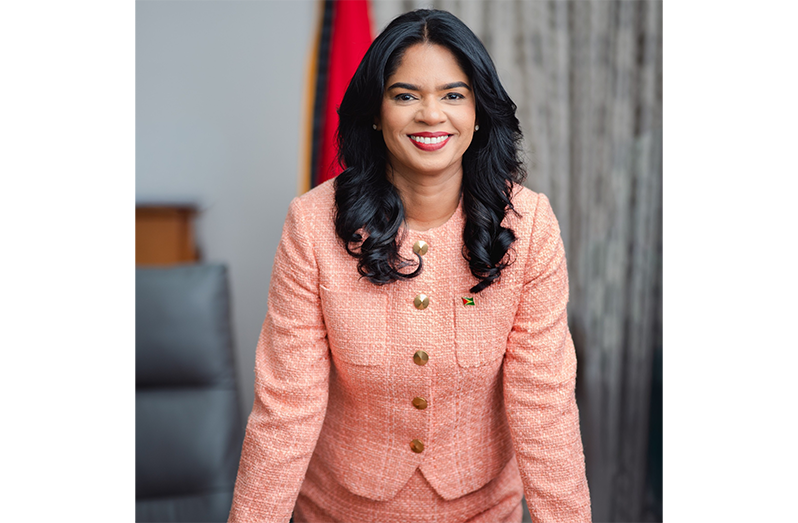
This was according to Minister of Education, Sonia Parag, who was at the time speaking on the ‘Starting Point’ podcast, during which she said the subjects have been formally scheduled within the school system following coordination with education officers and head teachers nationwide.
“We have already timetabled it,” she said, noting that this was done with the coordination of the education officers and the nursery, primary and secondary schools.
Minister Parag noted that civic and moral education will not be integrated into existing subjects, but will be delivered independently to ensure their importance is fully recognised.
“These are stand-alone subjects. So, we don’t want them to be incorporated… we want it [sic] to be taught as a standalone [sic], as a separate subject [sic], because it deserves that sort of importance, and it deserves that significance,” she said.
She went on to explain that while elements of civic and moral instruction may already exist in subjects such as history, the new approach ensures a structured and intentional focus on nationhood, citizenship and behaviour.
At the nursery level, the emphasis will be on identity, patriotism and basic civic conduct.
“Children need to know patriotism. They need to know their identity. They need to know their nationality, and it is all towards nationhood, building co-operation, building unity,” the minister said.
Against this backdrop, she noted that young learners will be taught appropriate conduct during national observances, including how to stand during the national anthem. “If the national anthem is being played, what do you have to do? You stand right. You stand at attention with your hands to your sides,” Minister Parag said.
The programme will also introduce national songs at an early age. “We have a lot of adults in Guyana who do not know the national songs, we’re starting them… We’re starting it from a young age,” she added.
As learners progress through the education system, the curriculum will expand to include democratic principles and civic responsibility.
The minister said those in the upper primary and secondary levels will learn about governance and leadership.
“They will be learning about democracy. They will be learning about how fragile democracy is, and how you need to keep it strong and steady, and how they play a part in that,” she said.
They will also be taught how they may one day contribute as policymakers and leaders within their communities.
Moral education, meanwhile, will focus on values and behaviour, rather than rote learning.
“Those abstract nouns like kindness… how you can foster teamwork, how you can work as a co-operative,” Parag said, are central to the programme.
She stressed that moral education is intended to shape conduct, not simply academic recall. “That’s not how it should work, because, in reality, in everyday life, you have to live and behave in that manner and moral education will contribute to your behavioural patterns,” she explained.
The minister said the curriculum was finalised after months of internal development.
“For the last three months, we’ve been working on the curriculum in-house and making sure that it captures what we want and what the definition of what these things should look like,” Minister Parag said.
It was then that the minister stated that the rollout of civic and moral education began last week in schools.




