–urges modern Commonwealth partnerships to address past wrongs, support access to education, climate resilience, opportunities
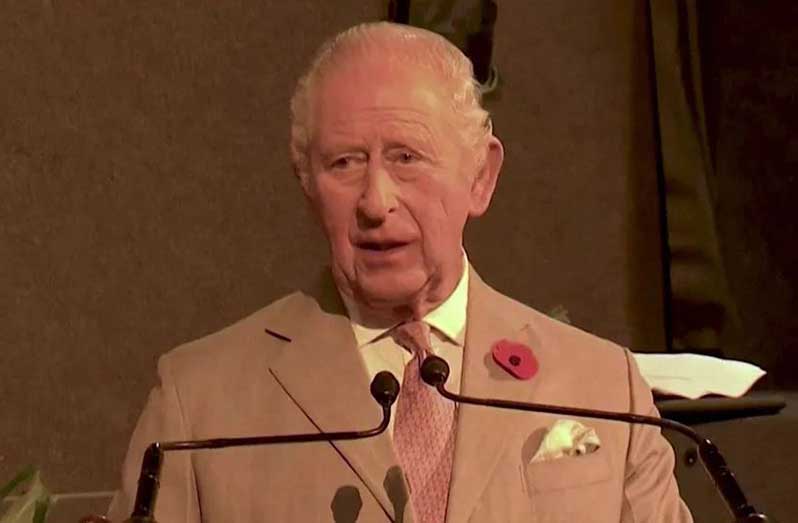
KING Charles III has said the transatlantic slave trade continues to cast a shadow over Commonwealth nations, urging members to build modern partnerships that address past wrongs through practical action.
Addressing the opening ceremony of the 28th Commonwealth Heads of Government Meeting in Antigua and Barbuda on Tuesday, the King described the history of enslavement as a “shameful chapter” that filled him with profound sorrow.
“We cannot change the actions of those who came before us. We can, however, learn from the past,” he said.
The King said history included both the achievements and failures of earlier generations, and that its consequences remained relevant today.
“The more I have furthered my own understanding of the issues through listening, learning, and looking, the more committed I have become to finding ways for us to work in modern partnership to address the wrongs of the past with action for the future, through improving access to education, investing in jobs and opportunities, encouraging intra-commonwealth trade, and inspiring vital climate resilience measures across the world,” the monarch told world leaders.
He also pointed to the role of courage and determination in overcoming injustice, including efforts to end the international trade in enslaved people in which the Royal Navy had played a leading role.
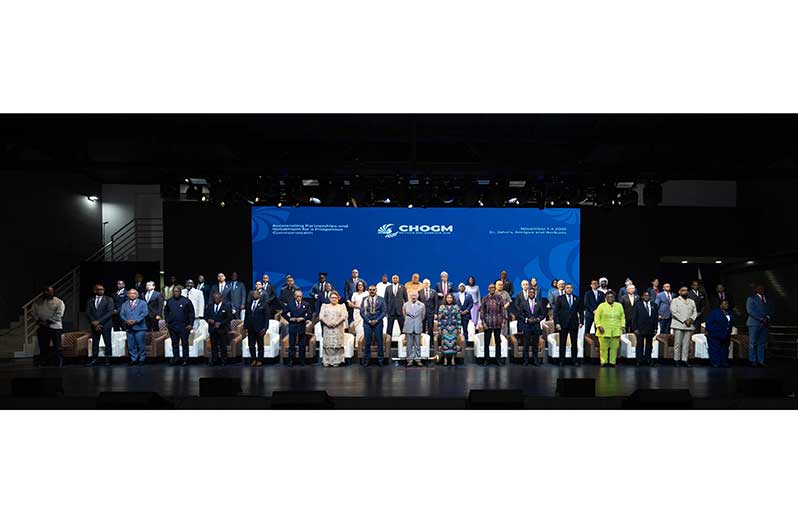
The King called for a “modern partnership” focused on the future.
Prior to the King’s visit to the region, Guyana’s President Dr. Irfaan Ali had called for “mature” discussions on reparations that addresses the lasting development inequalities caused by slavery, noting that the issue should not be treated as a demand for “payback” or charity.
King Charles had arrived in Guyana Thursday last, before departing for Antigua and Barbuda for the Commonwealth HoG meeting.
Speaking to ITV News presenter Robert Moore ahead of King Charles III’s visit to Guyana, Dr. Ali said the King would be welcomed warmly, citing Guyanese hospitality and the monarch’s longstanding relationship with the country.
“As a country, we will continue to champion the issue of reparation because slavery was the worst indignity to humankind,” Dr. Ali said during the interview, which was aired on Monday night.
Asked about calls for an apology for Britain’s colonial past, Dr. Ali said an apology would help create “an environment of having free-flowing discussions”.
He cautioned, however, that an apology should not be seen as an end in itself. The president said reparations should not be based on assigning a monetary value to the injustice of slavery.
Instead, he argued, discussions should identify development gaps and inequalities resulting from the region’s history of exploitation and underdevelopment.
“That is a very important question that we need to settle in the conversation, not only about an apology, but also about how do we define reparation? Some would say it is through a valuation system, but in my humble opinion, you cannot ever value the type of injustice that took place, and you can never, you know, create a monetary mechanism to address that,” he said.
Possible measures, he said, could include debt relief and new forms of concessional financing for education, healthcare and mental health, as well as climate adaptation and mitigation.
“But what you can do is to identify the development gaps, the development inequality, the underdevelopment that took place as a result of slavery,” he pointed out.
Dr Ali rejected the suggestion that reparations amounted to “payback,” saying: “This is not payback. It is not charity.”
He called for a solution that recognises the suffering and consequences of slavery while supporting a development model to address them.
The interview also touched on the contrast between countries that, Dr Ali said, benefited materially from slavery and those left facing its long-term effects.
He argued that the wealth generated through exploitation had helped some countries build systems better able to withstand economic shocks.
“You who benefited tremendously from the darkest days of human history, benefited materially and financially, are now telling me that you don’t have enough financing to match your needs,” the Head of State quizzed.