






By Bebi Shafeah Oosman
A YOUNG Black Bush Polder couple is reaping the rewards of hard work, determination and innovation in agriculture, crediting the Ministry of Agriculture’s Rice-Duck Initiative with creating new opportunities for their economic empowerment and financial independence.
Through the initiative, which integrates duck rearing with rice cultivation, the couple has been able to diversify their agricultural activities, creating a successful income-generating opportunity while embracing more sustainable farming practices.
Their journey is a testament to how targeted agricultural interventions can transform livelihoods, empower young people and encourage greater participation in agriculture, not merely as a means of survival but also as a viable pathway to entrepreneurship, prosperity and long-term financial stability.
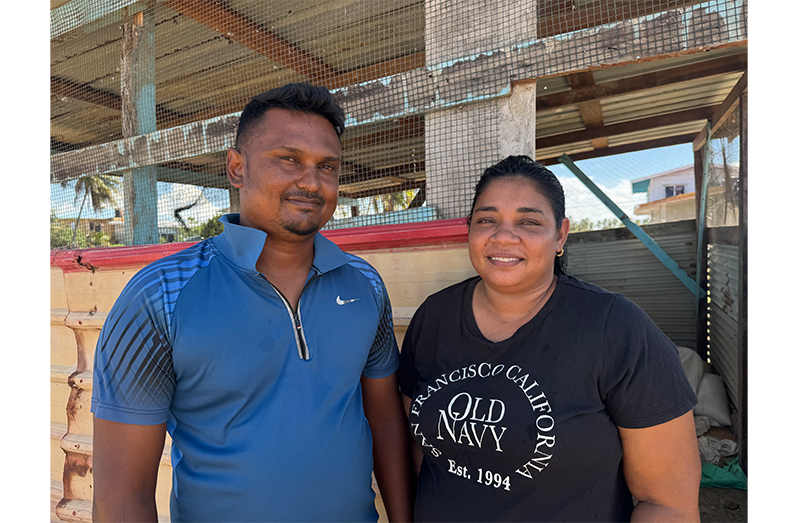
Deoraj Mangal, 37, and his wife, Kamini Mangal, of Lot 251 Mibicuri North, Black Bush Polder, embarked on the Rice-Duck Initiative in May and have since embraced the innovative approach to farming, recognising its economic and environmental benefits.
With more than a decade of experience in rice cultivation, Deoraj explained that integrating duck rearing into his existing farming operations has opened new avenues for income generation while reducing some of the traditional expenses associated with rice production.
“I am a farmer and I have been planting rice for over ten years, and from when we take on the project from GRDB and the FAO, we do rearing of ducks and rice together, and we see this project as a very beneficial project to me and my family,” he stated.
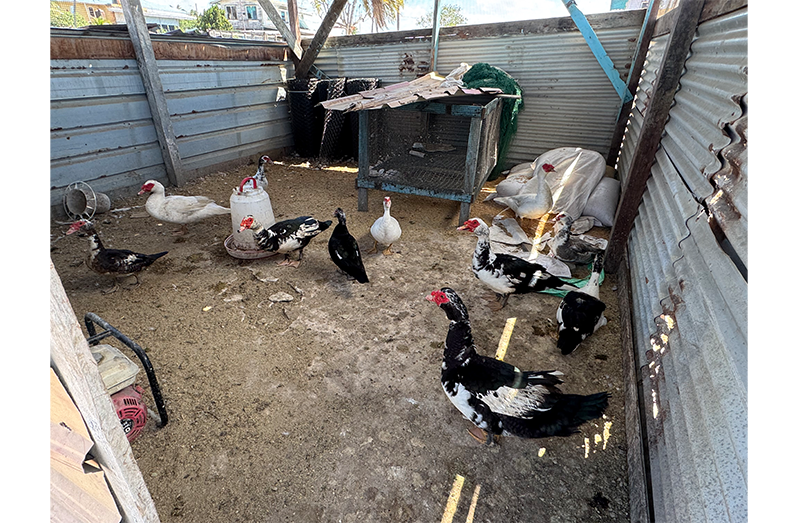
Beyond its economic benefits, the initiative has evolved into a family undertaking, with the couple’s three children actively participating in the daily activities associated with rearing the ducks. From feeding the birds to collecting eggs, the children are gaining practical exposure to agriculture while developing an appreciation for hard work, responsibility and entrepreneurship.
Deoraj stressed that his family is very much engaged in the project, explaining that his children regularly assist with feeding the ducks and collecting eggs.
“My family all in the project; my children they come into the pen and they feed and they come and pick up the eggs and I think this is a too good project.”
For the experienced rice farmer, one of the most attractive aspects of the initiative is its potential to significantly reduce production costs while promoting environmentally friendly agricultural practices.
He explained that the ducks serve a dual purpose within the rice fields, assisting with natural pest and weed control while their droppings provide organic nutrients to the soil, thereby reducing the dependence on chemical pesticides and synthetic fertilisers.
“This project we don’t have to spray, so no spraying is required, and fertiliser also, the duck faeces fertilise the land, and I believe that this project will go a far way,” he explained.
The integrated farming approach also allows farmers to generate income from multiple sources, including rice production, duck meat and eggs, rather than relying solely on the proceeds of their rice harvest.
According Deoraj, they sowed in May and reaped in September, “so the plot is like an acre plot so we sold 28 bags of paddy to the mill because we could have done seed paddy but we didn’t have his quality seed so we didn’t keep it for seed paddy, we sold drakes at $7,000 and we sold hens at $3,500 per hen so we have a very good combination of harvesting from the rice and the selling of the ducks together.”
Meanwhile, Deoraj’s wife, Kamini, spoke about the significant impact the project has had on her life, particularly in empowering her to achieve greater financial independence and contribute to the economic well-being of her family.
For Kamini, the project represents more than just an agricultural venture but has also provided her with an opportunity to earn her own income, become more actively involved in the family’s farming operations and strengthen her financial position.
Kamini recalled that her introduction to rice farming came after her marriage to Deoraj, when she began learning about the industry and the various aspects of rice cultivation. However, she never imagined that agriculture would eventually provide her with an opportunity to establish her own source of income and achieve greater financial independence.
She emphasised that the rice-duck initiative has opened doors she once thought were beyond her reach, allowing her to transform the knowledge and experience gained over the years into a meaningful economic opportunity.
“This project benefits me a lot; what we doing here we don’t have to spray, we don’t have to apply any fertiliser so we save back in that area because when we lose the ducks in the morning they go and feed out the weeds and catch out the insect and when they swizzle in and so the plants tend to get more healthier in that way.”
Detailing her day-to-day operations, the mother of three said she gets up, makes breakfast, takes her children to school while her husband is in the backlands working.
“I look after the duck and rice; it is very simple and it convenient because it deh right back of my house so it convenient for me to look after it so I don’t have to go far, it is a very good thing to be involved as long you have time and you deh home it will benefit them a lot,” she said.
The couple praised the Ministry of Agriculture led by Minister Zulfikar Mustapha for adapting to modern initiatives and ensuring the ministry can assist them with the changes going on in the world.
“The GRDB and extension staff they advise us a lot in the sector because everything is going modern now so sometimes as farmers we don’t know certain things and certain drugs to use, the weather pattern change and we need some other advice and also the weather, the advisory for the weather is also important; so we like to thank the minister for always making sure everything in place; he always meeting us and assisting as much as he can.”




