






- 168 persons with disabilities benefit from training this year
A TOTAL of 168 persons with disabilities benefitted from skills development programmes facilitated by the Board of Industrial Training (BIT) between January and September this year, as efforts continue to improve their access to employment and economic opportunities.
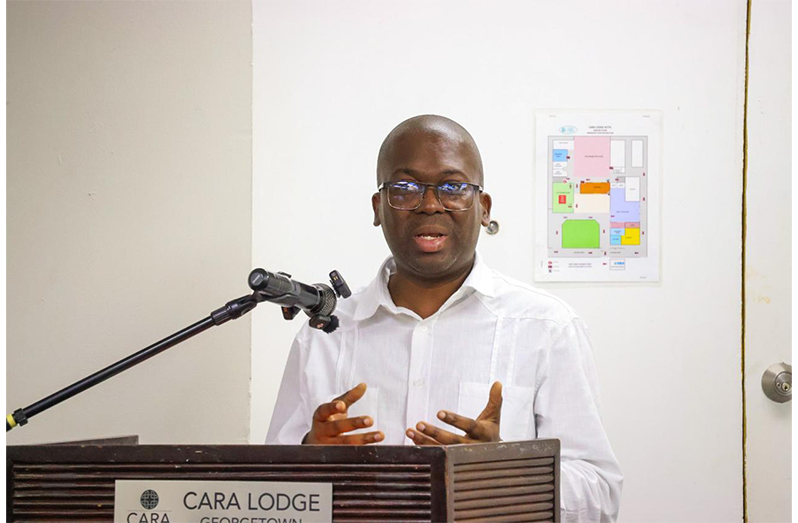
The figures were disclosed on Tuesday by BIT’s Chief Executive Officer (CEO), Richard Maughn, during the Job Readiness and Soft Skills Training Programme seminar hosted by the Ministry of Labour and Manpower Planning at Cara Lodge, Georgetown.
Maughn said the initiative reflects the Government’s focus on ensuring that persons with disabilities are equipped with the practical and interpersonal skills needed to participate meaningfully in the labour market.
The programme, which was conceptualised by Minister of Labour and Manpower Planning, Keoma Griffith and spearheaded by the Central Recruitment and Manpower Agency, caters for 35 persons with disabilities.
BIT’s role includes supporting the validation of participants’ competencies, quality assurance and certification for those who satisfy the established requirements.
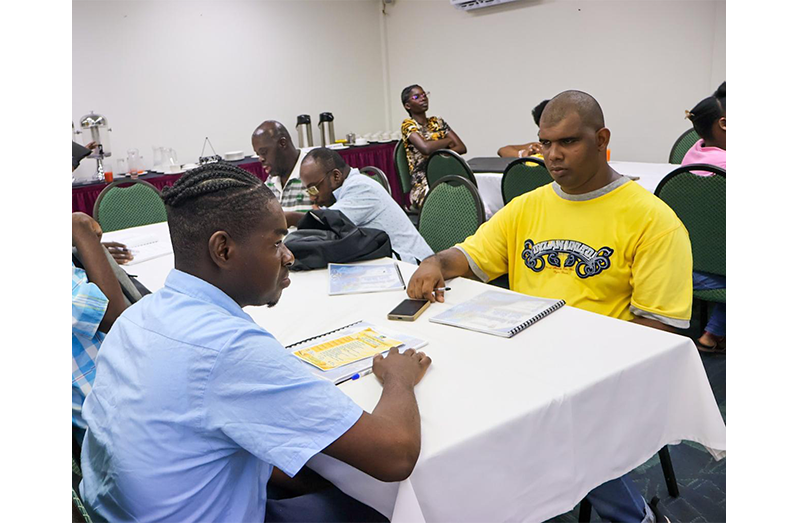
According to Maughn, of the 168 persons engaged in BIT’s 2026 training cycle, 108 have completed their programmes, while another 60 are still undergoing training.
The beneficiaries comprise 61 males and 107 females and were trained across nine occupational areas, including cake decoration, commercial food preparation, computer skills, drone and robotics technology, garment construction, graphic design and screen printing, assistive technology, pastry making and sustainable farming.
Maughn noted that the programme forms part of a wider effort by BIT to expand skills development opportunities for persons with disabilities.
Between 2020 and 2026, the Board engaged 570 persons with disabilities through training in 23 occupational areas, with 223 males and 347 females benefitting.
The areas included computer skills, cosmetology, customer service, digital marketing, data analysis, plumbing, website development, small electronics repairs, sustainable farming, commercial food preparation and drone technology and robotics.
The largest number of beneficiaries during that period participated in training involving JAWS software, information and communication technology and assistive technology, which accounted for 94 participants.
Maughn said the figures demonstrate the importance of inclusive workforce development, pointing to estimates that approximately 1.3 billion people worldwide, or one in every six persons, experience significant disability.
He also cited estimates of more than one million persons with disabilities across the Caribbean and a 2025 survey which identified approximately 24,524 persons with disabilities in Guyana.
He stressed, however, that providing training opportunities must be accompanied by concrete efforts to ensure that participants can secure employment and contribute to the economy.
“Skills development alone is not sufficient. Training must translate into meaningful economic participation,” Maughn said.
He called on private sector companies, public institutions and Government agencies to take deliberate steps towards creating employment opportunities for persons with disabilities.
Employers, he said, must recognise the competencies of persons with disabilities, provide reasonable accommodations and remove barriers that prevent them from participating fully in the workplace.
As Guyana continues its economic transformation, Maughn said, persons with disabilities must be recognised not simply as beneficiaries of national development but also as contributors to the country’s growth.
“Inclusion is not an act of charity; it is a fundamental right, an economic imperative and an essential pillar of sustainable national development,” he stated.
He reaffirmed BIT’s commitment to working with the Ministry of Labour and Manpower Planning and other stakeholders to strengthen skills development and expand opportunities for persons with disabilities.




