






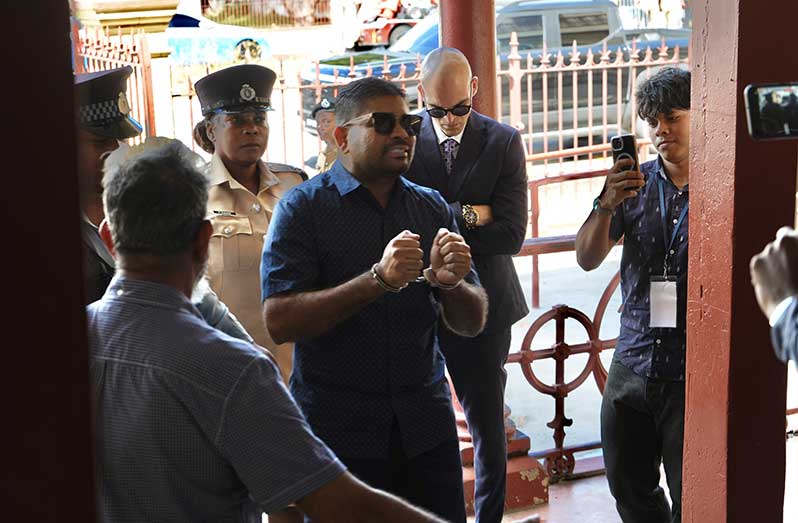
–Attorney signals intention to seek judicial review of Chief Magistrate’s decision to maintain bail
–insists compelling evidence supports murder charge over ‘Paper Shorts’ killing
ATTORNEY representing the United States, Glenn Hanoman, has renewed efforts to have Opposition Leader Azruddin Mohamed’s bail in the ongoing extradition proceedings revoked, arguing that compelling evidence exists to support a possible murder charge against him over the 2021 execution-style killing of gold dealer Ricardo “Paper Shorts” Fagundes.
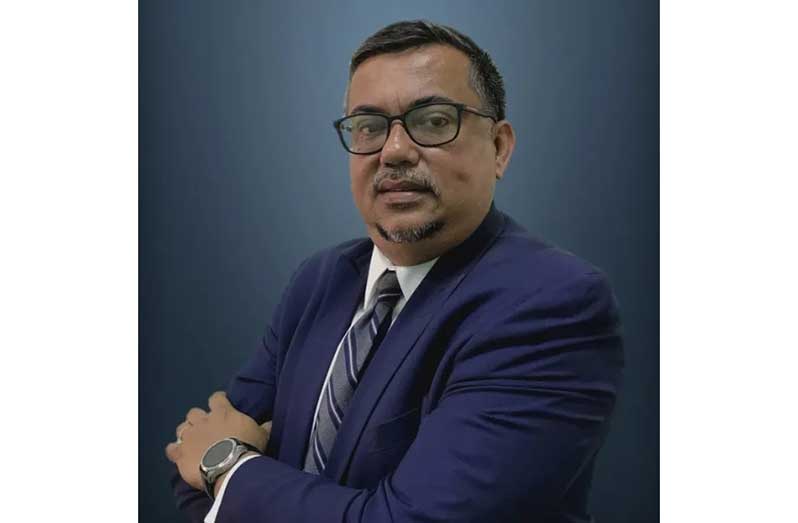
During lengthy submissions on Tuesday before Chief Magistrate Judy Latchman at the Georgetown Magistrates’ Courts, Hanoman argued that Mohamed had engaged in further offences and interfered with a prosecution witness, Senior Superintendent of Police Prem Narine, head of the Special Branch Unit.
He also argued that additional charges could be brought against Mohamed arising from the alleged unauthorised acquisition, release and manipulation of footage from the Safe Country surveillance system.
Of particular significance was Hanoman’s assertion that there was compelling evidence to support a murder charge against Mohamed in connection with Fagundes’ killing.
“I happen to note that there is strong and compelling evidence that supports a murder charge against [Mohamed],” Hanoman submitted, before adding that statements from an alleged co-conspirator had already been obtained.
Fagundes was gunned down outside Palm Court on Main Street, Georgetown, on March 21, 2021, in an execution-style attack.
The attorney also relied on what he described as Mohamed’s conduct outside the United States Embassy, stating that it occurred within hours of bail conditions being imposed by another court, including a condition prohibiting contact with prosecution witnesses.
According to Hanoman, Mohamed appeared outside the embassy and publicly targeted Narine, describing him as a murderer and an assassin, while calling for his deportation and the revocation of his visa.
Hanoman told the court that Mohamed had also declared that he would no longer be able to hold people back if the demands were not met.
The prosecution interpreted the remark as a threat, arguing that Mohamed was suggesting he could no longer restrain his supporters if their demands were not met.
“He should be charged with murder,” Hanoman quoted Mohamed as stating in reference to the witness.
The attorney argued that the public statements amounted to a threat against public order and demonstrated disregard for the conditions of bail imposed by the court.
He further argued that the incident demonstrated a pattern of conduct in which Mohamed disregarded the conditions attached to his release.
Hanoman also raised concerns about the circumstances under which Mohamed allegedly obtained CCTV footage from the Police Command Centre, arguing that he had facilitated its release by police ranks and was therefore not absolved of responsibility simply because he was the recipient.
The attorney alleged that the footage was subsequently distributed and manipulated, with portions slowed down and clipped to create what he described as a false narrative about the events captured in the recordings.
According to Hanoman, the alleged conduct could attract several additional charges, including offences relating to the unauthorised release and possession of the footage, as well as the manipulation of evidence and obstruction of justice.
“More charges are [to be] brought against the defendant,” he submitted, while referring to provisions of the law concerning persons who facilitate offences committed by others.
However, Chief Magistrate Latchman ultimately refused the prosecution’s application to revoke Mohamed’s bail, ruling that the existence of multiple charges against him was insufficient, without more, to establish that he had committed further offences or was likely to do so.
“Charges by themselves without more do not satisfy the court that Mr. Mohamed has committed an offence or is likely to commit an offence,” Latchman ruled.
She added, “There must be something substantial that elevates a charge to satisfy the court that the defendant has committed an offence or is likely to commit an offence.”
The magistrate also found that the alleged breaches of bail conditions had not been established and that there was no evidence that Mohamed was a flight risk.
“Breaches must be proven. Breaches have not been established,” she said.
“There is no evidence that Mr. Azruddin Mohamed is a flight risk,” she said, adding that there was also no solid evidence that he did not reside at the address he had provided to the court or had supplied a false address.
The prosecution has since indicated that it intended to pursue a judicial review of the Chief Magistrate’s decision.
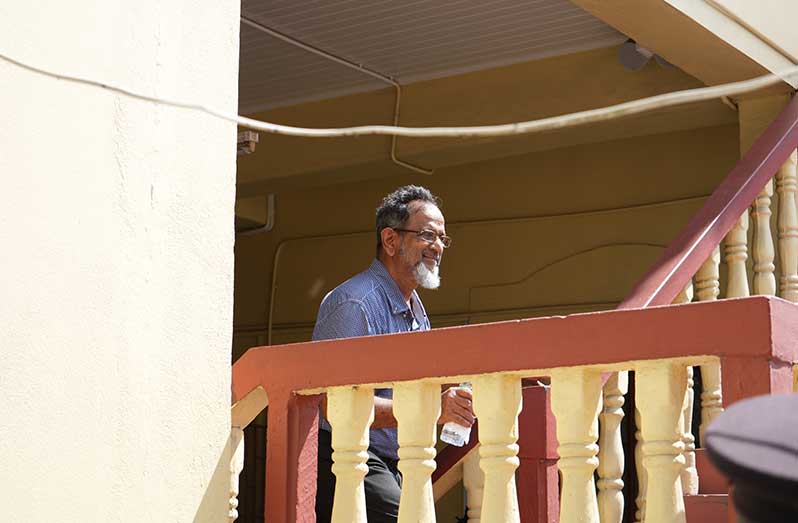
Azruddin and his father, Nazar Mohamed, were each granted $150,000 bail on October 31, 2025, following their arrest on a United States extradition request. The bail conditions required them to surrender their passports and report weekly to the Ruimveldt Police Station.
While on extradition bail, Azruddin became embroiled in additional criminal proceedings in Guyana. On October 16, he was charged alongside his driver, Eugene Thorne, and videographer, Mario Mohamed, with unlawful possession of a firearm and ammunition, and attempting to obstruct the course of justice, arising from an October 12 incident outside the residence of Narine. All three pleaded not guilty and were granted $750,000 bail each.
On October 30, Azruddin was again charged, this time jointly with Police Constable Ryan Greene, over the alleged unauthorised transfer of Safe Country surveillance footage in exchange for $800,000. Both were remanded to prison.
Another police rank, Ashton Chappelle, was later charged in connection with the alleged unauthorised obtaining and distribution of the CCTV footage. He, too, was remanded.
BAD PRECEDENT
Speaking to reporters after the ruling, Hanoman criticised the Chief Magistrate’s decision, stating it set a “bad precedent,” and could send the wrong message about the consequences of breaching bail conditions.
“The message being sent is that it doesn’t matter what you do after you are granted bail. It doesn’t matter how many times you are charged for other offences.”
Hanoman maintained that, in his interpretation of the law, interfering with witnesses and being charged with serious offences while already on bail constituted “classic grounds” for revocation.
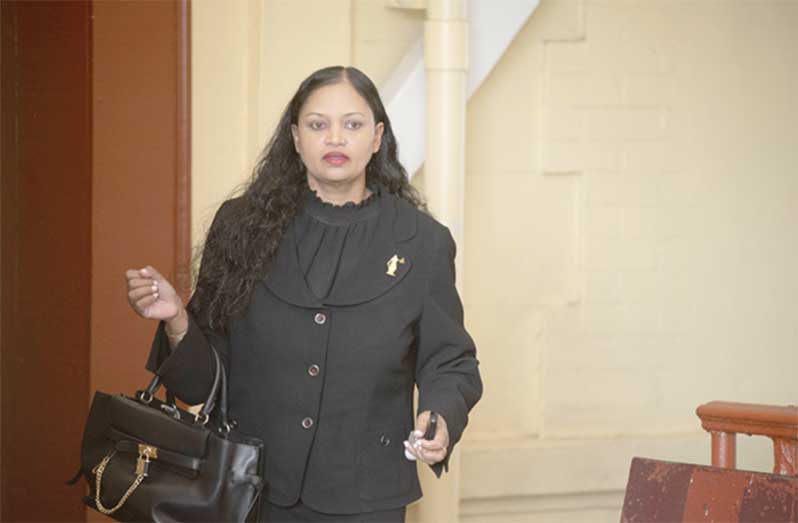
Hanoman maintained that the prosecution had been prepared to present evidence supporting its application to revoke Mohamed’s bail, but the Chief Magistrate declined to receive it.
He further contended that the ruling should be subjected to scrutiny by a higher court, maintaining that there were sufficient grounds for judicial review.
This marks the second application the Chief Magistrate has refused this week. The first, seeking to revoke Mohamed’s bail in the extradition proceedings, was made on Monday by another attorney representing the United States, Jamaican King’s Counsel Terrence Williams.
The extradition proceedings against Mohamed and his father, Nazar Mohamed, stem from an 11-count US indictment following sanctions imposed on the two men by the US Department of the Treasury in June 2024 over allegations of corruption and their involvement in a gold-export scheme.
The United States is seeking their extradition to face charges of conspiracy to evade more than US$50 million in taxes and royalties through the under-declaration of gold exports.
Azruddin is also implicated in a separate US indictment concerning the importation of a luxury Lamborghini from Miami. Prosecutors alleged that he used an undervalued invoice to import the vehicle, resulting in the alleged evasion of more than US$1 million in taxes.
The United States is seeking to have both men surrendered to face the charges before its courts in Florida. Both men deny the allegations.
The extradition proceedings, which commenced on January 6, have now been ongoing for nearly 10 months, but only two prosecution witnesses have testified so far.




