
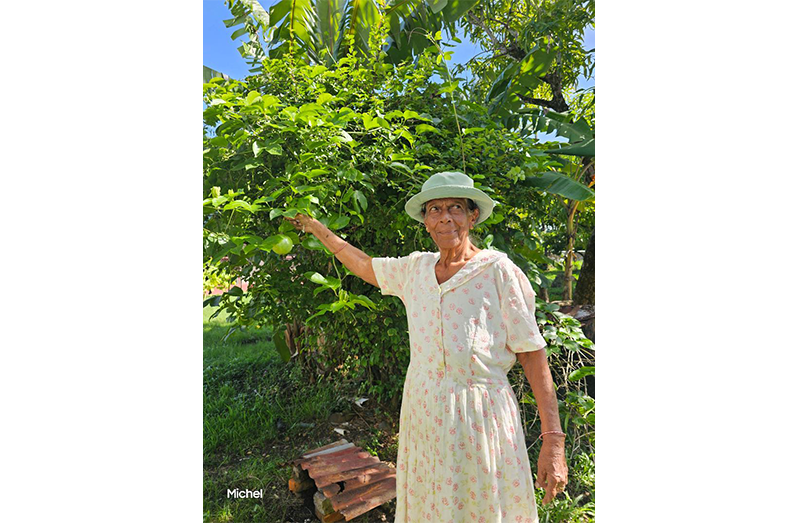
ON Temple Street, Windsor Forest, West Coast Demerara, the quiet rhythms of an older Guyana co-exist seamlessly with the signs of a rapidly modernising nation. At the centre of this convergence is Parvati Loaknauth, an 85-year-old matriarch whose life reflects endurance, faith, and an abiding satisfaction with both personal and national progress.

Loaknauth is sprightly and self-reliant, a woman firmly set in her ways yet deeply appreciative of change. She remains fully able-bodied, preparing her own meals, tending to her home, and cultivating her garden with the same diligence that has characterised her life for decades.The modest yard surrounding her home is alive with crops, budding plants, fruit trees, and flowers—an extension of her philosophy that purposeful work nurtures both body and spirit.

Originally from Maria’s Pleasure on Wakenaam Island in the Essequibo River, Loaknauth recalls a childhood shaped by the stability of village life. Her father was a contractor, and the family lived comfortably. She grew up alongside three sisters, including a twin, older by 15 minutes; her eldest sister is now 89.That sense of security was shattered in 1954 when her father died after falling from a roof and breaking his neck, a tragedy that profoundly altered the family’s circumstances.
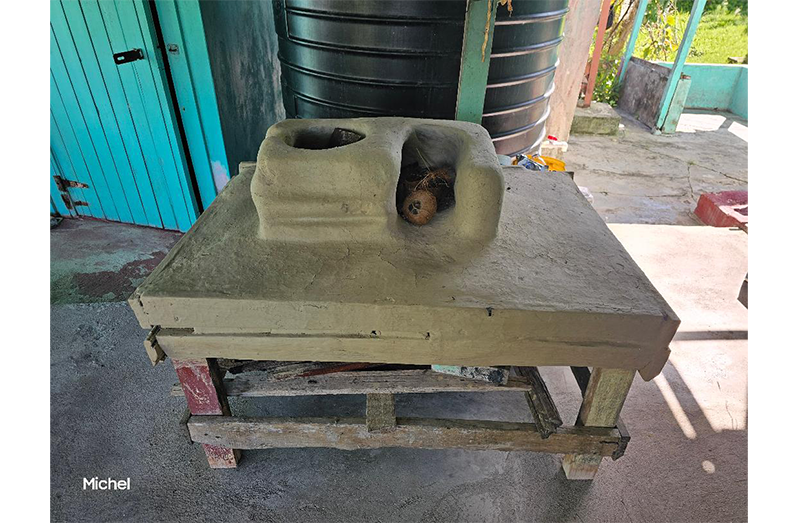
In keeping with the social customs of the time, Loaknauth left school after Standard Six and married young. Marriage required her to relocate to Windsor Forest, her husband’s home village, where she began a life she describes as difficult but never hopeless. She has lived there continuously for the past 70 years.
Having never worked prior to marriage, she was forced to adapt quickly to the demands of survival. Her husband found work weeding at the estate, while she walked barefoot along the railway embankment to cut rice at a plantation in Harlem. The labour was intense and unrelenting. Later, when her first child was born, her husband secured permanent employment at a company where he worked for 28 years, bringing a measure of stability to the household.
Loaknauth recalls earning $1.50 for cutting and bundling 72 square feet (one rod) of rice with only a grass knife. After long days in the fields, she returned home to cook, clean, and prepare for the next morning’s work. Despite the physical demands, she and her husband persevered, united by a shared commitment to their family.
Together, they raised five children, ensuring that education remained a priority. They kept chickens, sheep, turkeys, and goats, and maintained a kitchen garden that supplied vegetables and fruits. “Things were cheaper then,” she reflects, “but you had to work hard for everything.” That hard work yielded lasting rewards. All of her children later secured good jobs, migrated, and established families of their own.

Today, Loaknauth is the proud mother of five children, grandmother to nine, and great-grandmother to seven. Despite the hardships of her early life, she speaks warmly of her marriage, describing it as happy, and expresses deep pride in her children and grandchildren.
A devout Hindu, Loaknauth believes her strength and longevity are grounded in faith. Daily prayers remain central to her life, complemented by a disciplined, wholesome lifestyle. Loaknauth’s late husband, Ganga Persaud, was the village pandit, a respected member of the community he served.
She attributes her vitality to eating mostly vegetables, maintaining a strong work ethic, and drinking a daily herbal brew made from carilla leaves and lemongrass. Adequate rest, she adds, is equally important.
Her yard continues to provide abundantly. She rarely purchases greens or fruits, and from her 12 mango trees alone, she once earned approximately $50,000 from the sale of ripe mangoes—an example of self-sufficiency rooted in tradition.
Loaknauth also expresses satisfaction with Guyana’s national development. She speaks approvingly of the country’s infrastructural transformation, including the construction of the new Bharat Jagdeo Bridge, which she views as a symbol of progress and improved connectivity. Such developments, she believes, signal a better future for younger generations.
With a gentle chuckle, she says she lives comfortably as a pensioner and is content with her quality of life.
Her home is tidy, her garden well-kept, and her days peaceful.
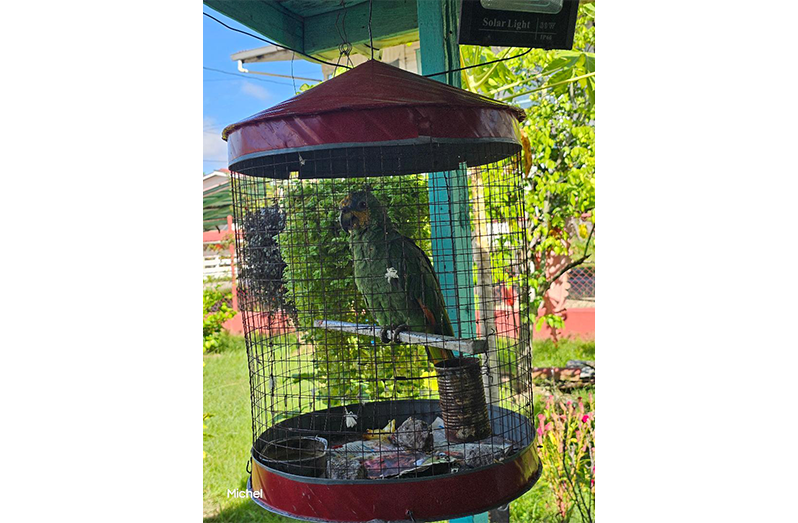
A familiar presence is Robert, an 18-year-old parrot once owned by her daughter, whose chatter adds warmth and continuity to the household.
In Parvati Loaknauth’s life, tradition and modernity do not compete; they co-exist.
Her story is one of quiet resilience, deep faith, and measured contentment, offering a poignant reminder that national progress is ultimately anchored in the lived experiences of ordinary citizens whose strength and sacrifice laid the foundation for the present.