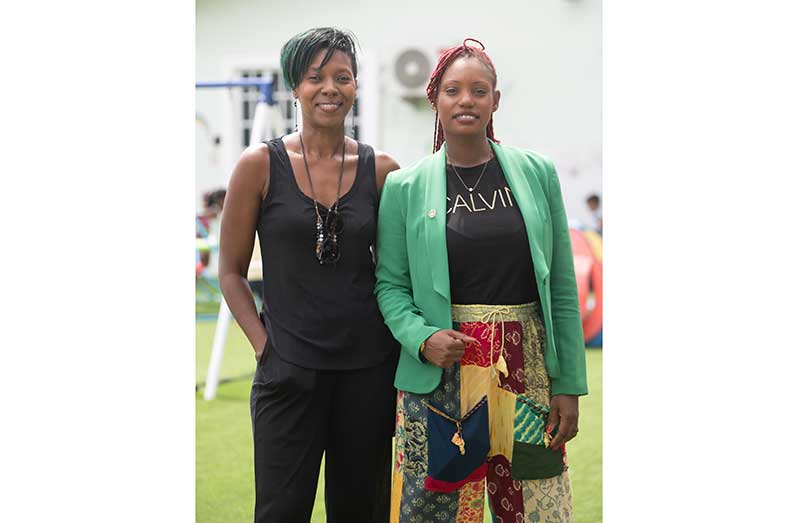
– highlights shift in teaching approaches
JUST over a year after opening its doors, an early childhood education centre in Ogle has recorded a steady increase in enrollment, reflecting growing interest among parents in alternative approaches to early learning in Guyana.
Atikali Learning Lab, located at Lot 6 Temple Street, Ogle, East Coast Demerara, began operations in 2024 with seven students.
The institution now serves 48 children between the ages of 15 months and five years, spread across three classes: pre-school, junior kindergarten and senior kindergarten. The school maintains what it describes as appropriate teacher-to-student ratios for each age group.
The centre’s founders say the growth mirrors a broader shift in how parents are thinking about early childhood education, with increased emphasis on social, emotional and developmental learning alongside academic preparation.
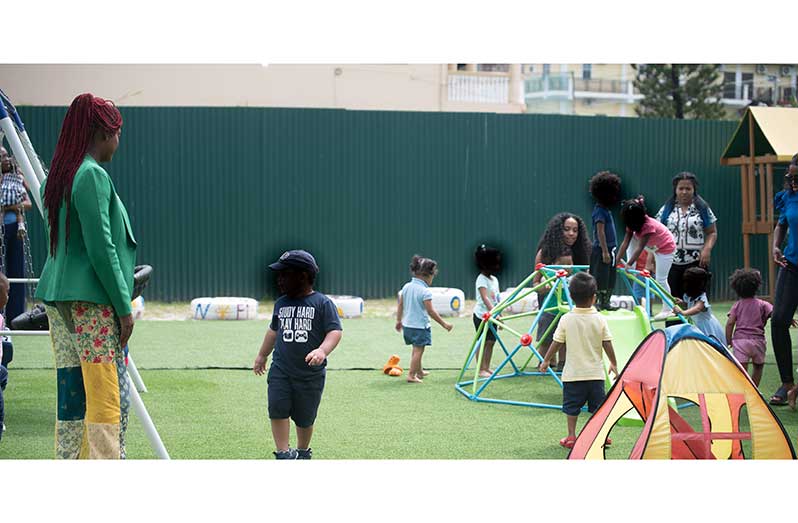
Across Guyana and the wider Caribbean, education officials and child development specialists have in recent years stressed the importance of stronger foundations in the early years, particularly in literacy, numeracy, social skills and problem-solving.
Atikali’s programmes are built around a research-based curriculum model that focuses on developmentally appropriate learning and play-based instruction, combined with early exposure to science, technology, engineering, arts and mathematics (STEAM).
The school’s approach places significant weight on children’s social and emotional development, motor skills, independence and critical thinking, rather than rote learning.
Founder and Managing Director Quenita Walrond said the institution’s first year has been focused on establishing and refining its teaching model.
She noted that the school’s priority has been to build a system that supports child development in a balanced way, combining academic learning with creativity, exploration and social growth.
“We are looking at development first,” Walrond said in an interview, adding that the aim is to support children’s overall well-being and character formation, not only academic performance.
Business Strategy and Marketing Lead Tracey Smith said the institution’s approach is play-based but grounded in research-backed methods, allowing teachers to assess and guide students using established developmental frameworks rather than anecdotal observation alone.
The school’s curriculum is delivered in collaboration with the internationally recognised Creative Curriculum programme, and Atikali has been selected as an ambassador school for that model in Guyana.
Education experts have increasingly pointed to such frameworks as a way to strengthen early childhood outcomes, especially in systems where formal schooling often begins with a strong focus on memorisation rather than conceptual understanding.
Smith also noted that while the institution is faith-centred, its student body is diverse, with children from a range of ethnic and religious backgrounds.
The growth of Atikali comes at a time when early childhood education is receiving greater attention both locally and regionally. Policymakers and educators have repeatedly highlighted the link between strong early learning foundations and improved performance at the primary and secondary levels, as well as better long-term social outcomes.
Looking ahead, the school’s leadership says the immediate focus is on refining its current model before considering expansion into the primary education level, a move they say would be driven by internal capacity and demand rather than rapid growth.
For now, the experience of the Ogle-based institution appears to underscore a wider trend: increasing interest among parents in early childhood programmes that balance academic preparation with social, emotional and developmental learning during the formative years. Persons can contact Atikali at info@atikalilearninglab.com.