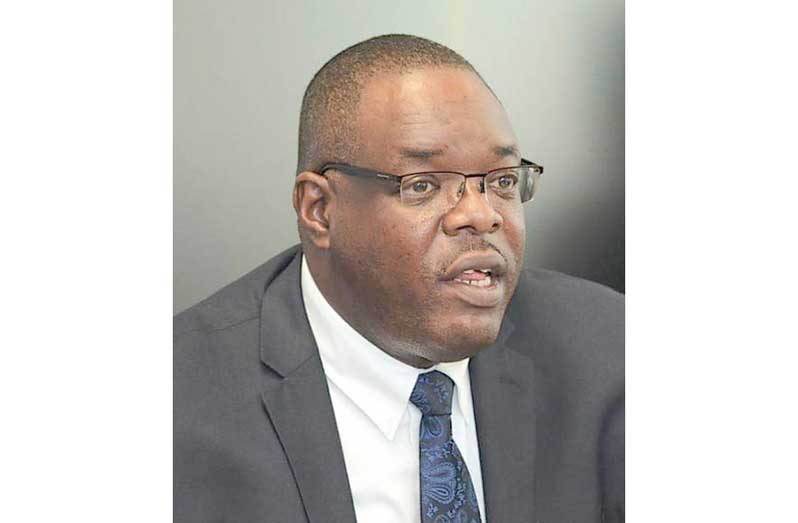
– announces disaster recovery measures and education reforms
THE Caribbean Examinations Council (CXC) has announced major advances in digital testing, new disaster recovery measures, and expanded education reform initiatives as more than 10,000 candidates across the region sit the January 2026 Caribbean Secondary Education Certificate (CSEC) examinations.
The updates were outlined by Registrar and Chief Executive Officer Dr Wayne Wesley during a media briefing in Kingston, Jamaica, on Tuesday, where he also disclosed key decisions taken by the Council’s Board of Governors at its recent governance meetings.
Dr Wesley said the January examinations, which began earlier this week and conclude on January 29, are being administered using CXC’s digital e-assessment and hybrid systems. He noted that the Council intends to move all examinations fully on-screen within the next three to five years.
Immediately following the January sitting, CXC will begin preparations for the traditional May–June examination period, during which more than 100,000 candidates are expected to sit over 600,000 CSEC and Caribbean Advanced Proficiency Examination (CAPE) subject entries.
As part of its institutional reforms, CXC has formally approved its Regional Disaster and Business Recovery Protocol, which outlines how the organisation responds when a participating member state is affected by disasters such as hurricanes, floods or volcanic eruptions.
Dr Wesley said the protocol has already been activated in support of Jamaica following the impact of Hurricane Melissa. Under an agreed action plan with the Jamaican Ministry of Education, Skills, Youth and Information, affected schools will be allowed flexibility in how examinations are administered, including the use of a modified approach. Late registration fees have been waived, the deadline for School-Based Assessments (SBAs) has been extended to June 15, 2026, and candidates will still receive their results in August alongside the rest of the region. Students who feel unprepared to sit the examinations may also apply for a refund or defer to a later sitting in 2027.
On the academic front, Dr Wesley said the Council has approved two new policy documents aimed at improving learning outcomes across the region. These include updated literacy and numeracy standards for the first three years of secondary school, as well as revised targets and performance benchmarks for primary education under the Caribbean Primary Exit Assessment (CPEA).
He also provided an update on the Caribbean Targeted Education Certificate (CTEC), a new initiative aimed at expanding certification opportunities. Originally projected to involve 3,000 students, the pilot programme has attracted more than 6,400 candidates from 13 member states across 48 examination centres.
In addition, CXC reaffirmed its commitment to inclusive education, particularly for students with disabilities. Dr Wesley said the Council will continue to advocate for the adoption of the WIPO Marrakesh Treaty across the region to support visually impaired and print-disabled learners. During the 2025 examinations, special assessment arrangements were made for more than 3,400 candidates with visual impairments and other special needs.
Dr Wesley said the Council’s work is guided by a renewed focus on strengthening resilience in times of crisis, improving service delivery, and widening access to education for all learners across the Caribbean.
He added that CXC intends to build on these initiatives throughout 2026 as it continues to modernise its operations and expand its role in supporting education systems across the region.