
THE sometimes-narrating ghost of Monique Roffey’s funny, sad and serious new novel, Passiontide (Alfred A. Knopf, $28.00) is Sora Tanaka, a Japanese tourist and steelpan player murdered on the fictional Caribbean island of St Colibri, a stand-in for the author’s native Trinidad. The incident is based on the real-life 2016 murder of Asami Nagakiya, a Japanese visitor and well-known pan player who was found strangled in Port of Spain. This parallel murder becomes the catalytic event in Passiontide, the seventh novel by the Trinidad-born British writer, through which Roffey probes the urgent theme of violence against women.
Tanaka’s killing, one in a long line of femicides on St Colibri, sets in motion a series of political and personal upheavals that propel the novel’s winding plot. Roffey mines both the bacchanalian paganism of Carnival and the solemn rituals of Catholicism to craft a story rich in political commentary and emotional gravity.
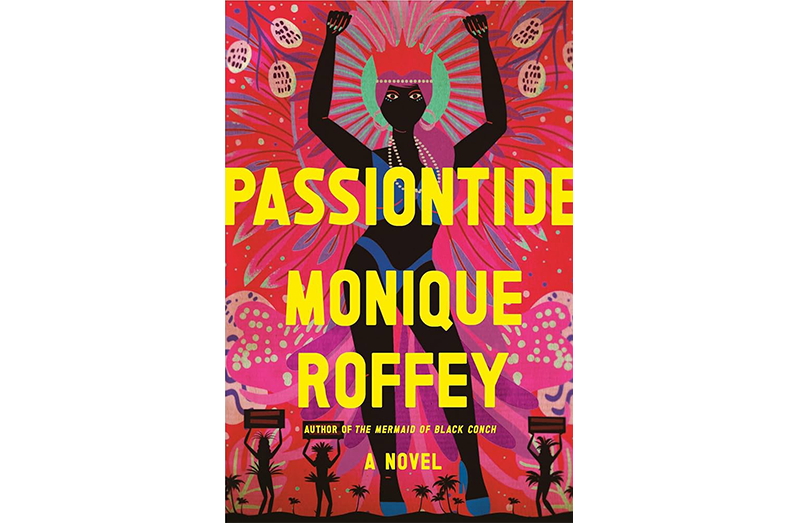
“Passiontide”, the source of the novel’s title, is the final two weeks of Lent in Christianity, a period of penance and reflection on sin and sacrifice. But the Passiontide of Roffey’s novel refuses traditional expectations; instead, it unfolds as a period of social turmoil and erupting violence on St Colibri, a transparent stand-in for Trinidad and Tobago. The island setting is similar to that of Roffey’s previous novel, The Mermaid of Black Conch (Peepal Tree Press, 2022), which won the prestigious Costa Book Award. That novel—a luminous synthesis of Caribbean myth and incisive political insight—was the sixth in her rapidly growing oeuvre.
Passiontide is a different kind of novel, though it shares with its predecessor a deep concern for the condition of Caribbean women. A feminist perspective shapes both works, but here Roffey’s engagement with the subject is more pointed, more insistent. The narrative follows four women on the island—Tara Kissoon, a flamboyant women’s rights activist; Sharleen Sellier, an aggressive local newspaper journalist; Gigi Lala, the leader of a sex worker collective; and Daisy Solomon, the Prime Minister’s wife—and others, women who have varying degrees of connection to Sora Tanaka, or in some cases none at all. Their stories—and Sora’s own, told from beyond the grave—interweave into a chorus of perspectives linked by a shared reckoning with the island’s long, brutal history of unsolved murders of women.
Galvanised by Tanaka’s death, Tara Kissoon begins to organise women across the island, confronting the casual misogyny of men and the entrenched patriarchal systems under which crimes against women are routinely ignored. The women “occupy” the park opposite Parliament, camping out, protesting, raising hell and upending the island’s complacency. Their numbers grow, ultimately drawing in even the Prime Minister’s wife as the movement intensifies.
Roffey, a writer of finely detailed scenes and deep sensitivity to Caribbean realities, renders these women with affection, nuance and penetrating insight. They are archetypes of Caribbean life, yet fully human—funny, sexual, conflicted, strong, vulnerable and passionate. The novel is frequently laugh-out-loud hilarious, yet anchored by a sharp depiction of the real lives of Caribbean women. It is a prescient, here-and-now story.
One of the women’s strategies is radical in its simplicity: they refuse sex with their partners until their demands are met. The novel openly nods to Aristophanes’ play Lysistrata, in which women similarly stage a sex strike to end war. In Passiontide, the abstention brings its own pains and ironies, but Roffey uses it to draw out enduring truths about the challenges of being a woman in a deeply misogynistic society. The novel’s emotional power lies in its multifaceted, reasoned examination of these realities. It can make you cry—and also laugh out loud. That emotional chiaroscuro is quintessentially Caribbean, a region long practised in laughing through its tears.
Firmly rooted in the genre of literary fiction, Passiontide nonetheless carries the tension of a mystery and, at times, the rhythms of a police procedural. The question “Who killed Sora?” remains a significant through-line. Sora herself, the ghostly guide of the tale, does not know the identity of her killer—only the details of her own death, which she recounts with startling detachment. The investigation falls to Cuthbert Loveday, the island’s chief of police, a compellingly flawed and fully realised character.
Passiontide is an engrossing work of fiction, attentive to the Caribbean milieu—its language, food, humour, politics and history. Told through multiple perspectives, the novel offers a holistic portrait of a place and its people. It is a Caribbean that feels utterly recognisable, rendered with the precision and empathy that have become Roffey’s signature.