
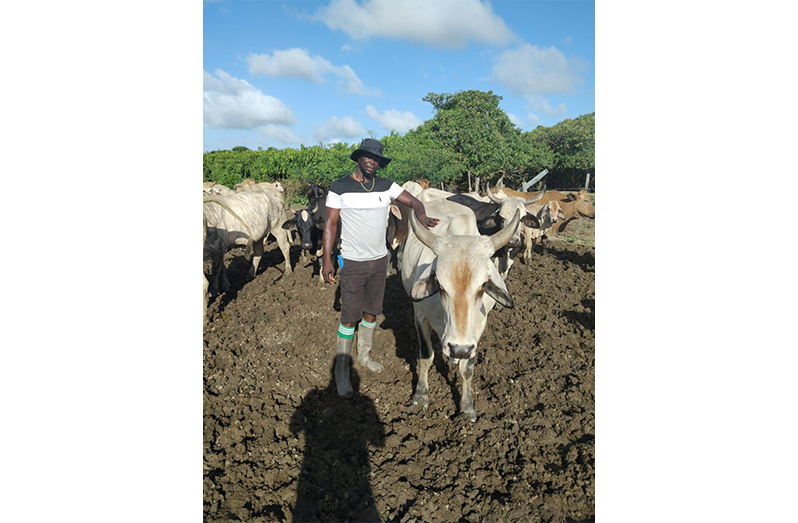
FOR Region Five cattle farmer Sean James, cattle rearing is not merely an occupation; it is a legacy shaped by memory, discipline and deep respect for the land. Raised in the countryside by his grandparents, James learned the fundamentals of animal husbandry at a young age, spending long days grazing cattle, tracking strays, and absorbing lessons from a grandfather widely respected for the quality of his herd. Those formative experiences planted the seeds for a lifelong vocation rooted in tradition, resilience and self-reliance.
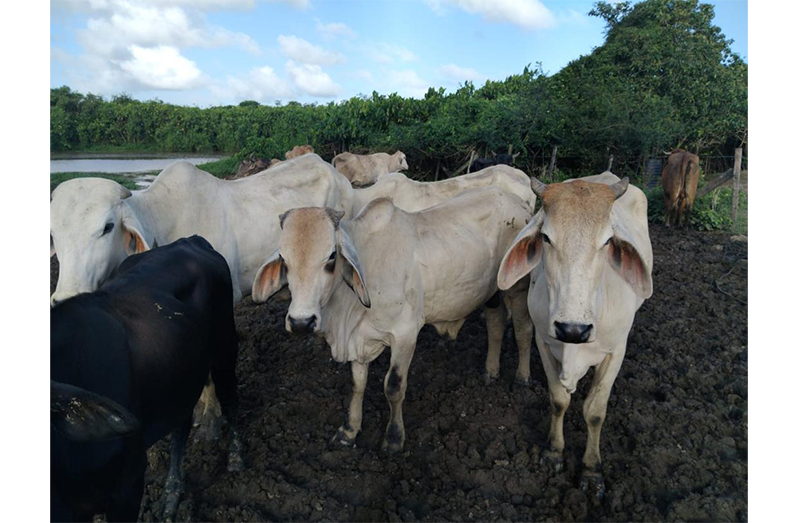
Now 48 and a resident of Number 28 Village, West Coast Berbice, James manages a herd of close to 100 cattle, including Zebu, Brahman, Brown Swiss and Holstein crossbreeds. His farming operation is dual-purpose, supplying milk, beef and breeding animals, and represents his sole source of income. After the passing of his grandparents, James decided to establish his own farm, relocating his animals and steadily building a herd that reflects both inherited knowledge and personal ambition.
While his cattle are currently temporarily pastured along Abary Creek, James is preparing for a major transition. With 50 acres of land secured at Blairmont Village, he plans to relocate his animals to a permanent pasture system that will allow for more structured grazing and improved productivity.
“I believe in animals,” he often says. “I take care of them, and they take care of me.” For James, cattle rearing offers independence, stability and dignity—advantages he values deeply as a father of five.
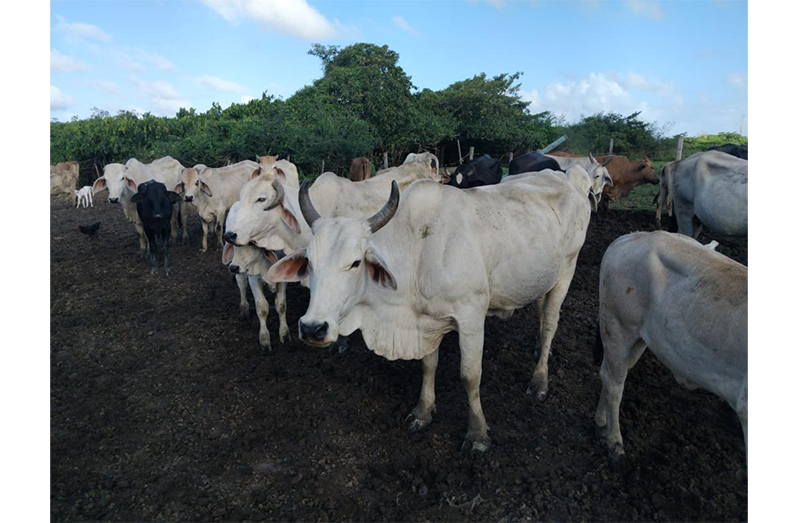
Although firmly grounded in traditional practices, James is a strong advocate for applying modern science and technology to agriculture. He credits much of his progress to the support received from the Ministry of Agriculture (MOA) through the Guyana Livestock Development Authority (GLDA). Through various genetic improvement initiatives, he has accessed superior breeds to improve milk yield, beef quality, and overall herd productivity. He is particularly thankful for the leadership and support of Hon. Zulfikar Mustapha, Minister of Agriculture, and Dr Dwight Walrond, Chief Executive Officer of the GLDA, whose commitment to strengthening livestock development has translated into tangible, farm-level benefits for producers like himself.
Just recently, as part of the Government of Guyana’s strategic national genetic improvement programme implemented through the GLDA, James was among nineteen farmers who each received a Girolando heifer. The Girolando breed, developed in Brazil from a cross between Holstein and Gyr cattle, is particularly well suited to Guyana’s tropical environment, combining heat tolerance, disease resistance and enhanced milk productivity. For James, the introduction of the Girolando represents a significant milestone in his lifelong journey as a dairy farmer. With continued technical guidance from the GLDA, he is eager to commence a more structured breeding programme to strengthen his herd and increase milk yields to meet growing domestic demand.
In managing reproduction on his farm, James employs a blended approach that combines traditional and modern techniques. While he maintains a breeding bull within his herd, he also actively utilises the GLDA’s Artificial Insemination (AI) programme. He believes that AI is a critical tool for maintaining high genetic quality, enabling controlled breeding, access to superior genetic material, and long-term productivity gains. This strategic use of AI, alongside natural breeding, has played an essential role in sustaining the overall performance and resilience of his herd.
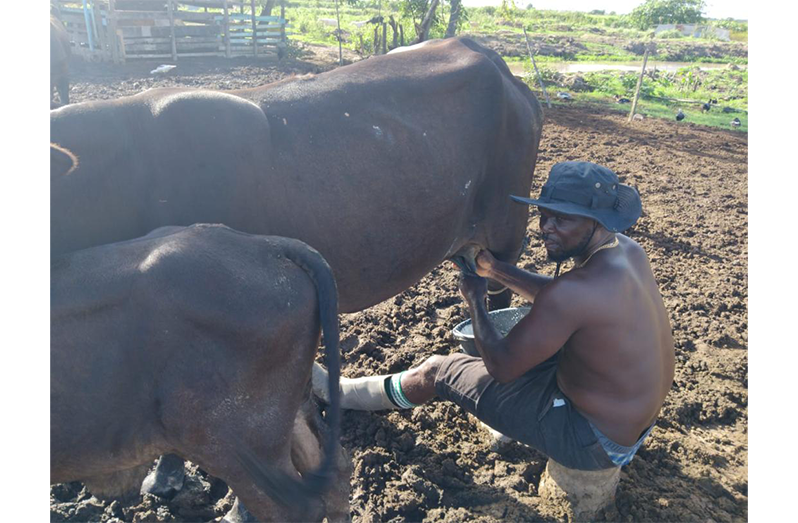
Beyond genetics, James has also benefited from the ‘Clean Milk Initiative’, another key intervention supported through the GLDA. The initiative promotes strict hygienic standards through training, monitoring and evaluation of on-farm production systems. Its implementation has significantly improved the quality and marketability of his milk. Currently, James supplies approximately 12 gallons of fresh milk daily to the Amaya Milk Company at Number 27 Village and anticipates increased production as his herd expands and genetic improvements take effect.
James is grateful for the consistent support of the GLDA Region Five extension team, headed by Dr Joel Dilchand, Senior Veterinarian and Regional Coordinator. Regular on-site visits, proactive disease surveillance and timely veterinary interventions have enabled him to maintain Hazard Analysis and Critical Control Point (HACCP) standards on his farm. Combined with meticulous record-keeping, these measures enhance traceability, strengthen consumer confidence and ensure that milk is produced under environmentally responsible and hygienic conditions.
Looking ahead, James is adamant that farmers like himself are ready to embrace the rapidly evolving livestock sector in Region Five fully. He is confident that the combination of aggressive genetic breeding programmes, improved access to pasturelands, sustained technical assistance and regular farmer training will further transform livestock production in the region. He also views the new abattoir at Onverwagt, West Coast Berbice, as a critical investment that will modernise the livestock value chain, improve food safety standards, reduce post-harvest losses and create new market opportunities for farmers.
For James, these coordinated interventions position Region Five on a clear path to becoming not only the livestock capital of Guyana but also a national model for modern, science-driven and sustainable livestock development. His story reflects a broader transformation underway—one in which traditional knowledge, institutional leadership and technological innovation converge to secure livelihoods, strengthen food security and shape the future of agriculture in Guyana.