
Melvin Singh’s journey into apiculture is rooted in a deeply personal experience that reshaped his understanding of health, nature and trust.
Nearly seven years ago, after surviving pneumonia complicated by misdiagnosis and a near-fatal cardiac arrest, Singh made the conscious decision to eliminate sugar from his diet and rely on honey as a natural alternative.
What he believed to be a wholesome choice, however, soon revealed a troubling truth.
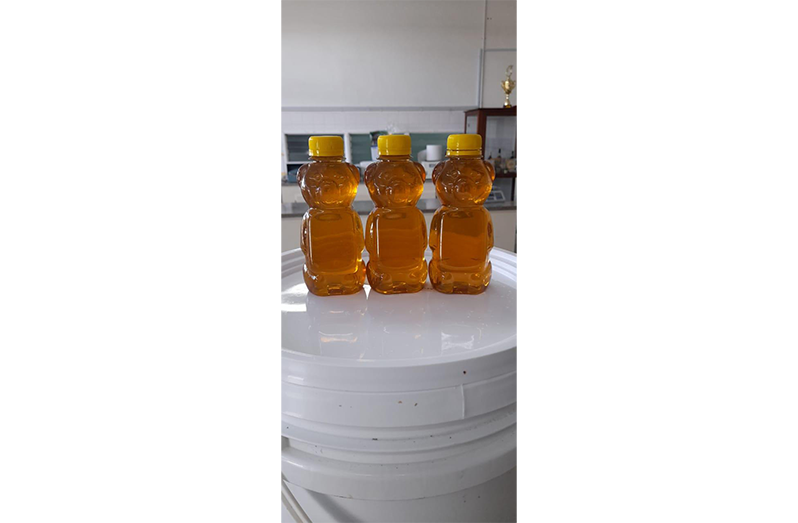
Observing the honey crystallising unnaturally while sitting near sunlight, he realised that the product he had trusted for his recovery was counterfeit.
That discovery became a turning point. Rather than retreating from honey altogether, Singh committed himself to producing the real thing—pure, traceable and responsibly harvested.
Approaching beekeeping with both curiosity and discipline, Singh invested time in extensive research before establishing his apiary.
Determined not to rely solely on conventional methods, he imported “easy-flow” hives from the United States, becoming one of the early adopters of this technology in Guyana.
An easy-flow hive is a modern beekeeping system designed with specially engineered frames that allow honey to be extracted through a tap mechanism.
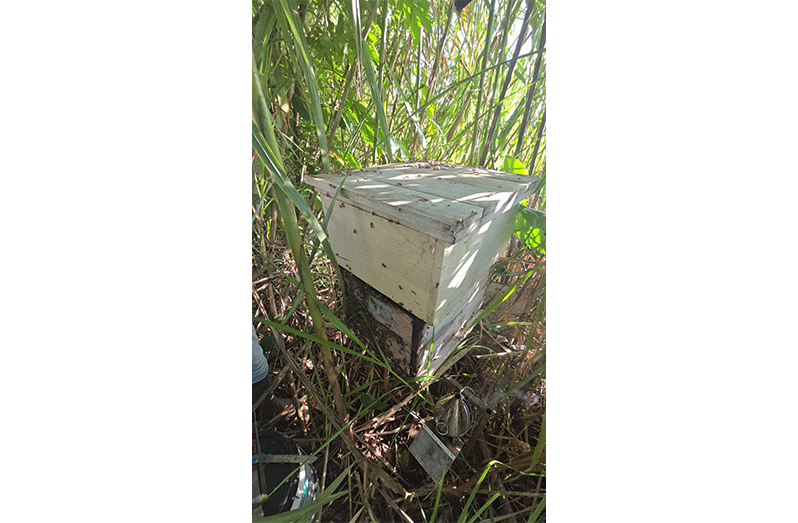
Instead of opening the hive, removing frames, and disturbing the colony, the beekeeper simply turns a lever, opening the honey cells and releasing honey directly into a collection jar.
This process significantly reduces stress on the bees, preserves the integrity of the hive and minimises the risk of contamination.
By allowing bees to remain calm and undisturbed, easy-flow hives encourage consistent foraging and nectar conversion, ultimately improving productivity and colony health.
Singh soon learned, however, that innovation must be adapted to local ecological conditions.
To better suit Africanised bees, he modified the easy-flow frames, adjusting their configuration to accommodate the bees’ natural behaviour and ensure colony stability in Guyana’s tropical environment.
He also operates a double-box system, known as “supers”, where the lower box houses the queen and is never interfered with, while honey is harvested only from the upper sections.
This approach prioritises bee welfare and long-term productivity over short-term gain.
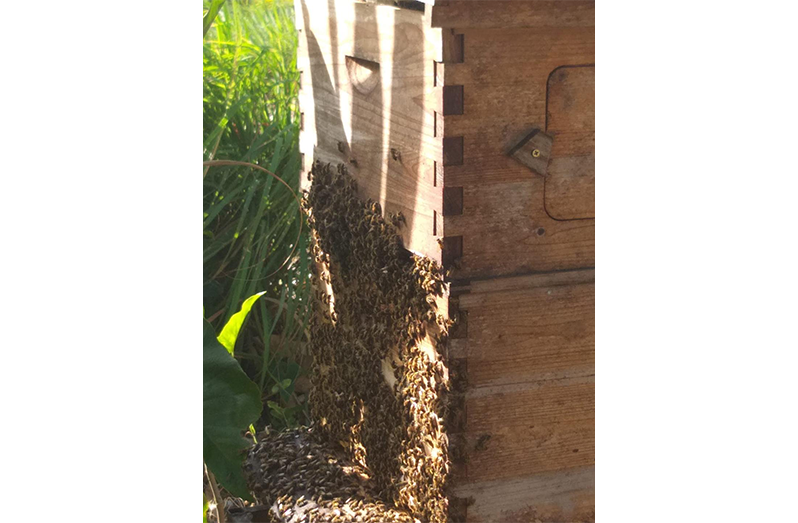
Today, Singh manages 38 super hives at his Parika property on the East Bank Essequibo and another 30 hives at Lower Bonasika along the Essequibo River.
His apiaries are strategically placed among mango, cashew, citrus and other fruit trees, creating a mutually beneficial ecosystem.
The results have been striking. Mango trees that once failed to bear fruit are now producing abundantly, a clear testament to the vital role bees play in pollination and agricultural sustainability.
The honey produced in these locations is equally distinctive, shaped by the diversity of blossoms and prized for its rich flavour, aroma and quality.
Despite these successes, Singh’s work has not been without setbacks. During recent honey flow seasons, his apiaries were vandalised; hives were pushed over and set alight, disrupting production and endangering the bees.
Forced to rebuild boxes just months ago, he nonetheless remains resolute. In 2026, he aims to expand to 150 hives, transitioning from a medium-scale operation to a larger, more resilient enterprise.
Central to Singh’s vision is restoring trust in honey. He is one of the participating beekeepers in the Guyana Food Safety Authority (GFSA), in collaboration with the Guyana Livestock Development Authority (GLDA), National Registration and Traceability System (NRTS) pilot programme being rolled out across several regions.

This digital “hive-to-consumer” platform registers apiculturists, maps apiaries using GPS technology, assigns batch numbers and places QR codes on honey products to allow instant authentication.
Singh believes the initiative is timely and critical in combating counterfeit honey. He describes the QR code system as “a good move toward eliminating fake honey”, noting that it will ensure defaulters take responsibility for the products they place on the market.
For legitimate producers, the system provides long-needed credibility and accountability, while consumers gain confidence by knowing exactly where and how their honey was produced.
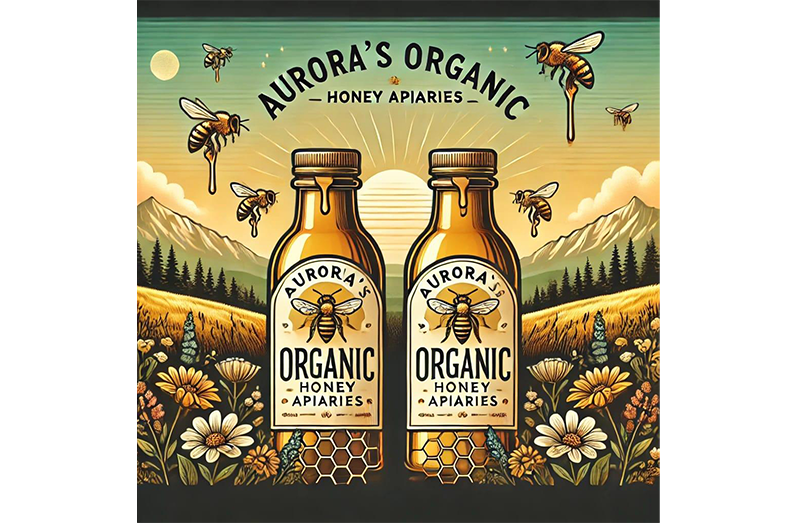
Later this year, Singh plans to officially launch Aurora’s Organic Honey Apiaries, named after his only granddaughter—a brand that reflects both legacy and purpose.
Though he works professionally as a private contractor, beekeeping remains his passion, pursued more out of love than profit.
Still, his ambitions extend beyond Guyana, with long-term plans to access export markets, particularly in the United States.
In an age where food authenticity is increasingly questioned, Melvin Singh’s work demonstrates how innovation, transparency and respect for nature can come together to rebuild trust.