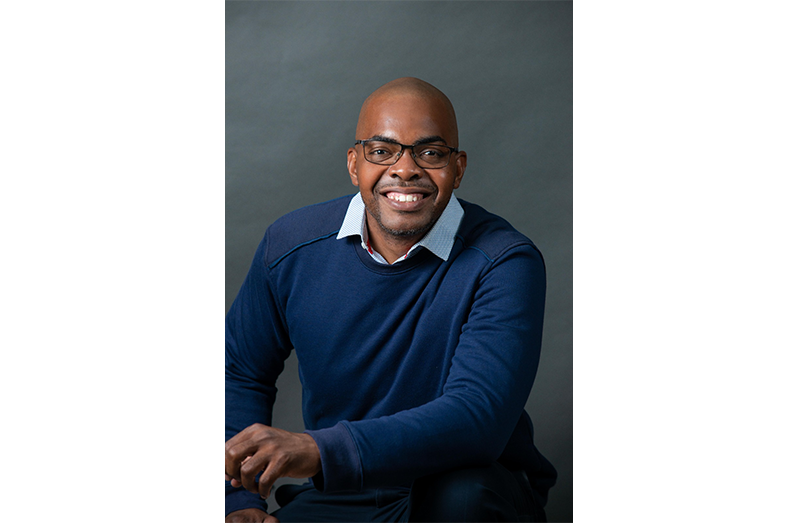
Trinidadian Literary Advocate has archived nearly 1,000 regional writers, and he’s not stopping
WHAT began in 2019 as a personal exercise to improve speaking and presentation skills has grown into a powerful digital archive of Caribbean storytelling. Trinidad and Tobago–based podcaster Kevin George, founder of Tropical Literature Creatives, has interviewed more than 100 authors and featured nearly 1,000 writers of Caribbean heritage, using technology to bridge borders, amplify underrepresented voices and preserve regional literature. In an interview with Pepperpot Magazine this week, George reflected on the challenges and changing trends within Caribbean literature, from self-publishing and marketing hurdles to the growing influence of audiobooks, collaboration and digital tools. Through it all, Tropical Literature Creatives has become a vital space where Caribbean stories are not only told, but sustained for future generations.
Today, Tropical Literature Creatives is a well-known and well-loved podcast among Caribbean literature enthusiasts, but George says the idea was never meant to become a platform of this scale. Instead, it began with a personal goal of sharpening his public speaking abilities. “I promote writers and authors of Caribbean heritage,” George explained. “In terms of how I started, originally it was actually a project that I started to help me with my speaking and presentation skills. I had done a broadcasting course and I wanted experience, so when I wanted to enter the industry, I could say I had a body of work to refer to. I ended up starting a podcast where I would interview authors of Caribbean heritage, and then it kind of grew into something else,” he said. “Where I started off with interviews, I segued into offering additional services that helped promote authors of Caribbean heritage.”
While there are countless platforms for Caribbean creatives today, George said Caribbean literature, in particular, remains underexplored. As an avid reader himself, he noticed a gap in visibility and access for writers from the region. “In terms of choosing Caribbean authors as a topic, I liked reading, but some of the authors I wanted to interview were not accessible,” he explained. “So I pivoted towards authors of Caribbean heritage.” Like many people in the region, George initially believed Caribbean writers were few and far between.
That perception, however, quickly changed. “I thought it would have been one or two authors, but I learned that the fraternity of authors of Caribbean heritage was a lot larger than I initially thought,” he said. “When I approached them, they were eager to be interviewed.” For many of those writers, visibility was a challenge long after their books were published. “A lot of authors, after they had written their books, struggled with marketing,” George noted. “Being interviewed on a podcast was a good platform to get the word out. A symbiotic relationship came out of it.”
Over the years, Tropical Literature Creatives has shared the stories of Caribbean authors from across the globe. In that time, George said he has observed clear shifts and growth within the literary landscape, much of it driven by technology. “Technology has changed the landscape,” he explained. “I can have a Caribbean author living in Japan who has written a book, and a person in Canada of Guyanese heritage reading that book. Technology really is a game changer.” Alongside this increased connectivity is the rise of self-publishing and online distribution, which George said has transformed access to publishing. “Traditionally, publishing was very expensive,” he noted. “But with the advent of self-publishing, it makes publishing a book very economical. A man on the street can now publish a book.”
That shift, he believes, makes conversations around Caribbean literature and writing more important than ever. With the growth of AI tools and online publishing platforms, writers now have more power and more responsibility than at any time before. While the benefits are significant, George urged that there are also reasons for caution. “It is important to have these conversations not just to promote books, but to talk about technology,” he said. “Publishing power and responsibility are now in the hands of the author. Authors are responsible for publishing and marketing their work.” He added that artificial intelligence, in particular, presents both opportunities and risks. “With the advent of AI, authors should be aware of technologies that can make their job easier,” George said. “But these tools are a double-edged sword. They can be beneficial or a detriment if not used properly.”
Despite challenges related to marketing, visibility and emerging technologies, George remains optimistic about the strength and future of Caribbean storytelling. He noted a growing spirit of collaboration among writers across the region and its diaspora, as well as increasing international interest in Caribbean narratives. “One trend that I have seen is collaboration,” he shared. “More material is being produced by Caribbean authors, and I’d like to see that material used as a platform for other industries like television and film. Platforms are always looking for material to adapt.” Another notable shift has been the rise of audiobooks, which George believes could significantly expand the reach of Caribbean literature. “I have also seen a lot of Caribbean books being converted into audiobooks, which is an exciting development,” he said. “Film and television may not be too far behind.”
Looking ahead, George said Tropical Literature Creatives aims to deepen collaboration not only with authors, but also with readers and institutions. Future plans include joint ventures that bring together writers, audiences, corporate partners and educational entities. “We see ourselves collaborating with corporate, business and educational entities to make reading, literature and learning more exciting and accessible,” he said. “Not just in the Caribbean, but beyond. Caribbean writing is exciting, and the genres and stories are intriguing. We see ourselves bridging these groups and elevating the voices of Caribbean authors.”
That vision, George emphasised, very much includes Guyana. “A lot of people may not know that I have featured many Guyanese authors, including Jasmaine Payne, Yolanda T. Marshall and others,” he said. “It is exciting to see what is coming out of Guyana. If what has been coming out so far is of such good content, I cannot wait to see what comes next.” Through Tropical Literature Creatives, George continues to ensure that Caribbean stories, wherever they are written, are heard, valued and preserved, one voice at a time.