
One professional’s quiet leadership at GLDA
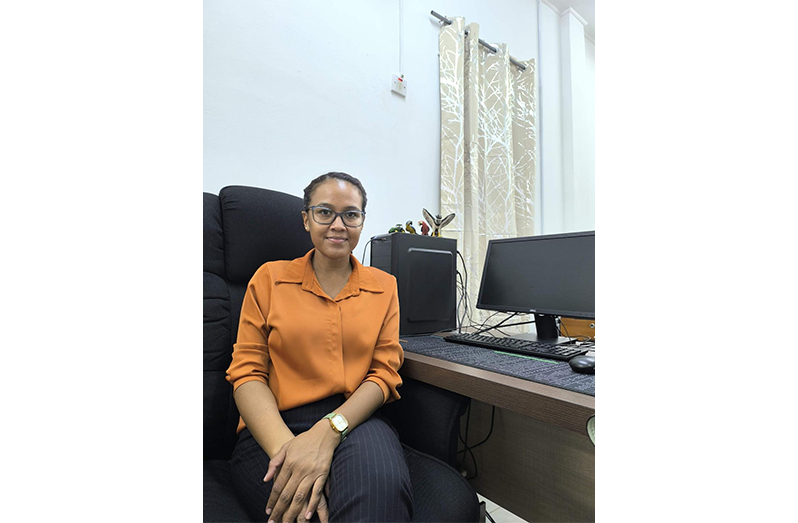
Melissa Boston did not grow up imagining herself at the helm of a national laboratory or overseeing some of the most advanced livestock genetic programmes in Guyana. Raised in the Deep South District of Aishalton Village, Region Nine, her early life was shaped by community values, discipline and a strong tradition of public service. Today, at 34, Boston serves with distinction as Acting Head of the Genetic Improvement Laboratory and Small Ruminant Breeding at the Guyana Livestock Development Authority (GLDA), quietly helping to shape the future of the country’s livestock sector.
Born and raised in the South Rupununi, Boston comes from a humble, hardworking family that instilled in her the importance of always putting her best foot forward. Both of her parents were public servants—her mother a Headteacher at Aishalton Primary School and her father the District Education Officer for the Deep South District. Agriculture was also deeply embedded in her upbringing. Her grandfather was a cattle rancher, and her parents were actively involved in cattle rearing. She recalls childhood stories told by her father about walking long distances across the savannahs in search of cattle that had strayed, stories that reflected resilience, patience and a commitment to rural livelihoods.
Academically driven from an early age, Boston earned the top placement at Aishalton Primary School in the Common Entrance Examination, a success that took her far from home to attend St Rose’s High School in Georgetown. She later pursued agricultural studies at the Guyana School of Agriculture (GSA), where she completed a two-year diploma. Upon graduation, she returned to Region Nine and served her community for three years as a Livestock Extension Assistant with GLDA, gaining valuable field experience and strengthening her resolve to build a career in agriculture.
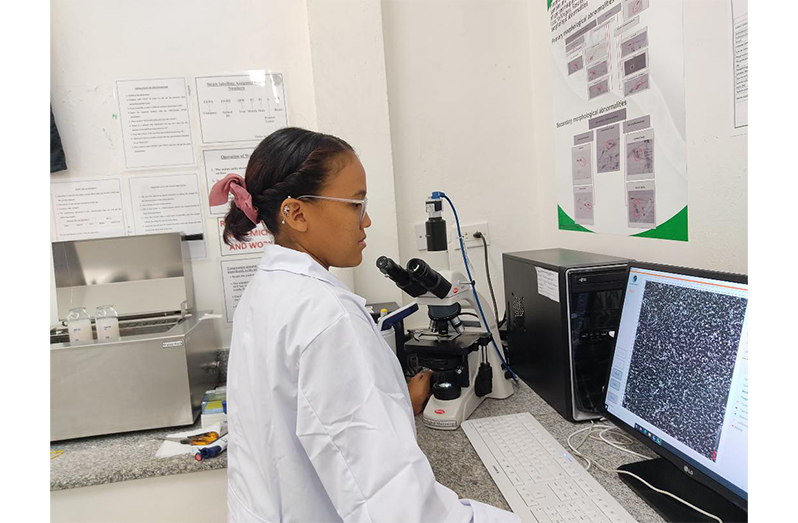
Following the completion of her contract, Boston was awarded a scholarship to study in Russia, where she spent five years deepening her technical knowledge in livestock production, with a particular focus on swine management. She returned to Guyana in 2019 and rejoined GLDA as a Livestock Extension Officer, assigned to the Genetic Improvement Unit (GIU) under the guidance of Dr Renita Lashley.
Although her formal training centred on swine, those responsibilities were already assigned within the unit. Instead, Boston was entrusted with work in the Genetic Improvement Laboratory and Small Ruminant Breeding—areas in which she initially had little hands-on experience. She embraced the challenge wholeheartedly. In retrospect, she believes that her supervisor recognised her potential and capacity to grow into these demanding roles.
Over the past six years, Boston has played a pivotal role in developing and implementing the Quality Management System for the Genetic Improvement Laboratory, a critical framework that ensures accuracy, consistency, and adherence to international best practices in genetic services. This work contributed to her appointment as Acting Head of Department, a responsibility she describes as both humbling and demanding. She is quick to acknowledge the contribution of her team—livestock assistants Akeem Wallerson and Quacy Hector—whose dedication and teamwork, she says, are central to the unit’s effectiveness.
A well-mannered, soft-spoken and introverted individual with a warm smile, Boston leads through quiet confidence and technical competence rather than authority. Beyond laboratory management, she has been closely involved in completing the Embryo Transfer Programme at the Ebini Livestock Station in Region Six and now oversees embryo transfer activities across the coastal regions, alongside her responsibilities for the Genetic Improvement Laboratory.
She is also deeply grateful for the confidence and trust placed in her by GLDA’s management. Boston has expressed particular appreciation for the support of Dr Dwight Walrond, Chief Executive Officer of GLDA, noting that his leadership and confidence in young professionals have created space for growth, innovation and accountability. That institutional trust, she says, has been a powerful motivator, encouraging her to meet the demands of her role and continuously raise standards within the Genetic Improvement Unit.
The laboratory under her supervision is a cornerstone of GLDA’s Genetic Improvement Programme. It is where semen from boars, bulls, bucks and rams is collected, processed and prepared for Artificial Insemination (AI), supporting livestock producers nationwide. The programme is a national initiative aimed at modernising Guyana’s livestock sector by improving herd quality, productivity and food security through advanced reproductive technologies such as AI and Embryo Transfer (ET). By introducing superior breeds, including Brahman, Angus and Nelore, through subsidised services and bull-rotation programmes, GLDA is strengthening farm profitability while contributing to CARICOM’s regional food security goals.
Artificial Insemination has provided farmers with low-cost access to superior genetics. It has expanded successfully from cattle into swine and small ruminants. At the same time, the Embryo Transfer programme further accelerates genetic progress by implanting embryos from elite breeding stock, with plans underway to make up to 1,000 embryos available to farmers across the country.
For Boston, however, the science is inseparable from a deeper personal mission. A proud Indigenous woman, she notes that although she is currently stationed in Region Four, her long-term dream is to return home to Region Nine, serve her community and one day operate her own farm. Her journey from the savannahs of Aishalton to the laboratories shaping Guyana’s agricultural future reflects the transformational power of education, mentorship and institutional confidence.
In Melissa Boston, GLDA has not only a skilled scientist and administrator but also a quiet leader whose work bridges tradition and technology, rural heritage and modern science. Her story stands as a testament to how belief in people, coupled with opportunity and dedication, can drive national development from the ground up.