.jpg)





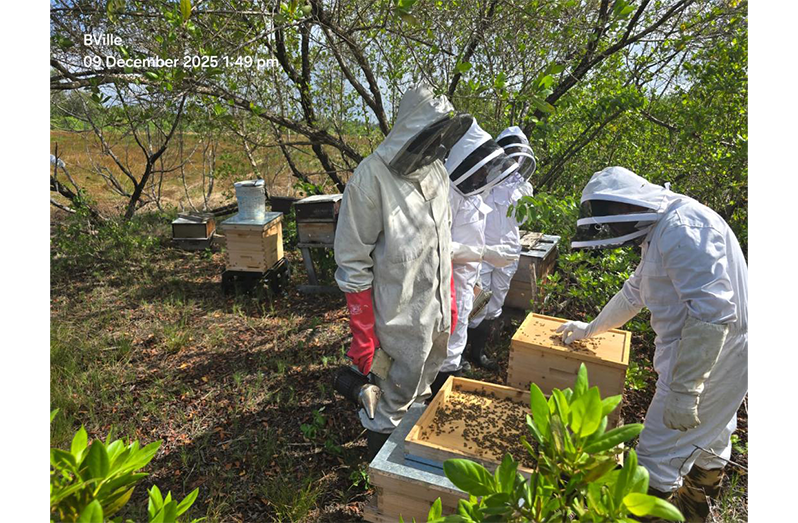
Local beekeepers laud initiative, call for speedy implementation
GUYANA’S apiculture sector is undergoing a profound transformation, as the Guyana Food Safety Authority (GFSA), in collaboration with the Guyana Livestock Development Authority (GLDA), is piloting the National Registration and Traceability System (NRTS) across several regions.
This digital “hive-to-consumer” platform introduces a comprehensive framework for registering apiculturists, mapping apiaries with GPS technology, assigning batch numbers, and placing QR codes on honey to allow instant authentication.
Anchored in the Food Safety Act 2019 and guided by Codex Alimentarius, ISO 22000, CARICOM’s CRS 18:2011 Honey Standard, and CAHFSA’s 2022 Honey Trade Guidelines, the programme establishes a strong regulatory and technological foundation aimed at reducing adulteration, modernising honey production, and strengthening Guyana’s food safety infrastructure.
While the apiculture sector is the initial focus, the platform is envisaged to eventually extend to all agricultural industries, creating a unified digital traceability framework for Guyana’s food production systems.
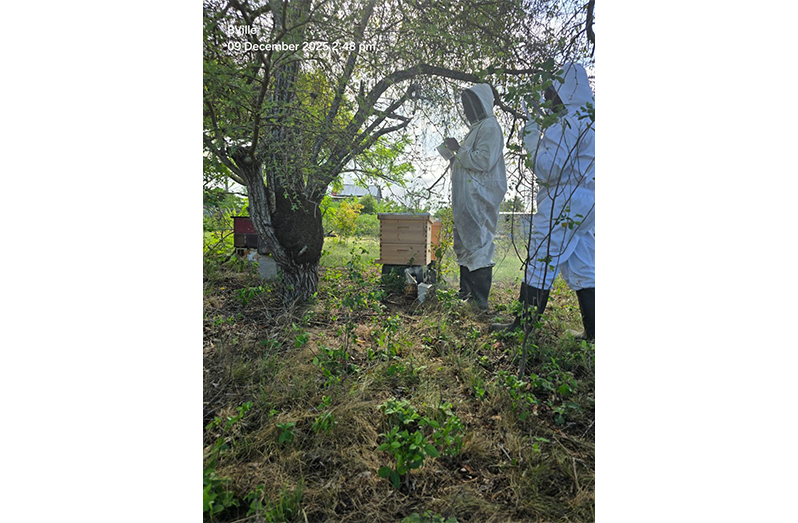
Veteran apiculturist Horace Sinclair of Golden Harvest Apiary, Sandvoort, West Bank Berbice, strongly endorsed the system, describing it as a “welcome intervention in a sector too often challenged by counterfeit honey.”
Sinclair explained that “the creation of a QR code from hive to consumer is a good move toward eliminating fake honey,” emphasising that it will help ensure that “defaulters take responsibility for the product they put out.”
He believes the system provides the credibility and accountability legitimate producers have long needed, especially as consumers continue to express concerns about authenticity in the marketplace.
Fellow beekeeper Shane Fullington, who produces raw, unprocessed “Hive to Bottle” honey, offered equally strong support.
Fullington noted that consumers frequently report being deceived by adulterated honey, stating, “There has been a lot of negative feedback from the consumer level about people getting fake honey on the local market, and this programme will reduce these issues significantly.”
He highlighted the system’s practicality and value: “You can scan the QR code on the beekeeper’s product using your cell phone to see where the hive is, the vegetation type, if the product is authentic, if it is safe for consumption, and whether it has met all the requirements in the food safety standards”.
Fullington added that the system encourages professionalism by ensuring beekeepers maintain hygienic environments and properly document their processes.
Each harvest now receives a unique batch number, making it easier for buyers to trace a bottle of honey “back to the exact origin of the beekeeper”.
Meanwhile, Lyndon Stewart, Vice President of the Guyana Apiculture Society and team leader at Kingdom Apiary, underscored the system’s potential to combat counterfeit products.
Stewart noted, “This initiative to create GPS coordinates for traceability of our honey will assist us in pushing fake honey off the shelf, off the market, and off your tables.”
He added that consumers will finally have evidence-based assurance because “they know it’s going to be good, safe, and fit for human consumption.”
Stewart stressed that genuine beekeepers will benefit from having a digital identity and verifiable location, something counterfeit sellers lack.
“Persons who are not beekeepers and are selling fake honey would not have any location or digital footprint,” he said, making it clear that unverified sellers will be easily identified once the system becomes national policy.
Stewart also emphasised that the system has unexpected public-safety benefits. In recent months, several serious incidents have occurred when construction workers unknowingly disturbed wild colonies.
“Unconsciously, those contractors did not know bees were residing in that remote area,” he explained, noting that at this time of year, “most beehives are filled with honey, and any disturbance, the bees are going to defend their hives.”
Stewart believes that with improved digital mapping, contractors can invite beekeepers to inspect areas before clearing vegetation, reducing the risk of attacks and saving lives.
The NRTS is supported by a strong legal and policy framework led by the Food Safety Act 2019, which mandates registration, traceability, record-keeping, and inspections.
Section 43 requires all food establishments — including apiaries — to be formally registered, while Section 59 obligates producers to maintain full traceability through documented “one step forward, one step back” records.
The National Food Safety Policy further promotes data-driven, risk-based, ICT-enabled oversight. Regionally and internationally, the system aligns with CARICOM’s CRS 18:2011 honey standard, CAHFSA’s trade guidelines, and Codex Alimentarius principles, ensuring Guyana’s honey industry meets global requirements for purity, hygiene, authenticity, and export readiness.
Importantly, this system will complement the current surveillance and laboratory testing being conducted by the GLDA, strengthening the authority’s ability to detect adulteration, verify product quality, and support science-based decision-making. Collectively, these frameworks place Guyana among regional leaders in modern agricultural traceability.
The initiative aligns strongly with the PPP/C Government’s digital transformation agenda under President Dr Mohamed Irfaan Ali.
The Administration has prioritised building a modern, technology-driven economy by expanding ICT infrastructure, digitising government services, strengthening data systems, and integrating smart technologies across agriculture.
The NRTS directly reflects the President’s mandate for a digital state by replacing manual, paper-based record-keeping with real-time digital monitoring, geo-referenced mapping, and smartphone-enabled QR code authentication.
It complements broader efforts to modernise value chains, strengthen data-driven planning, and integrate ICT into every stage of food production.
By embedding the honey industry within a national digital traceability framework, the initiative demonstrates how technology can modernise rural livelihoods while improving transparency and competitiveness.
The traceability system is expected to significantly increase Guyana’s honey trade at local, regional, and international levels.
Locally, supermarkets, processors, and speciality retailers will have greater confidence in sourcing honey that is fully documented and verifiably authentic, opening new domestic market opportunities for registered beekeepers.
Regionally, the system supports compliance with CARICOM’s sanitary certification and traceability standards, enabling Guyana to expand intra-regional trade and reduce barriers linked to food safety concerns.
Internationally, as global markets such as the EU, UK, and North America tighten requirements for traceability, batch origin, purity testing, and residue monitoring, the NRTS positions Guyana to meet these criteria and compete for niche markets that value rainforest honey and ethically sourced products.
Equally significant is the system’s impact on consumer confidence. Traceability is now one of the strongest drivers of trust in global food systems.
With QR-enabled transparency, consumers can verify exactly where their honey comes from, how it was harvested, and whether it meets food safety standards.
This level of openness discourages adulteration and strengthens Guyanese honey’s national brand.
When buyers can view the beekeeper’s ID, the apiary location, batch information, and safety certification with a simple scan, they gain assurance that the product is genuine—an advantage that enhances the sector’s competitive edge.
As the apiculture sector continues to expand — supporting livelihoods, biodiversity, and national food security — the NRTS is reshaping how honey is produced, verified, and traded in Guyana.
Consumers benefit from certainty; producers benefit from legitimacy and expanded markets; regulators benefit from data-driven oversight; and the national economy benefits from an ICT-enabled agricultural transition aligned with the government’s digital agenda.
Beekeepers like Sinclair, Fullington, and Stewart agree that the system protects consumers, strengthens the industry, and safeguards bees.
Their unified endorsement signals that Guyana’s honey value chain is entering a new era defined by transparency, innovation, public trust, and global competitiveness.