.jpg)





MICHAEL Jordan’s compelling new novel, The Girl in the Pink Pleated Skirt, deservedly won the 2022 Guyana Prize for Best Novel. It is a gripping tour de force exploring murder and police corruption set against the gritty backdrop of Guyana. While firmly rooted in the mystery genre, this is not a conventional whodunnit—instead, it probes the darker question: why was the killer able to get away with it? Politics, cronyism, bumbling police work, moral decay, and a callous disregard for human life all weave together to create a chilling portrait of societal breakdown.
More reminiscent of Truman Capote’s In Cold Blood or Norman Mailer’s The Executioner’s Song, Jordan’s novel offers a stark examination of crime and criminality. It diverges sharply from the cosy mysteries of Agatha Christie or the pulp thrillers of Mickey Spillane. This is a dark, unflinching narrative populated by menacing characters engaged in heinous acts, including the brutal murder of women and children.
The novel reads like a journalistic exposé, pulling back the curtain on the seedy underbelly of Guyanese urban life—class hierarchies, police brutality, and a citizenry’s terrifying tolerance for abuses of power. Jordan’s storytelling carries a prescient resonance that reflects both Guyana’s historical and contemporary realities. Inspired by a real murder case, the story centres on the 1978 death of seventeen-year-old Sandra Stephens, found with a broken neck in an alleyway in Tucville.
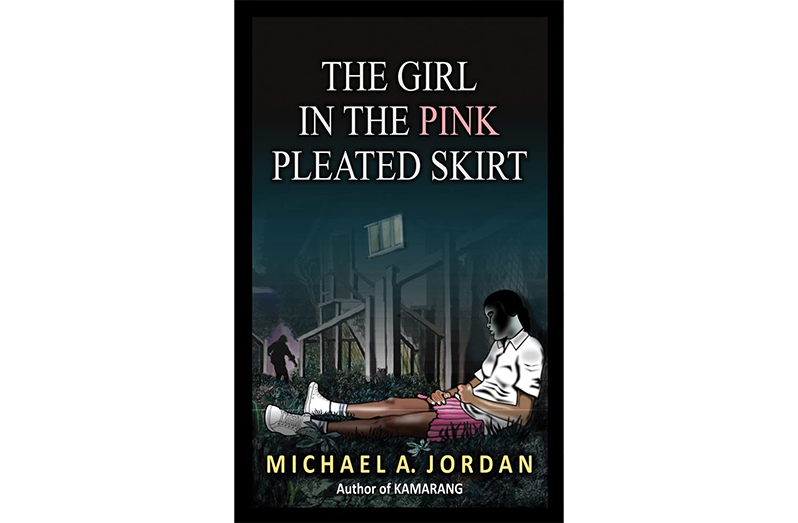
The narrative explores the ripple effects of Sandra’s death across her community—the grief of friends, parents, neighbours, the police tasked with the investigation, and the suspected killer. Most poignantly, it affects fourteen-year-old Daniel McAllister, whose sister was Sandra’s friend. A savant with an uncanny memory for disturbing details, Daniel is haunted by the crime well into adulthood.
Jumping forward thirteen years, Daniel has become a fledgling investigative reporter at the Chronicles, frequently outpaced by rivals but obsessed with reopening Sandra’s case. When a new murder of a young girl echoes the tragedy of 1978, Daniel suspects the work of a serial killer and doggedly pursues leads despite scepticism from his peers. Readers are drawn with him into the darkest corners of the city’s underworld.
Daniel uncovers a horrifying pattern: multiple young girls, raped, murdered, and discarded like refuse in city canals—cases buried under layers of police cover-ups and official silence. His investigation descends into a modern-day Inferno, where he encounters a parade of villains—pimps, rapists, drug dealers—each more depraved than the last. The portrayal of poverty is raw and visceral, haunting the reader like the image of wounded creatures dragging themselves to die unnoticed, mirroring the fate of many of the murdered girls.
Like Jordan’s previous novel, Kamarang—a masterful blend of horror—The Girl in the Pink Pleated Skirt moves at a breakneck pace towards a surprising climax. Yet, unlike Kamarang, this novel favours a lean, direct prose style that prioritises dialogue over lengthy exposition. Gone are the poetic meditations on rain or the lush Guyanese landscape; Jordan’s unadorned prose resembles the terse, hard-hitting style of crime reporters, with Guyanese Creole dialogue that lends authenticity and texture to the narrative.
In many ways, The Girl in the Pink Pleated Skirt is a political novel, its unvarnished critique of government and law enforcement serving as an explicit condemnation. Police responses to the murders are perfunctory—empty assurances of “no stone shall be left unturned” ring hollow against the backdrop of cover-ups and brutality. A particularly harrowing scene depicts police torturing teenagers—binding their limbs and throwing them into a canal—highlighting the brutal abuse of power with chilling casualness. Worse still, these atrocities are met with fearful acquiescence by the citizenry, leaving justice elusive and protests nonexistent.
Despite its darkness, the novel is not without moments of light. A tender love story emerges between Daniel and a woman he meets during his investigation, though it is tempered by realism, avoiding romantic clichés and echoing the “Warm December” trope of bittersweet affection. Jordan’s most vivid realism shines in his descriptions of poverty’s sights, smells, and desperation, which may unsettle some readers but never stray into sentimentality.
The political and social commentary never detracts from the novel’s entertainment value. Witty and suspenseful, it delivers shocks and tremors that keep the reader off-balance from start to finish. The tension mounts as readers cling to every page, eager to learn the fate of the suspected killers and the indomitable Daniel, who repeatedly puts himself in harm’s way.
The Girl in the Pink Pleated Skirt is a powerful, suspenseful novel that commands attention—an illuminating, disturbing, and ultimately unforgettable journey through the dark heart of a society grappling with its demons.