






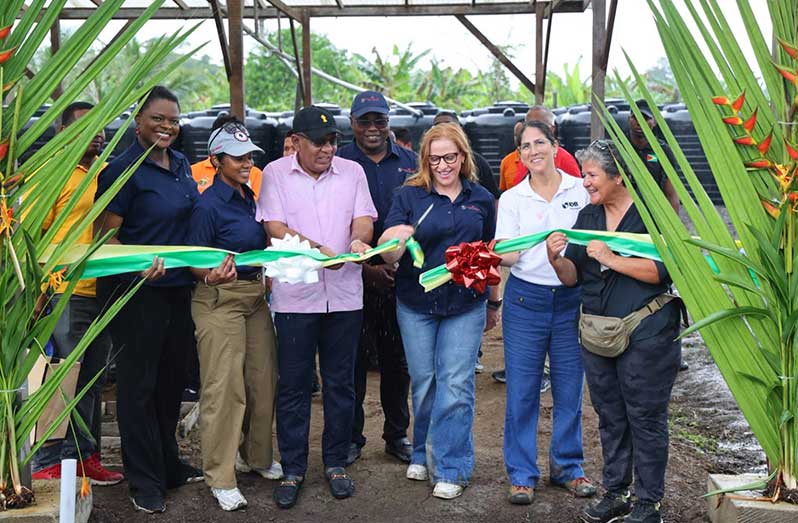
– urges women farmers to pursue agro-processing and value addition
AGRICULTURE Minister Zulfikar Mustapha has pledged to establish an additional shadehouse for women farmers in Region One, as he commissioned two facilities at Morawhanna and Smith Creek to support agricultural production and expand economic opportunities for women in the region.
The commissioning ceremony was held at Smith Creek, where Mustapha highlighted the contribution of women to Guyana’s agricultural development and commended Towatuma – Women Working Together for its role in the initiative.
“Today’s commissioning holds special significance, for it reflects the central role that women continue to play in the development and transformation of our agriculture sector,” the minister said.
Mustapha also encouraged the women to look beyond primary production by exploring value addition and agro-processing, which he said could help them earn more from their produce and retain a greater share of the economic benefits within their communities.
“We want to see the women involved in these facilities moving from production into value addition and agro-processing. We want you to take what you produce here and explore opportunities to package, process, and market those products so that more of the value remains within your communities,” he said.
The minister reaffirmed the government’s commitment to agricultural development in Region One, with the additional shadehouse intended to further support the women’s productive activities.
Shadehouses provide a more controlled environment for growing crops, helping farmers manage growing conditions and protect plants from adverse weather. Such facilities can support more consistent production, particularly in communities where access to agricultural infrastructure presents challenges.
The Morawhanna and Smith Creek projects were established through collaboration among the Greater Guyana Initiative, supported by ExxonMobil Guyana, Hess and CNOOC; the Guyana Marine Conservation Society (GMCS); and the Ministry of Agriculture, through the National Agricultural Research and Extension Institute (NAREI).
The initiative also reflects the work of Annette Arjoon-Martin and the GMCS in promoting women’s empowerment, sustainable agriculture and community development in Region One.
Beyond increasing crop production, the emphasis on processing, packaging and marketing could create opportunities for the women to develop small agricultural enterprises, diversify their income and strengthen local economic activity.
The initiative forms part of broader efforts to expand agricultural opportunities in hinterland and riverine communities, where improved infrastructure, technical support and market access can help farmers develop more sustainable livelihoods.
With the commissioning of the two shadehouses and the pledge of another facility, attention will now turn to how the women can maximise production, develop value-added products and establish reliable markets for their agricultural output.




