






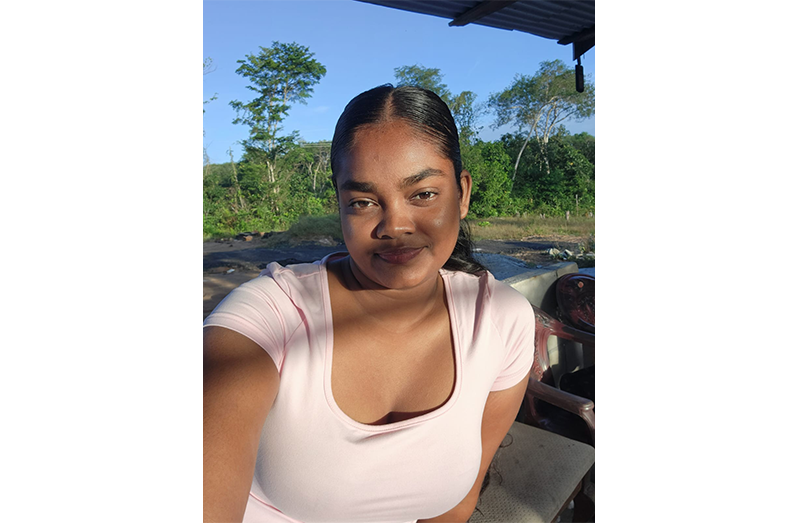
– Female Farmer from West Bank Demerara passionate about her career
AT a time when many young people are pursuing careers in urban industries, agriculture is often overlooked as a pathway to entrepreneurship.
For Shevanie Ragnauth Famey, better known as “VL”, farming is more than an occupation; it is a livelihood built on independence, resilience and a commitment to sustainable food production.
From humble beginnings in the riverine community of Maria’s Lodge, West Bank Demerara, Famey has transformed her lifelong connection to agriculture into a thriving, integrated farming enterprise.
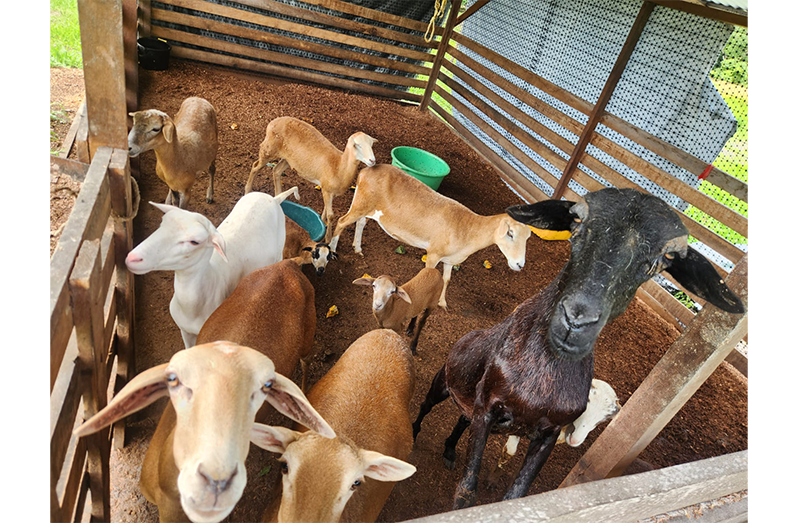
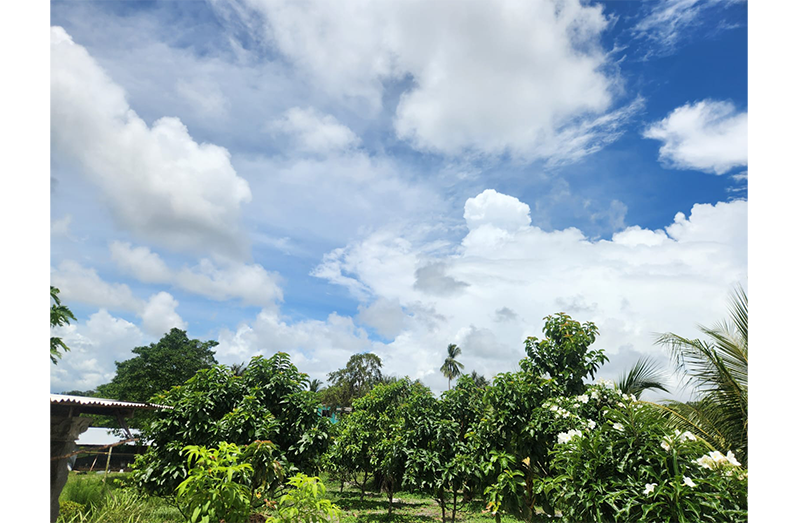
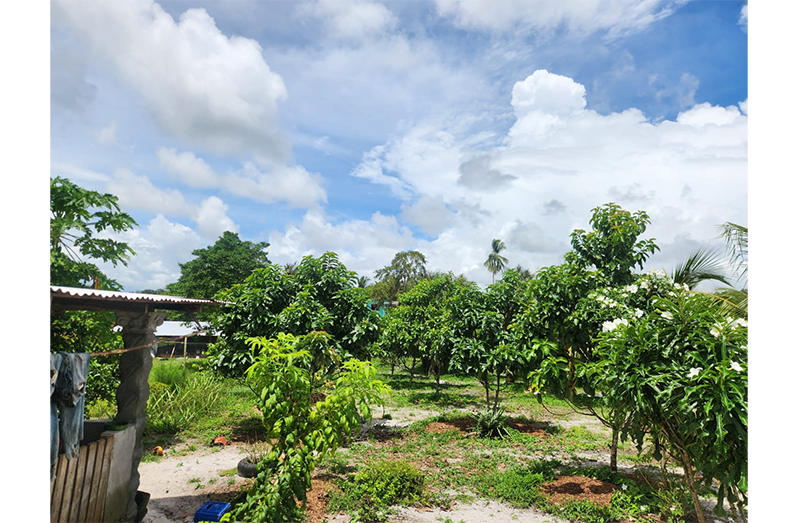
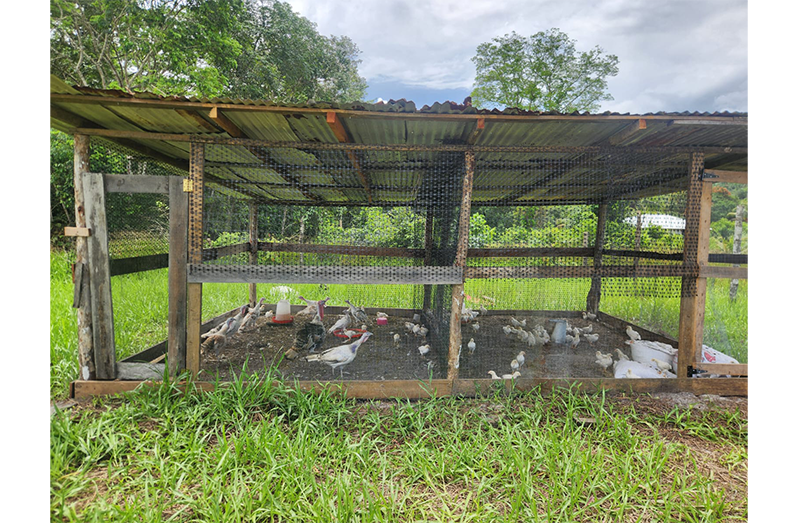
Together with her husband of six years, she manages a five-acre farm at Long Creek, along the Soesdyke-Linden Highway, where they cultivate citrus, pear and other perennial crops while rearing layers, broilers, turkeys and sheep.
Unlike many of her peers, Famey never aspired to work for someone else. Instead, she chose entrepreneurship, believing that farming offered the opportunity to build a meaningful and independent future.
That decision has steadily paid dividends. Five years ago, the couple began their livestock enterprise with just four sheep.
Today, their flock has grown to eleven animals, while their diversified farming system provides multiple income streams and reduces production risks.
For Famey, however, success in agriculture is not measured solely by expansion. She believes farming is a continuous learning process that requires patience, adaptability and sound management.
“Being a farmer isn’t about being perfect,” she said. “It’s about learning every day, improving your practices and making the best use of the knowledge available.”
Her appreciation for agriculture began long before she established her own farm. Raised alongside her three siblings in Maria’s Lodge, she grew up in a farming household where both parents relied on agriculture to support the family.
Her father worked as a foreman at the former Wales Sugar Estate, while her mother managed the household and contributed through farming activities.
Perhaps the resilience that defines Famey’s approach to farming was shaped by those early experiences.
Growing up in the remote riverine community of Maria’s Lodge, the family faced significant infrastructural challenges.
The village lacked electricity, potable water and reliable transportation, forcing residents to depend on boats powered by outboard engines as their primary means of travel.
Transporting produce required crossing the Demerara River to Supply Koker before continuing by public transportation to the market, an expensive and time-consuming process that eventually prompted the family to relocate to Hillfoot, along the Soesdyke-Linden Highway.
Those experiences instilled in her the perseverance that continues to guide her farming journey today.
Although she inherited valuable practical knowledge from her parents, Famey believes modern agriculture requires continuous education.
A graduate of Alpine Secondary School, where she excelled in Agricultural Science at the Caribbean Secondary Education Certificate (CSEC) examinations, she continues to invest in expanding her technical knowledge through farmer-training programmes.
She credits the Guyana Livestock Development Authority (GLDA) with playing a pivotal role in strengthening her farming operation. According to Famey, the regular technical support provided by GLDA veterinarian Dr Nauth and livestock officer Mr Bhagwandin has enabled her to combine traditional farming practices with improved production techniques.
“The extension support has made a significant difference,” she explained. “Every visit helps us improve how we manage our animals and our farm.”
She encourages more farmers to participate in GLDA’s training programmes, noting that access to technical knowledge is essential for improving productivity, animal health and farm profitability.
Despite the progress achieved, farming along the Soesdyke-Linden Highway remains challenging. Although nearby creeks provide water for livestock and irrigation, the absence of electricity limits opportunities for mechanisation and value-added production, including cold storage.
Nevertheless, Famey remains optimistic.
“We work with what we have while hoping conditions continue to improve,” she said.
Environmental stewardship is another defining feature of her farming philosophy. She operates an integrated production system in which livestock and crop enterprises complement one another. Livestock manure is recycled as organic fertiliser for her perennial crops, reducing dependence on synthetic fertilisers while improving soil health.
She is equally committed to responsible animal-health management. Veterinary medicines are administered only when necessary and under the guidance of GLDA veterinarian Dr Nauth, and recommended withdrawal periods are strictly observed before livestock are marketed, ensuring both food safety and consumer confidence.
Looking ahead, Famey intends to expand her layer enterprise to meet the growing demand for locally produced eggs. She hopes to access financing through the Guyana Development Bank to increase production capacity and invest in additional infrastructure.
Improving the genetic quality of her sheep flock is another priority. She is hopeful of acquiring an improved breeding ram, particularly a Barbados Black Belly ram, through the Guyana Livestock Development Authority’s genetic-improvement programme to strengthen productivity and enhance flock performance.
While acknowledging that farming may not be regarded as the most attractive career by many millennials, Famey believes the profession offers rewards that extend beyond financial gain.
“Farming is challenging, but it gives you independence,” she said. “You’re producing healthy food for your family and your community and contributing to national food security.”
She also believes responsible farming requires balancing profitability with affordability.
“As farmers, we have a responsibility to manage production costs so consumers can continue accessing safe, high-quality local food at affordable prices.”
For Famey, agriculture is more than a business; it is a long-term investment in Guyana’s future. Her journey demonstrates how determination, continuous learning, sustainable farming practices and effective extension services can transform modest beginnings into a resilient agricultural enterprise.
As Guyana advances its food-security agenda, young farmers like Shevanie “VL” Famey exemplify the innovation, commitment and entrepreneurial spirit needed to strengthen the country’s agricultural sector.
Her story is a reminder that, while farming demands perseverance and hard work, it remains one of the most rewarding avenues for building livelihoods, supporting communities and contributing to national development.



