

NESTLED in the heart of the Rupununi savannahs, where the majestic Kanuku Mountains overlook endless grasslands, and the Rupununi River winds through one of Guyana’s most breathtaking landscapes, the Indigenous village of Yupukari is quietly writing a new chapter in community development.
Long celebrated for its rich Indigenous culture, wildlife conservation and ecotourism, the village is now gaining recognition for another reason: its determination to become a model of sustainable livestock production under the leadership of Toshao Russian Dorrick.
For Dorrick, agriculture is more than an occupation; it is the pathway to economic empowerment, food security and community resilience.
His vision is to transform Yupukari into a thriving livestock-producing community that creates employment, improves household incomes and secures a brighter future for more than 1,700 residents living in Yupukari and its three satellite villages.
Predominantly inhabited by the Macushi, Wapishana and Arawak peoples, the community has long depended on farming, cattle rearing, fishing and hunting to sustain its livelihoods.
Today, however, those traditional practices are being strengthened through improved livestock management, modern agricultural techniques and strategic government investment.
The significance of Yupukari’s transformation is amplified by the rich livestock heritage of the Rupununi savannahs, long regarded as the cradle of Guyana’s cattle industry.
For generations, the region has produced some of the country’s highest-quality beef cattle, with ranching serving as the economic backbone of many Indigenous and farming communities.
While the sector experienced periods of decline due to prolonged droughts, inadequate infrastructure and shifting economic conditions, it is now undergoing a strong resurgence.
Under the leadership of President Dr Irfaan Ali and the PPP/C Government, strategic investments in agriculture have revitalised the livestock industry through improved infrastructure, expanded veterinary and extension services, enhanced breeding programmes and greater support for farmers.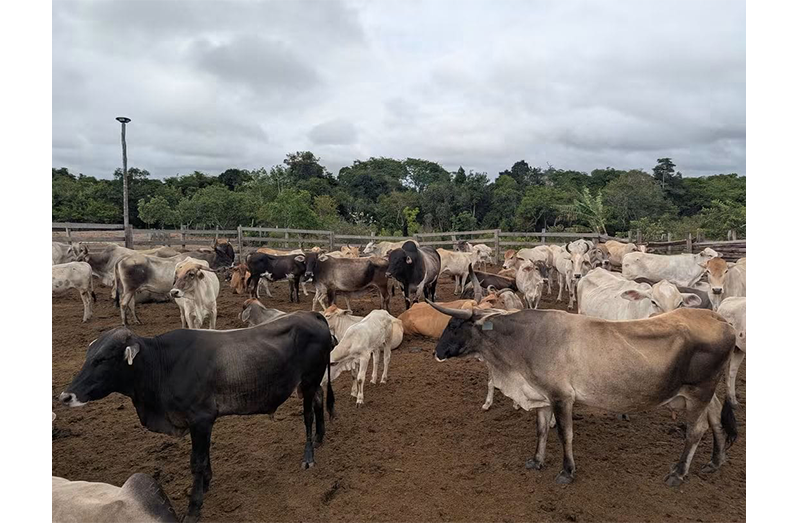
As a result, the Rupununi is steadily reclaiming its position as one of Guyana’s premier cattle-producing regions, contributing significantly to national food security, rural economic growth and the country’s broader agricultural-development agenda.
Recognising the enormous potential of Region Nine, the Ministry of Agriculture, through the Guyana Livestock Development Authority (GLDA), has significantly expanded its support services throughout the region.
Farmers now benefit from enhanced veterinary care, livestock extension services, artificial-insemination programmes, disease surveillance, pasture-development advice and technical training.
These interventions are improving livestock productivity while equipping communities like Yupukari with the knowledge and resources required to develop commercially viable and climate-resilient livestock enterprises.
At the centre of Yupukari’s own agricultural success story is its community cattle ranch, a project that has become a symbol of resilience, vision and the long-term benefits of strategic government investment.
The ranch was established approximately 22 years ago through a Presidential Grant awarded during the administration of then President, now Vice President, Dr Bharrat Jagdeo, together with Her Excellency Carolyn Rodrigues, Guyana’s first female Minister of Amerindian Affairs. Supported through government hinterland-development initiatives and the Low Carbon Development Strategy (LCDS), the investment enabled the Village Council to establish a community-owned livestock enterprise capable of generating income and creating employment opportunities.
More than two decades later, that investment continues to transform lives. What began as a modest community project has evolved into one of Yupukari’s most valuable communal assets, providing employment, supporting community activities and supplying beef for village functions.
The ranch stands as tangible evidence of how visionary government policies, when combined with committed local leadership, can create sustainable economic opportunities for Indigenous communities.
Building upon this foundation, Dorrick is now spearheading an ambitious expansion programme designed to transform the community ranch into one of the largest Indigenous-managed livestock operations in the Rupununi.
The village currently manages approximately 107 heads of cattle, but its long-term objective is to increase the herd to nearly 2,000 animals.
Such an expansion, he believes, will substantially increase beef and dairy production while creating employment, generating income and strengthening the community’s contribution to Guyana’s national food-security agenda.
However, Dorrick is quick to emphasise that sustainable livestock development is not simply about increasing cattle numbers.
Instead, the community is pursuing a carefully planned strategy centred on improving livestock genetics, strengthening animal husbandry and enhancing climate resilience.
He explained that his community is working towards a strategic and phased approach to livestock development.
“Priority will be given to developing improved pastures, strengthening herd-management systems and constructing modern livestock-handling facilities. By putting these essential foundations in place first, the village will be well positioned to expand its cattle population sustainably while maintaining high standards of animal welfare, productivity and environmental stewardship.”
The decision to introduce Brazilian breeding animals reflects the community’s commitment to improving productivity rather than merely increasing herd size.
Given the proximity to Brazil and the availability of superior genetics, incorporating improved breeding stock offers significant opportunities to strengthen livestock production. At the same time, Dorrick is adamant that these improvements must never compromise Guyana’s internationally recognised animal-health standards.
Dorrick emphasised that the people of Yupukari remain firmly committed to complying with the legal animal-importation protocols administered by the Guyana Livestock Development Authority.
He stressed that every breeding animal must undergo the Authority’s mandatory inspection, quarantine and certification process before being introduced into the community.
“We are committed to doing things the right way,” he explained. “Every breeding animal that comes into Guyana should first be properly inspected, quarantined and certified by the GLDA before entering our community. Those procedures are essential because they protect our livestock, our farmers and the entire country from dangerous animal diseases.”
According to Dorrick, maintaining strict biosecurity is everyone’s responsibility. He believes that diseases introduced through uncontrolled animal movements could devastate livestock production throughout Guyana, threatening farmers’ livelihoods, food security and future export opportunities.
For that reason, he commended the GLDA for maintaining rigorous veterinary inspections, quarantine facilities and certification procedures, describing them as indispensable safeguards for the country’s growing livestock industry.
The community’s livestock-expansion programme also reflects a growing awareness that climate resilience is now fundamental to agricultural success.
With forecasts indicating the possible return of El Niño conditions, Yupukari has prioritised pasture development, improved water management and enhanced livestock nutrition before the onset of the dry season.
“We don’t want our animals eating dry grass,” Dorrick explained. “We are putting things in place to ensure they receive proper nutrition through improved pasture development and supplementary feeding.”
His comments reflect a broader philosophy of preparedness. By investing in adequate pastures, reliable water sources and improved feeding systems, the village is positioning itself to withstand increasingly unpredictable climatic conditions while maintaining healthy and productive livestock.
Combined with superior genetics and improved animal husbandry, these measures will allow the community to sustain livestock production despite the challenges posed by prolonged droughts and changing weather patterns.
Central to achieving this vision is the strategic use of funds received under Guyana’s Low Carbon Development Strategy.
Rather than viewing the funding as short-term assistance, the Village Council has deliberately invested in productive assets that will strengthen agriculture over the long term.
Pasture development, improved breeding programmes, livestock infrastructure and capacity-building are all being prioritised to ensure that the ranch remains economically viable for future generations.
For Dorrick, these investments represent more than agricultural development; they are investments in economic independence.
“The opportunities are there,” he said confidently. “Guyana is growing rapidly, and the demand for quality beef and dairy products continues to increase. We want Yupukari to be ready to supply those markets. By using our LCDS resources wisely, we are building a sustainable livestock-production system that creates jobs, strengthens food security and generates income for our people.”
The village’s agricultural ambitions extend beyond cattle production. Through support from the Hinterland Sustainable Agriculture Development Programme, Yupukari is also preparing to establish a community poultry project that will diversify food production, create additional employment opportunities and reduce dependence on imported poultry products entering the hinterland.
Equally important to the village’s progress has been the Government’s commitment to free education and expanded scholarship opportunities.
Increased access to tertiary education has enabled young people from remote Indigenous communities to acquire specialised agricultural training before returning home to contribute to local development.
One outstanding example is Wendy Lawrence, who graduated from the Guyana School of Agriculture in 2025. Today, she serves as Yupukari’s Crop Extension Officer, working alongside farmers and Community Service Officers to promote Good Agricultural Practices and strengthen agricultural productivity throughout the community.
Her success has inspired Dorrick to encourage more young people to pursue studies in livestock development and agriculture.
“Education is one of the greatest investments we can make,” he said. “We want more of our young people to attend the Guyana School of Agriculture and return home with the skills needed to develop our livestock sector.”
Throughout this transformation, the Guyana Livestock Development Authority has remained one of the community’s strongest partners. Dorrick praised the Region Nine Extension Team, headed by Dr Halley, for consistently providing veterinary services, livestock advisory support, artificial insemination services, and guidance on animal health and pasture management.
“The GLDA team is always willing to assist whenever we need support,” Dorrick said. “Their advice has helped us improve our livestock management and gives us confidence that we are moving in the right direction.”
The impact of these collective efforts is already evident. Each year, the community ranch provides beef for village activities, while many individual farmers market cattle throughout the Rupununi.
The village also contributes beef and milk to the Government’s school-feeding programme, ensuring that local children benefit from nutritious, locally produced food.
This commitment to strengthening Indigenous agriculture was further demonstrated during the National Toshaos Council (NTC) Conference, held at the Arthur Chung Conference Centre in Georgetown from July 20 to 24, 2026.
During the conference, Dorrick advocated greater investment in livestock development across hinterland communities, including expanded breeding programmes, pasture development, infrastructure and technical support.
He expressed pride that Yupukari is moving more aggressively towards achieving its own food security while reducing dependence on external sources of basic food supplies.
Ultimately, the story unfolding in Yupukari is about much more than cattle production. Although the community continues to enjoy international recognition for its black caiman research, river-turtle conservation, butterfly farming and ecotourism initiatives, it is also becoming a powerful example of how Indigenous leadership, strategic government policies and community determination can drive sustainable development.
Under the stewardship of Toshao Russian Dorrick, Yupukari is demonstrating that when visionary local leadership is matched by sound public policy, technical support and educational opportunity, even the most remote communities can become engines of agricultural innovation and economic growth.
The strengthening of the community ranch is therefore far more than a livestock success story; it is a testament to the transformative power of partnership, perseverance and purposeful investment.
As Guyana advances its national food-security agenda, Yupukari stands as compelling evidence that the future of the country’s livestock industry will be built not only in its cities but across the vast savannahs where Indigenous communities continue to lead the way.