






–Judge says, weighs previous actions, charges in Mohamed’s bail challenge
–as ruling expected today following hours of arguments in High Court
JUSTICE Priscilla Chandra-Hanif on Tuesday drew attention to how an accused person’s previous criminal charges should be weighed when determining whether there is a likelihood of further offending, as she heard arguments in Opposition Leader Azruddin Mohamed’s challenge to the refusal of bail.
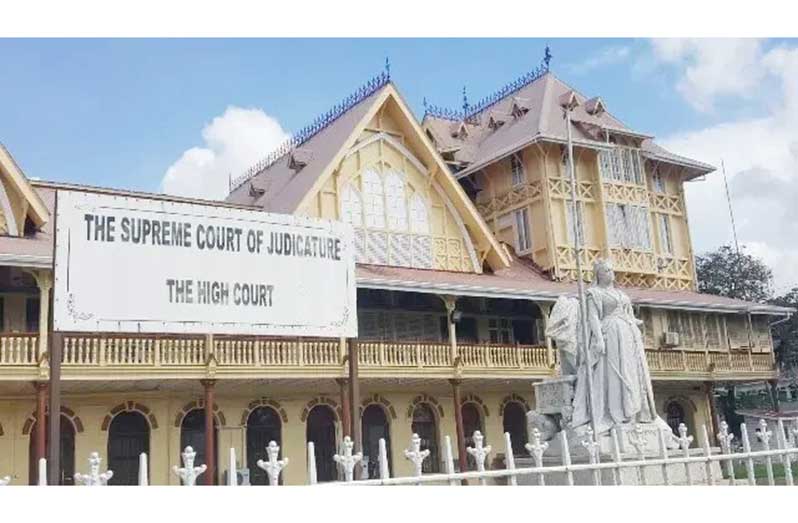
The substantive judicial review hearing was held at the Demerara High Court, where Mohamed is seeking to have Magistrate Abigail Gibbs’ decision to remand him on a cybercrime charge quashed.
During the proceedings, Attorney-at-Law Roysdale Forde, SC, who is representing Mohamed, argued that the magistrate had erred by relying on the existence of other criminal charges without sufficient evidence to establish that his client posed a genuine risk of committing further offences if granted bail.
Forde submitted that the Bail Act requires the prosecution to establish substantial grounds for believing that an accused is likely to commit another offence while on bail, contending that pending charges alone cannot satisfy that requirement.
However, Justice Chandra-Hanif questioned whether an accused person’s previous conduct could be excluded from an assessment of the likelihood of future offending.
The judge said a court must consider an individual’s history, including the nature and number of previous charges, when determining whether there is a risk of further offences.
She also questioned how multiple charges should be considered collectively, particularly whether their cumulative effect could eventually provide sufficient grounds for a magistrate to conclude that an accused person poses a risk.
“The probability of the future has to be informed by the past. So, I’m looking at past behaviour, past charges, if possible, what type of charges, the nature of the charges and the number of charges.”
In response, Forde acknowledged that past circumstances could inform an assessment of future conduct but maintained that the prosecution must still provide credible evidence to establish the likelihood of further offending.
Attorney General Anil Nandlall, SC, argued against reviewing the refusal of bail for Mohamed, telling the court that judicial review is not an appeal on the merits of a decision.
The Attorney General also adopted submissions previously made by King’s Counsel Darshan Ramdhani, who represents the Director of Public Prosecutions.
Nandlall in his submission noted that the court’s role was limited to determining whether the magistrate acted unlawfully, irrationally or with procedural impropriety.
He argued that refusing bail was an order the magistrate was authorised to make, and said the decision should not be overturned simply because a reviewing judge might have reached a different conclusion.
A ruling is expected at 11am today, bringing the hearing to a close after sharp arguments over whether the magistrate properly assessed the risk of further offending and the seriousness of the cybercrime charge.
The dispute centred in part on a passage suggesting that several matters involving Mohamed, considered together, showed a pattern that created substantial grounds to believe he might reoffend.
The judicial review proceedings were filed by Mohamed’s mother, Bonita Mohamed, challenging the magistrate’s October 30 decision to remand him.
Mohamed was arrested and charged in connection with the alleged unauthorised access to and transfer of footage from the Guyana Police Force’s Safe Country surveillance system.




