
I CAN recall watching or reading headlines when I was younger and being distraught. There were certain past events that made me very worried about the state of the world, peace, and security. These crises disrupted our everyday patterns of behaviour; people felt an urge to be at the forefront of protests, and we called for immediate action to end the crises. I cannot help but now reflect on how different it feels to experience crises these days. It feels as if people are now desensitised to conflict. While the content of this column reflects my personal and professional opinions and insights, I developed it through many interactions and consensus with people while studying peace abroad. Many of us feel as if, over time, priorities shifted, and while we are aware of ongoing conflicts or crises, it is only a thought that may or may not linger at the back of our minds, and it may not materialise into anything more.
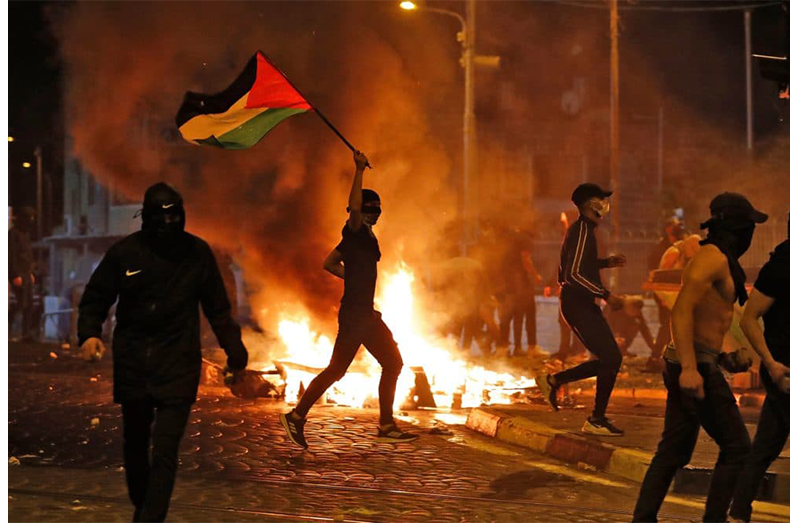
Do we scroll past these headlines or news because we lack empathy? Or is it a protective response that occurs when overwhelmed and anxious? Is it because of familiarity with the many crises we are currently faced with across the world? Or is it our inability to keep up with all that is happening? Unfortunately, it feels as though we no longer experience shock at things that can go wrong across the world. In the face of wars, humanitarian crises, environmental degradation, and even crime, many people find ways to adapt to these new realities. When I examine communities that live in a constant state of crisis or conflict, I can’t help but reflect on how sometimes those people have no other choice but to continue living their lives. They do not have the time or even energy to react in shock or disbelief. They have to continue living within their routines as a means of survival.
Many of the “crises” we see today are ongoing. They are not one-off incidents that only occur in a certain country during a specific period. They are often structural challenges and systems that reproduce and expand exploitation or inequalities. Take, for instance, the current state of Palestine. If you’ve been listening to the news or media for quite some time now, you will know that the events of recent times are only the tipping point of an ongoing conflict that has been occurring for decades prior. Some might even argue that these situations eventually stop being a priority for aid, assistance, and protest. Over time, it simply becomes an expected condition for the country, community, or the people, and this can be a very dangerous shift.
There is a “normalisation” that occurs where proximity does not exist. If you aren’t living close to or within the circle of the environment where a crisis occurs, there is often a disconnect. I came to that realisation after studying peace and being part of an environment that encouraged us, as students, to discuss these topics daily. Before studying peace, a conflict might be another headline to choose to read or scroll past.
How, then, can we focus our attention on responding to and acknowledging conflict or crisis while also trying to strike a balance to protect our own well-being? What happens when the emergency never ends? When does displacement last for years? When does recovery never fully arrive? These situations are shaped by power, access, and inequality. In many cases, the burden of adapting to prolonged crises falls unevenly.
Normalisation does not mean acceptance in the moral sense. It means adjustment. It means learning how to live with conditions that should, by any standard, be unacceptable. And while adaptation is necessary for survival, it should not become the endpoint.
As I close this week’s column, I want to remind you all that crisis and conflict were never meant to feel “normal.” We should become comfortable with feeling uncomfortable at the current state of our world, and, personally, I fuel those feelings through my advocacy and writing. If we lean too far into adaptability, we risk losing the sense of urgency and responsibility required to address conflict and crises. The challenge, then, is not only to respond to the crises of the world, but to refuse to become comfortable with them.