ELECTRICITY is a form of energy that powers the majority of our modern technology. It is a necessity for many to live, work, or even study.
I believe that where it is readily available, it can be considered a privilege, because many people around the world live without energy. This is completely different from people wanting to live intentionally “off grid”, without access to electricity.
From air conditioning and heating to refrigeration, charging our mobile devices, joining online classes, or cooking in an air fryer, it all depends on electricity. These can all be considered “simple luxuries” most of us enjoy, but not everyone has access to them.
In particular, people living in rural areas or in poverty/low-income areas are unable to access electricity.
As such, there is a gap that creates inequality in accessing electricity.
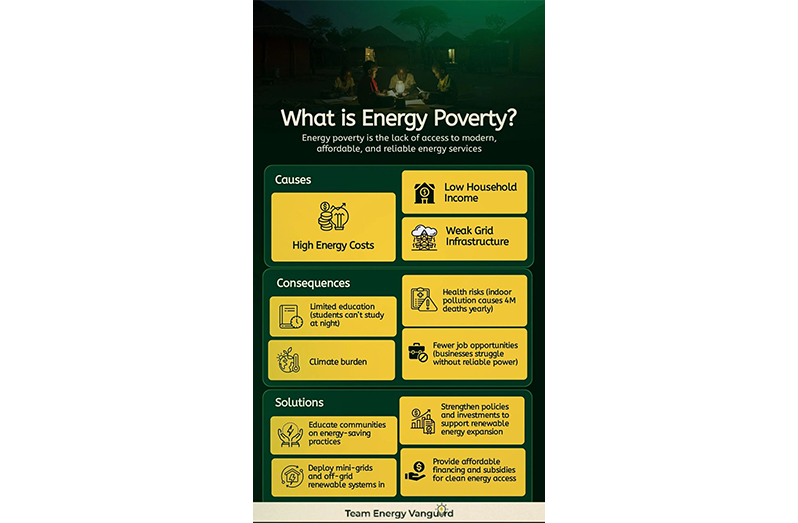
The term “energy poverty” refers to the inability to access or afford adequate energy for daily living.
I want to highlight an important point on how expensive electricity can be.
The global average for household electricity is around $0.18 per kWh. The total cost per month can range from 15 USD to hundreds or thousands of USD.
Energy poverty does not only include people without full access to electricity. It also includes people with limited access who need to constantly conserve and save.
This includes people using unsafe fuels to cook, constant blackouts, the inability to own certain basic electrical appliances, and students purchasing dimmed light bulbs, even though they need brighter ones to study.
While this phenomenon is often observed in developing countries in the Global South, it exists almost everywhere on Earth. Where there is a large financial gap, there is most likely energy poverty.
Many low-income families in developed countries also face difficulties due to limited access to energy.
In my experience abroad in developed countries, I observed families unable to turn on their indoor heating because of the cost, even when their house was freezing cold.
Some local and small businesses even close during the wintertime in some countries because they cannot afford heating bills.
The inability to access stable electricity output deeply affects opportunities and productivity.
Unfortunately, children without stable electricity might experience many difficulties with their schoolwork.
It can affect public offices and the delivery of public services such as healthcare or infrastructural maintenance.
Energy poverty quietly reinforces wider cycles of poverty.
This issue is further exacerbated by climate change.
Many governments and international institutions are advocating for a transition to renewable, cleaner energy.
I acknowledge and agree that it is necessary for environmental sustainability. However, a suggestion of conversion is only the first step towards the transition to affordable and clean energy.
This transition can expose the existing inequities and even widen the gap.
Electric cars, solar panels, and eco-friendly appliances are still expensive and remain inaccessible for many low-income families.
If an initiative, such as converting to renewable energy, creates another hierarchy of access and exacerbates inequality gaps, then I think it defeats the purpose of being a sustainable option.
Wealthier countries consume more energy than developing, lower-GDP countries.
Ironically, the countries contributing least to global emissions are often the most vulnerable to climate disasters and energy instability.
I believe both private and governmental sectors have a responsibility to ensure that energy remains accessible to all.
It requires relief programmes, investments, and policies to protect people against high costs.
I also think that, geographically, access to electricity is difficult, especially in Guyana’s interior regions.
While it will be costly to first provide access to these areas through transportation and roadways, I believe it is a necessary expense to ensure all Guyanese have equal access to energy.
The conversation around energy often focuses on innovation, green transitions, and billion-dollar industries.
But beneath those headlines are ordinary people wondering whether they can afford to keep the lights on.
Until that reality changes, energy poverty will remain one of the clearest examples of inequality hidden in plain sight.