






-focus on jobs, training, sustainable development in Region Nine
-regional chairwoman says
By Shaniya Harding
THE South and Deep South Rupununi are set to undergo a major tourism transformation with a significant focus on community-led development, job creation, and cultural preservation.
Speaking to the Guyana Chronicle following recent engagements, Regional Chairwoman, Vania Albert has highlighted ambitious plans aimed at positioning the region as a leading eco-tourism destination while ensuring that indigenous communities remain at the centre of growth and decision-making.
The meeting forms part of ongoing efforts to support sustainable tourism development in the South Rupununi, following recent engagements between His Excellency, President Dr. Irfaan Ali, and village leaders on advancing economic opportunities for hinterland communities.
Explaining how tourism packages will be developed at the community level, Regional Chairman Vania Albert said discussions with Toshao leaders focused on identifying what each village can offer to visitors. “We spoke about what kind of activities or what package the communities would have, and they can offer, you know, to the tourists or to the entire world and what they can venture into. So, they have a lot of potentials, a lot of opportunities and what they can offer,” Albert shared.
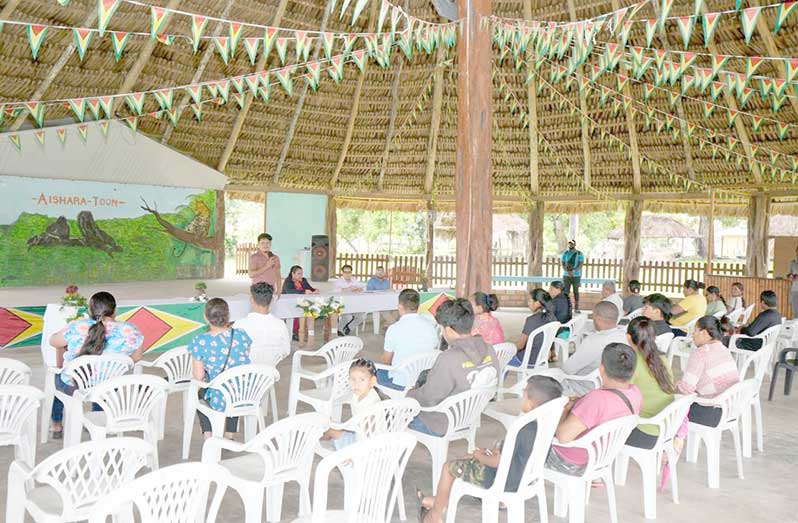
Highlighting the immediate next steps, Albert said the implementation of the tourism strategy will begin shortly, with teams returning to communities to work directly with residents to shape their tourism products and ensure they are market-ready.
She explained that a key focus will be on differentiating each village’s unique offering to create a diverse range of experiences for visitors. “Next two weeks, we will be going back to the villages and start helping them to craft whatever they wanted to offer. And at the same time, we will have to look at how we are developing their product, especially when it comes to marketing,” she said.
As Albert explained, sustainable tourism in the region will have a profound impact on the economy of the region. She explained that successful tourism ventures will create jobs, ensure communities are self-sustainable and bolster all development in the region.
Explaining the economic importance of tourism to the region, Albert shared, “Once they have this tourism business within their communities, it will help them for job opportunities, job creation within the communities. And also, it will bring an income when the day comes, where the families or residents of each village can benefit from that,” she shared.
Moreover, Albert explained that sustainability will remain a key pillar of the region’s tourism development, with deliberate efforts being made to balance economic expansion with the protection of the environment and indigenous heritage. She noted that regional bodies and local stakeholders are already working together to ensure that tourism initiatives are carefully designed in a way that benefits communities without compromising their natural and cultural assets. According to her, the region is not starting from scratch, as there is already a base of trained individuals who can contribute to the sector’s holistic growth.
“We have a lot of persons who have already trained, and they can take advantage of those things. That is where they have human resources as well,” she said.
Building on this foundation, Albert pointed to the importance of collaboration with communities that already have experience in tourism, noting that knowledge-sharing will be critical in helping newer villages establish themselves in the sector.
She said partnerships will allow residents to better understand both the opportunities and the challenges that come with developing tourism ventures, while also benefiting from practical, real-world experience. “We want to partner with other established tourism businesses as well, to have training and share their ideas and the experience. And also what they have been through, what challenges they face, when they were now going into the tourism sector,” she said.
Expanding on the broader vision for Region Nine, Albert stressed that tourism development will not be limited to a few communities but will instead be spread across the entire region, ensuring inclusive growth and widespread benefits.
She emphasised that the approach being taken is one that prioritises people, particularly young persons, by creating sustainable employment and new economic pathways within their own communities. “To transform region nine, it is not just in one village, but across our entire region. When we invest in sustainable tourism, we are not only attracting visitors. We are creating jobs that can actually be creating jobs for our people, opening new opportunities, especially for our youth,” she said.
Looking ahead, Albert is very optimistic to see the Rupununi positioned as a recognised eco-tourism destination on the global stage. She explained that the goal is to ensure visitors have a seamless and enriching experience, supported by community-run services and authentic cultural interactions.
“We wanted to expand in the way where our tourists can feel, when they visit the Rupununi, they must not have like a doubt of what they’re going to see,” she said. She added, “We want the Rupununi to become a recognised ecotourism destination, attracting visitors from across the world who are seeking nature and culture,” she said.




