






— President Ali challenges biodiversity alliance to turn pledges into investment, financing for conservation efforts
PRESIDENT, Dr Irfaan Ali has challenged the Global Biodiversity Alliance to prove that protecting nature can deliver jobs, investment and prosperity and not just another round of declarations.
Addressing the alliance’s second conference and financing forum at the Arthur Chung Conference Centre on Friday, Dr. Ali urged member countries to develop at least one finance-ready biodiversity project each before the next annual gathering.
“The success of this conference will not be measured by the speeches delivered … It will be measured by what happens next,” he said, adding: “Philanthropy is great, but it cannot be the basis and foundation upon which we view biodiversity,”
The president called for new ways to channel private capital into conservation, including a shared investment model for biodiversity reserves and common tax incentives across alliance countries.
He argued that nature protection must be built into economic planning, rather than treated as a separate priority.
Dr Ali made the argument that conservation must become part of countries’ economic planning, rather than being treated as a separate concern.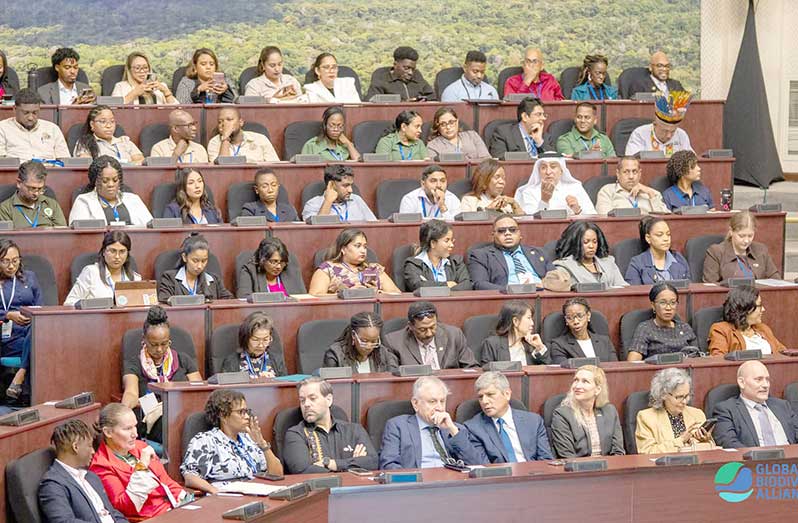
Biodiversity-rich nations, he stressed, should be able to generate lasting benefits from protecting their natural assets, while supporting the livelihoods of the people who live alongside them. The financing challenge is substantial.
The head of state cited a global biodiversity funding gap of about US$700 billion a year, and said recent international efforts had mobilised only US$1.8 billion—far short of a stated annual target of US$200 billion.
“We can have all the conversations we want about protecting biodiversity, but unless we change the economics of conservation, we will struggle to achieve the scale of change we want,” the president said.
He pointed to Guyana’s experience with forest financing as evidence that new approaches can produce results.
Dr. Ali said the country had mobilised funds through partnerships and international carbon markets.
Those resources, he said, were supporting more than 3,000 projects identified by over 250 villages and communities, including work on livelihoods, infrastructure and local services.
He said village priorities had been set through community plans, and stressed that investments should give Indigenous Peoples the opportunity to shape development in their own communities.
PRIVATE SECTOR
The president also urged private-sector leaders across alliance countries to explore a shared model for investing in biodiversity reserves.
The proposal would bring reserves under a common brand, supported by shared values, regulations and a marketing platforms.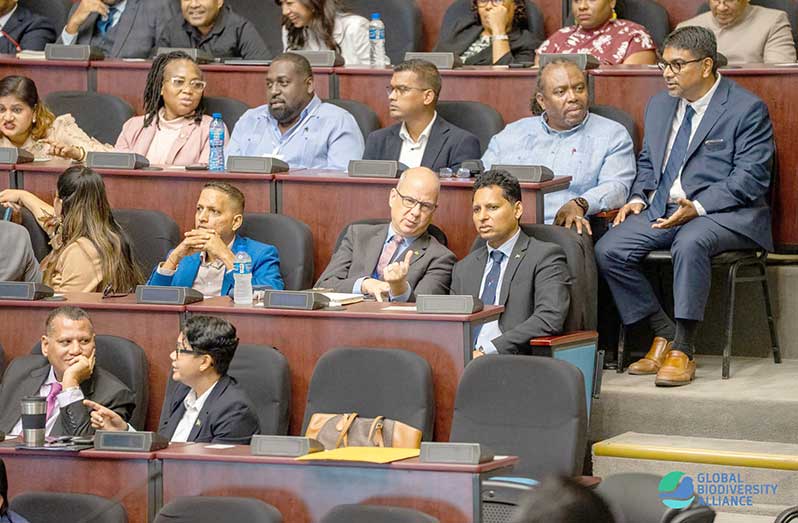
Dr Ali called on policymakers to consider common tax and fiscal incentives for investments that protect biodiversity.
He cited partnerships with development banks, universities and other institutions as part of the alliance’s work to build its capacity.
The organisation, launched in July 2025 with 17 founding members, had grown to 147 members, he said.
For the next 12 months, President Ali has set out three priorities: connecting science and innovation to the needs of biodiversity-rich countries; unlocking finance and investment and demonstrating that conservation can support jobs, communities and national economies.
“We do not pretend to have all answers. This room does not do that. Nor do we suggest that experience of one country can simply be replicated everywhere,” he said, adding: “I share our experience to show why we have learned that progress is possible, even when conventional thinking suggests otherwise. So now we need to take that attitude and ask the next question: how can we work together to change the economy or biodiversity overall?”
He urged members to consider how emerging technologies, including artificial intelligence and quantum technologies, could help monitor ecosystems and support scientific discovery. But he emphasised that innovation must translate into practical benefits for countries and communities.
Dr Ali also outlined Guyana’s plans to advance long-term conservation of a major forest landscape, saying the effort could double the country’s permanently protected area by 2030.
He said further stakeholder engagement, management planning and biodiversity monitoring would guide the next steps, with the aim of supporting research, sustainable livelihoods and responsible investment.
Th president related: “We must move beyond traditional approaches to biodiversity finance, and create new mechanisms that reward countries for conserving nature, mobilise private investment, and ensure biodiversity-rich developing countries receive a fair share of the economic value of the ecosystem.”




