






–with billions of dollars from climate funds channelled directly to communities for advancement initiatives
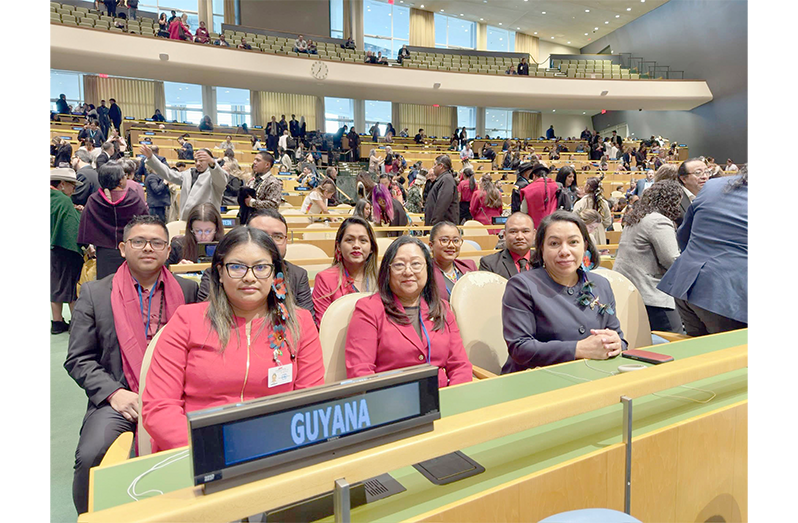
GUYANA has reaffirmed its commitment to placing Indigenous Peoples at the centre of climate action, with Minister of Amerindian Affairs Sarah Browne-Shadeek outlining the country’s model of partnership, land rights, and direct financing during the United Nations Permanent Forum on Indigenous Issues.
Addressing the interactive dialogue on climate change, the minister emphasised that Indigenous communities are not only among the most affected by environmental shifts, but are also key drivers of sustainable solutions.
Speaking under the theme “Indigenous Peoples and Climate Change,” Browne-Shadeek underscored that Guyana’s approach is rooted in inclusion, sustained engagement, and respect for Indigenous rights.
She highlighted that Indigenous Peoples, who make up 11 percent of the population, legally own 16.4 percent of the country’s landmass “absolutely and forever,” with protections enshrined in national legislation and aligned with international frameworks such as the United Nations Declaration on the Rights of Indigenous Peoples (UNDRIP).
The minister pointed to Guyana’s unique environmental profile, noting that the country maintains over 85 percent forest cover and remains carbon-negative despite its status as an oil-producing nation.
Central to this achievement is the Low Carbon Development Strategy (LCDS), which explicitly recognises and integrates the role of Indigenous communities in climate stewardship and environmental preservation.
A major highlight of Guyana’s presentation was its use of carbon-market revenues to directly support Indigenous development. Since 2023, between 15 and 26 percent of annual earnings from carbon-credit sales, amounting to $14.4 billion, have been transferred to Indigenous villages.
These funds are allocated through Village Sustainability Plans, which are designed, approved, and implemented by the communities themselves, reinforcing principles of self-determination and Free, Prior and Informed Consent (FPIC).
According to Browne-Shadeek, more than 200 Indigenous and hinterland communities have already benefitted from these investments.
The funding has spurred economic activity across sectors such as eco-tourism, agriculture, and small-business development, while also improving infrastructure and transportation.
At the same time, cultural and heritage initiatives supported by these funds are strengthening identity and facilitating the transfer of traditional knowledge across generations.
The government is also continuing to expand the Amerindian Land Titling Programme, with additional resources earmarked to secure land tenure for thousands more Indigenous citizens. This effort further reinforces the legal and institutional framework supporting Indigenous ownership and governance of ancestral lands.
Closing her remarks, Browne-Shadeek reaffirmed Guyana’s “unwavering commitment” to ensuring Indigenous inclusion in climate-resilience efforts, while advancing sustainable livelihoods and protecting the country’s vast natural resources for future generations.




