HE stood on the balcony looking out across the Atlantic Ocean to the far horizon. The waves crashing on the seawall were like a rhythmic symphony to his ears, and he closed his eyes in reflection.
“I have come from such a long way, from being hated, bullied and unwanted, to where I am today.”
It had been ten years since he had left home as a sixteen-year-old boy, but it didn’t seem that long, for the deep wounds in his heart were still fresh, and his struggles to survive, living homeless in the streets.
He opened his eyes and sighed deeply, “All because I was different.”
From the streets—working as a market porter in the day and sleeping in cardboard boxes in the night, surrounded by stray dogs—he became a successful designer living in a mansion.
“Fate took me for a real rough ride,” he smiled wryly, “But my mother’s love and blessings gave me the strength to fight those battles.”
He was the eldest of three siblings, with two younger sisters, who, along with his parents, formed an average, working-class family; his father was a carpenter, and his mother was a seamstress. His father paid special attention to him, proud to have a son, taking him to cricket games and teaching him how to play. Vickash, though, preferred to be home, playing with his sisters’ dolls, cutting out dresses from paper and having tea parties.
He was a little boy then, so no one saw anything wrong with that at that age of innocence, but as he grew, so did his passion for fashion and designing. His mother had once gently cautioned him that his father would be angry if he knew about his love of fashion.
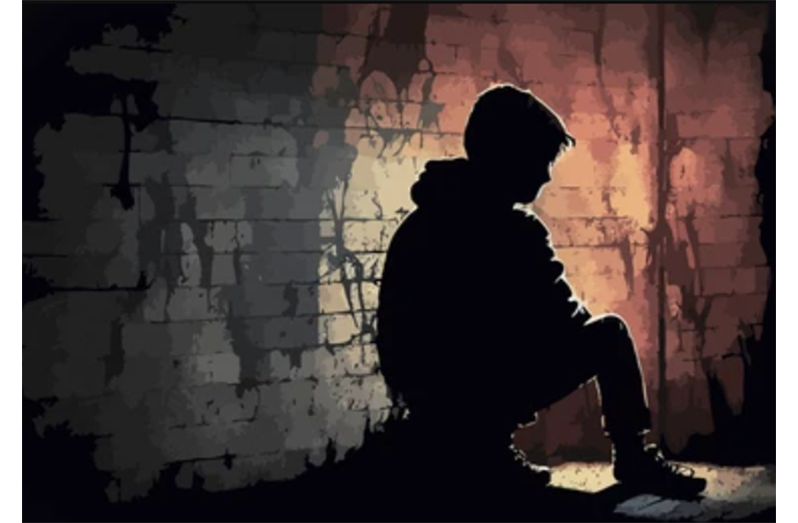
Vickash had heeded her warning and shared his time and interests between the male-centric activities his father wanted him involved in and his passion for what he wanted to do.
It had not been easy for him, but he had tried, always ending up with bruises and injuries from cricket, football, fishing and biking. He didn’t have the love, strength, or stamina for those activities, and soon the teasing began.
“His throw is weak like a girl.”
“How does he walk like that?”
“How does he run like that?”
“Your son needs to toughen up,” a friend of his father said.
Vickash had noticed the slow anger in his father’s face, which gave him a bit of fear, and at home, his father had spoken to him with controlled anger.
“What is wrong with you? You’re trying to embarrass me, to bring shame on me?”
“No, father,” he had answered quietly.
His father had slammed his wrist down on the centre table, “You’d better shape up.”
Vickash had been twelve then, and things didn’t get better for him when he started high school. That was when the bullying started to worsen, for he was seen as being different.
He told his mother about the bullying at school, not his father, and she gave him advice, the best way a mother could, to stay strong and focus on his studies.
But the taunting from the boys in the village and on the cricket field grew worse, and one day his father lost his cool and beat Vickash mercilessly with a belt. His mother had tried to stop the beating and was hit about the body.
“He’s just a young boy,” she had pleaded. “You can’t do this.”
“He has to grow up to be a man,” his father had responded angrily.
“To please who?” she had retorted. “You are pushing him too much.”
“Watch your mouth, woman,” he had threatened her.
Vickash did his best to be the boy his father wanted him to be; however, he continued to struggle. He had been beaten up by three boys on his team one day after his poor cricketing caused them to lose a match. They had some unkind words to say to him, but he took it quietly and went home, nursing his physical and emotional pain.
“I can’t do this, Mom,” he had said to her in pain. “Why can’t I be accepted as being different? It’s here, and at school, and one day they might kill me.”
She had comforted him, but she too was helpless in resolving the problems her son had been facing.
“Why, dear Lord?” she had cried.
Vickash did not return to the community ground for practice matches and, as such, was not selected for the upcoming games. His father, who had been away to the Corentyne on a job, was deeply disappointed with Vickash and had accosted his mother.
“I wanted a son, a real boy,” he had told her with controlled anger.
“He is a boy, our son,” she had answered quietly. “He needs our love and support, not hate.”
He had hit her and pushed her roughly, then left the room.
The girls, out of fear, had stayed in their room, but Vickash went to his mother and comforted her.
“I am so sorry that I am causing this to happen to you.”
“It’s okay, son, sometimes we have to face the unexpected in life.”
“Why am I like this, mother?” he had asked her, for at fourteen his body was going through more changes, changes he couldn’t understand.
“I have been trying so hard to be a normal boy, but at school and here they just won’t let me. So much taunting and bullying.”
“Don’t worry, people can be unkind, but one day, from the strength within, you will prove yourself as someone successful, just with time and belief.”
She had kissed him on the forehead and hugged him, a mother’s blessing that gave him some confidence in himself. At school, he studied, he played chess, he entered art competitions, and he bore the taunts.
There was still a kind of tension between him and his father, and two years later, it all came to an end. His father had been drinking that day and was at a cricket match for boys under 20 at the community centre ground. Vickash once again did not make the team because he had not been attending practice regularly.
“Today I could have been watching my son play,” he had said with deep disappointment. “But instead I have to watch the sons of other men play.”
It was late in the night when he was roughly awakened by his father and literally dragged out of the room.
“Where are you taking me?” he cried, trying to pull back, but his father was a strong man.
Vickash shouted for his mother as he was dragged out of the house.
“You’re useless as a son!” his father lamented angrily. “You know how many insults I had to hear today?”
Vickash’s mother reached his side just as the father was telling him, “There’s a trench over the dam. I want you to go take a swim.”
Mother and son had looked at him in horror.
“You know he can’t swim,” the mother stated. “What is wrong with you?”
“He would have to learn to save his life,” his father had said with cold fury.
Vickash and his mother slept in the girls’ room that night, trembling with fear.
“He wants me to die,” he cried. “That’s how much he hates me. How is this my fault, how?”
He broke down crying, and no one slept much for the rest of the night.
The next morning, after his father had gone to work, Vickash told his mother, “I will have to leave.”
His mother had looked distressed and asked quietly, a little tremor in her voice, “Where would you go? How would you take care of yourself?”
“I don’t know, Mom,” he had answered, his voice breaking. “But I can’t stay here any longer.”
Two days later, one early morning, Vickash kissed his sisters goodbye, tears rolling down his face, and he hugged his mother.
“Your blessings will keep me safe, and I hope to see you all again one day.”
He took a bus to the city with some money his mother had given him, and the address of an old friend of hers on the West Coast.
He had to leave the family he loved, not knowing what he would face in the strange world among strangers.
All because he was born different.
To be continued…