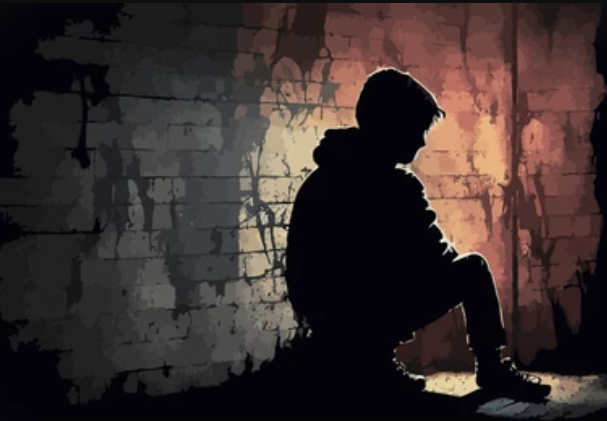
HE sat at the back of the bus, huddled against the window, wearing a dark, long-sleeved, hooded jersey, the hood partially covering his face. His heart was bleeding, but he did not cry.
“I will not cry,” he said to himself, “I have to stay strong to survive.”
At sixteen, he was pushed into the world by his cruel father, someone who could have understood why he was born different, who could have stood by him to be his support and strength. Instead, he faced hate and abuse, which were like physical scars on Vickash’s mind.
He took a deep breath and promised himself, “I will not die, I will survive to be my own person, and the regrets, father, will be yours.”
He disembarked at the village where the old lady lived and walked down the street past small houses with designs from long ago, yards with fruit trees, vegetable gardens, and livestock. It was quite like a lost little place, and Vickash said to himself, “I like this, at least I will get some privacy.”
The old lady, Aunty Bethany, was expecting him, and she greeted him with a cheerful little laugh.
“You resemble your mother,” she stated, a little twinkle in her soft brown eyes, “She is such a nice and kind person.”
“Yes, I know,” Vickash said with a little smile.
“Just make yourself at home,” she said to him, “There’s food in the kitchen, and I prepared a room for you.”
“Thank you,” he said, and that night, lying in bed in a strange house, far away from home, he whispered, “It feels fine here, but how long do I stay? Where do I go from here?”
He didn’t sleep well that night, and the next morning, after a healthy breakfast, he helped Aunt Bethany with the garden. He noticed many things that needed to be done, given she lived alone and hadn’t much help, so to occupy his time and earn his keep, he did all of her work.
In the evening, he sat at a small table by the window to do his fashion design sketches, but his heart wasn’t in it because of his heartache and missing home.
That weekend, he went with Aunt Bethany to the market at Parika, and Vickash looked around, awed by the bustling marketplace with its bountiful fruits and vegetables, the attractive clothing stalls, and food outlets with delicious-looking food. He carried her bags and basket as she wove her way carefully through the shoppers.
At home, he helped her unpack everything she had bought and prepared the chicken she needed to cook for lunch. It was curry chicken and dhal puri, and Vickash quite enjoyed the tasty, spicy meal that brought tears to his eyes, as he remembered his mother cooking the same curry.
“Don’t worry, son,” Aunt Bethany comforted him, “You were born on this earth for a reason, with a purpose to serve, so don’t let anyone tell you otherwise.”
A few months went by, by which time he received his CSEC examination results. He did great, obtaining ten passes of grades A and B, but he did not feel elated.
“It’s like happiness is not meant for me,” he lamented.
“You can come back home,” his mother suggested, “Get a job and rent an apartment.”
“I know,” Vickash accepted, “It’s a good idea, but I don’t want to come back home just yet.”
He had told himself he would go back home when he was older, stronger, and more confident. He was comfortable and safe at Aunt Bethany’s, but fate took that away when the old lady’s son returned home. He was not a nice person, spoke to his mother with an edge of roughness in his voice, and looked at Vickash with disdain, calling him a ‘sissy’.
He was like a rolling stone without a family, drinking and gambling, and he only visited his mother when he was broke and wanted money. The old lady was not pleased to have him there, but she didn’t have the heart to tell him he couldn’t stay.
“I have been hoping and praying that one day he would change,” she told Vickash.
Vickash felt sorry for her; he had seen what a cruel husband did to their wife, and now what a bullying son was doing to their mother.
“And the world hates people like me,” he expressed silently.
Vickash did not feel safe around him, and one night, in a drunken state, when he tried to break into Vickash’s room, he felt he couldn’t stay there any longer.
“Where do I go now?” he cried silently.
Aunt Bethany gave him an address of one of her vendor friends in Parika and told him, “You can work and stay with her for a while, until it’s safe to come back here.”
He had taken a bus one late afternoon to Parika and, after reaching the lady, realised she had three young adult sons, so that he couldn’t stay with her either. He went to one of the food outlets and sat on one of the empty stalls to eat the food he had bought. A few stray dogs looked hungrily at him, and he bought more food for them.
It was starting to get dark, and with no home to go to, Vickash lay down on the stall and fell asleep, the dogs staying right there with him. At 4 a.m., the market came to life as boatloads of fruits and vegetables were offloaded on the wharf. He stood there, fascinated by it all, when a female vendor who was there with a van to buy wholesale goods asked him, “Are you working?”
Before Vickash could answer, she pointed to a pushcart that was parked in a corner.
“I want all this load in my van.”
Vickash accepted the offer and started that morning as a porter. He bought food from the snackettes, used the standpipe to freshen up and wash his clothes, and slept on an empty stall at night, huddled in a corner, unnoticed by anyone.
“I guess I am homeless now,” he said to himself, “I have a family I can’t go home to, and working as a market porter with ten CSEC subjects. What a life!”
His mother was increasingly worried about him, but he continued to assure her he was doing fine. The stray dogs at the market were fed with money he earned, and they became his constant companions. He spoke to them because he felt better doing so than to humans.
“One day, I will become rich, then we will all go live in a mansion.”
In his mind, it was just a crazy dream, but the dogs barked as though they understood. Somehow his passion for designing came back, and under the market lights, he did his sketches. In the cool and quiet of the night, he would sit on the wharf watching the mighty river’s natural, smooth flow. The dogs sat with him in those peaceful moments, their lives the same—homeless.
Vickash knew he couldn’t be a market porter forever.
“There must be something good for me in this life.”
He kept that hope in his heart as days and weeks passed until one Sunday morning, when the market was at its peak, he hurriedly grabbed his sketch pad and a page fell out. Two days later, as he was cleaning the area where he usually relaxed and had his meals, a beautiful woman approached him and held up the lost page.
“Is this your work?”
He looked at it, surprised. “Where did you get it?”
“I found it on the ground two days ago, and after inquiring, a vendor told me it had to be yours.”
She looked at him for a long moment, then said, a concerned look on her face,
“This is really good work, you’re talented, but you’re young and homeless. How did that happen?”
Vickash had never told anyone his story, but to stay safe, he told her his father was ill, and he was working to send money home for his family.
“So sorry to hear that,” she said, “I guess you need a break in life.”
She then reached into her bag and handed him a pamphlet.
“There is an ongoing competition for the best-designed gown for a pageant, you should try and enter.”
“Wow!” Vickash exclaimed, and one week later, he had finished the sketch. He called the woman, who looked at it, absolutely amazed.
“I will send it in for you.”
Three weeks later, the winner was announced. His design had won, but it was under someone else’s name—the woman had stolen his design!
To be continued…