– to boost surveillance amid cross-border movement
GUYANA continues to strengthen its response to Human Immunodeficiency Virus (HIV) while advancing national efforts to eliminate a number of infectious diseases, Minister of Health, Dr Frank Anthony, has said.
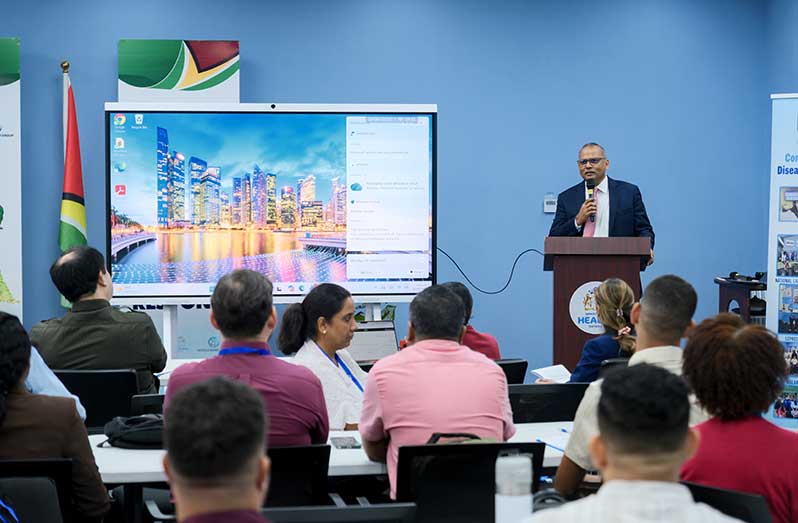
Dr Anthony made the disclosure while addressing the Strengthening Clinical Capacity for the Management of Advanced HIV Disease in Guyana workshop, held at the Ministry of Health’s boardroom, Brickdam, from September 14–15, 2026.
The workshop is being held in collaboration with the Pan American Health Organization/World Health Organization (PAHO/WHO) Disease Elimination Initiative and has brought together clinical professionals from Guyana’s 10 administrative regions.
Dr Anthony reflected on the significant progress made in HIV care and treatment over the years, noting that the availability of effective antiretroviral (ARV) medicines has transformed HIV from a once life-threatening diagnosis into a manageable chronic condition.
He recalled the early years of the HIV epidemic, when limited treatment options and widespread stigma often resulted in patients facing severe illness and discrimination.
“From those days, we have come a far way,” the minister said, highlighting the effectiveness of current ARV regimens and the importance of ensuring that persons living with HIV receive comprehensive care, particularly where they may also have other chronic diseases.
The minister stressed that Guyana must continue strengthening HIV surveillance, diagnosis, treatment and viral suppression, particularly in light of increased population movement across the country’s borders.
The two-day workshop is designed to strengthen the capacity of clinical professionals to effectively identify and manage persons with Advanced HIV Disease (AHD).
The workshop aims to strengthen participants’ understanding of the national burden and clinical significance of Advanced HIV Disease (AHD), while improving their ability to identify, assess and investigate patients at risk. It will also strengthen the application of updated national and WHO recommendations for HIV treatment, including ART initiation, optimisation, management of treatment failure and re-initiation, and equip healthcare providers to deliver the WHO-recommended package of care for people with AHD.
The workshop will further focus on strengthening Tuberculosis (TB) and TB/HIV screening, prevention and co-management, as well as improving the recognition, diagnosis and management of opportunistic infections, including tuberculosis, cryptococcal disease, histoplasmosis and Pneumocystis jirovecii pneumonia. Participants will enhance their use of laboratory and point-of-care testing and clinical monitoring, develop clinical decision-making skills through peer learning and real-world case discussions, and identify opportunities to strengthen facility-level systems and referral pathways to improve care for people with AHD.
Guyana’s geographical position and porous borders have resulted in significant cross-border movement for both healthcare and other purposes.
The minister pointed to the provision of healthcare services to persons from neighbouring Brazil and Venezuela as examples of the increased movement that health authorities must take into consideration when planning and implementing disease-control programmes.
“We need to step up our surveillance. We need to step up what we are doing in terms of our diagnosis,” Dr Anthony said, noting that where surveillance identifies potential hotspots, targeted programmes must be implemented to address emerging needs.
Guyana currently provides antiretroviral (ARV) therapy through the public-health system, while efforts are also being made to ensure that persons diagnosed with HIV enter and remain in treatment and achieve viral suppression.
The minister also highlighted the availability of viral-load testing within the public-health system, allowing patients to be monitored more effectively and enabling health-care providers to make informed decisions about their management.
Dr Anthony said Guyana must continue moving away from a highly vertical approach to HIV care and towards greater integration of HIV services within primary healthcare.
With approximately 450 public-health facilities across the country, he said health-care providers, particularly doctors at the health-centre level, should be equipped to diagnose HIV and provide appropriate treatment. Patients requiring more specialised care can then be referred to higher levels of the health system.
The decentralisation of ARV services is also expected to improve access by reducing the need for patients to travel long distances to obtain treatment.
The minister acknowledged that gaps remain in implementing this approach across the health system, but said strengthening primary-level HIV services will be critical to improving access and outcomes.
Dr Anthony urged the clinical professionals participating in the workshop to apply the knowledge and skills gained in their respective health facilities, thereby strengthening the diagnosis, treatment and management of persons living with HIV. He said that continued investment in clinical capacity, integrated primary healthcare and patient-centred services will be critical to closing existing gaps, improving health outcomes and ensuring that Guyana remains on course to meet its HIV-related targets by 2030.