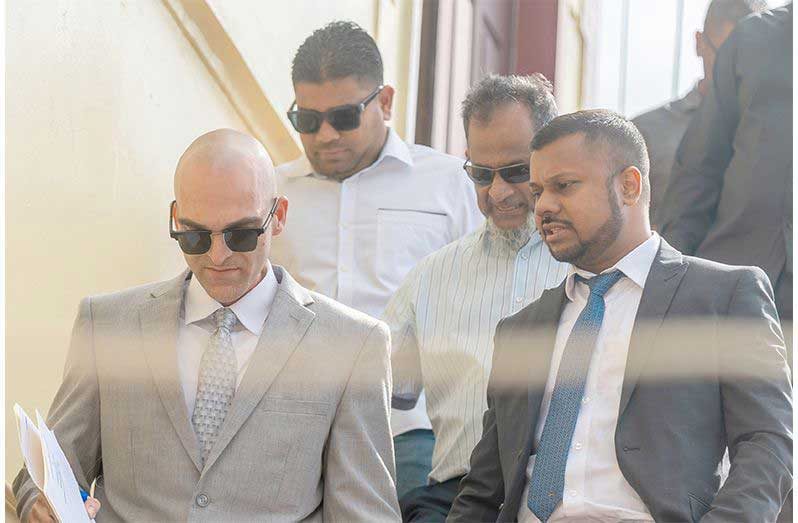
Extradition proceedings against U.S.-indicted businessman Nazar “Shell” Mohamed and his son Azruddin Mohamed were again delayed on Wednesday at the Georgetown Magistrates’ Court, after the defence sought a further adjournment on medical grounds and raised fresh procedural objections.
When the matter was called before Principal Magistrate Judy Latchman, defence attorney Siand Dhurjon informed the court that Nazar Mohamed remains unwell and had previously been diagnosed with a heart condition.
Counsel asked the court to exercise its discretion and allow additional time for rest and recovery.
Nazar Mohamed, who was present in court, told the Magistrate that he was experiencing tightness in his chest and was not fit to participate in hearings for the remainder of the week.
The latest medical update comes against the backdrop of growing questions over the legitimacy and consistency of the health-related claims advanced in the matter, particularly given the repeated delays linked to Nazar Mohamed’s reported condition and the case.
In light of the update, Magistrate Latchman adjourned the proceedings to February 26, 2026, when the court is expected to convene for a full-day hearing from 09:00 hrs.
Following the brief medical update, the court heard submissions on a significant procedural issue that could shape the course of the extradition process.
The central question is whether the committal phase should proceed under the paper committal framework introduced by the Criminal Law Procedure Act 2024 or whether the provisions of the Fugitive Offenders Act require a traditional oral preliminary inquiry with the opportunity for cross-examination.
Prosecutor Terrance Williams submitted that the 2024 legislative reforms allow for paper committal in certain circumstances and argued that this approach could be appropriately applied in the present extradition proceedings.
However, defence counsel opposed this position, maintaining that the specific evidential safeguards contained in the Fugitive Offenders Act must prevail, thereby necessitating an oral inquiry where the defence can challenge the evidence through cross-examination.
After hearing the competing arguments, Magistrate Latchman directed the prosecution to file written submissions on the procedural point to assist the court in determining the appropriate legal pathway for the extradition hearing.