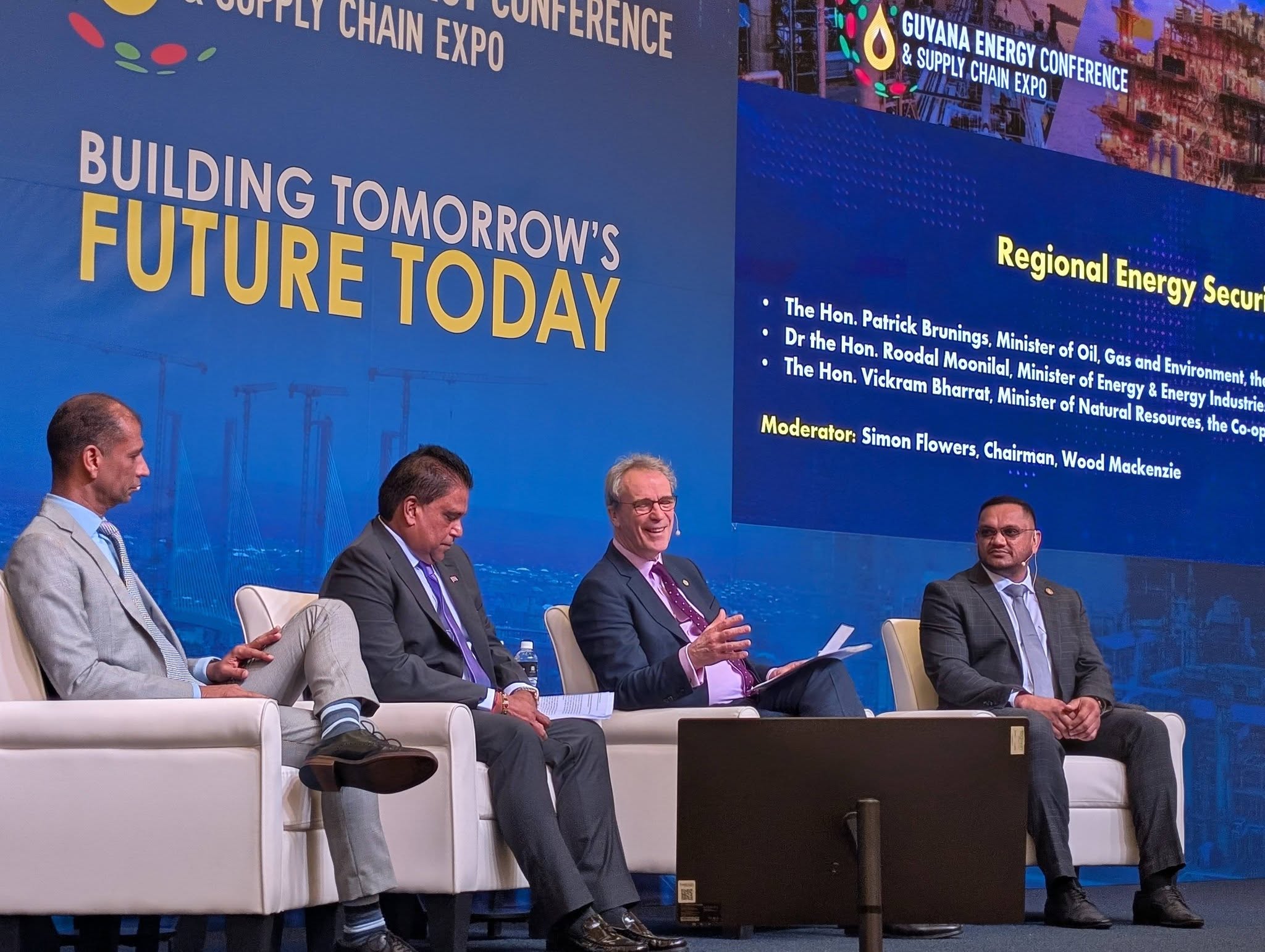
Stronger regional collaboration between Guyana, Trinidad and Tobago and Suriname has been identified as critical to advancing energy security and navigating the evolving global energy landscape.
This call was made during the Ministerial Panel on “Regional Energy Security” at the Guyana Energy Conference and Supply Chain Expo, where key regional policymakers outlined opportunities and shared concerns shaping the sector’s future.
Participating in the discussion were Minister of Natural Resources Vickram Bharrat; Trinidad and Tobago’s Minister of Energy and Energy Industries, Dr Roodal Moonilal; and Suriname’s Minister of Oil, Gas and Environment, Patrick Brunings. The panel was moderated by the Chairman of Wood Mackenzie, Simon Flowers.
Addressing stakeholders, Minister Bharrat underscored that Guyana’s rapid transformation in the energy sector is being driven by three core pillars: leadership, effective management and strategic partnerships. He noted that these elements have enabled the country to maximise resource potential while building institutional capacity and maintaining investor confidence.
Dr Moonilal, in his intervention, acknowledged that collaboration between Guyana and Trinidad and Tobago has been limited in recent years. He expressed regret at the missed opportunities but signalled a shift in approach, indicating that under the leadership of Prime Minister Kamla Persad-Bissessar, deeper engagement with Guyana and Suriname is now a priority.
The Trinidad and Tobago minister emphasised that greater coordination among Caribbean energy producers is essential to strengthen regional resilience, enhance market competitiveness and ensure long-term energy security.
Meanwhile, Minister Brunings highlighted that while the region’s progress in oil and gas development is commendable and increasingly innovative, significant challenges remain. He warned of ongoing threats to the sector, including market volatility, energy transition pressures and financing constraints, stressing that collaboration will be pivotal in overcoming these hurdles.
During the wide-ranging discussion, the CARICOM counterparts compared notes on sectoral growth, policy direction and investment trends across their respective jurisdictions. The panel also examined the implications of the global shift toward cleaner energy, access to capital for emerging producers and the urgent need for stronger regional and international partnerships.
Collectively, the ministers agreed that the Caribbean’s energy future will depend not only on resource development but also on cohesive policy alignment, knowledge sharing and joint initiatives that leverage each country’s comparative strengths.