
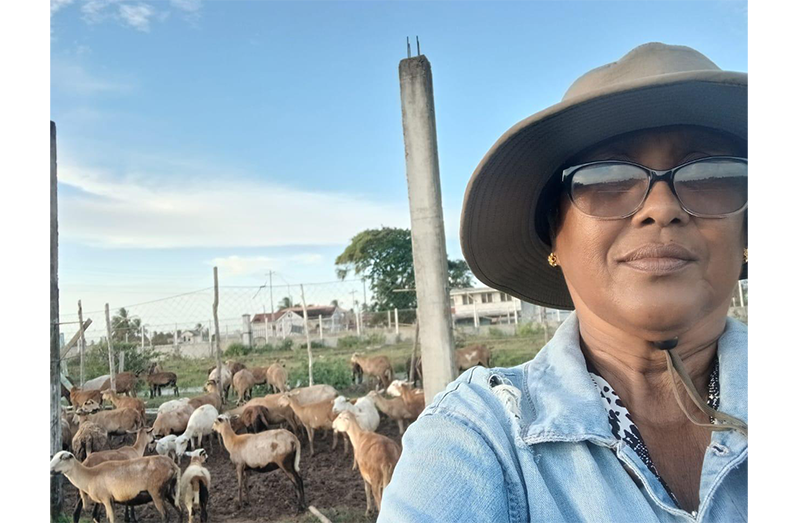
A Journey of Loss, Learning and Livestock
FOR Monica Evans, farming was never part of a carefully charted life plan. It emerged instead from grief, necessity and a quiet determination to rebuild meaning after loss.
Five years ago, with no formal training in animal husbandry and little family encouragement, Evans made the unconventional decision to enter livestock farming as her primary livelihood. Today, at 59 years old, the Armadale, West Coast Berbice resident stands as a compelling example of how resilience, state support and adaptive learning are reshaping the face of agriculture in Guyana, particularly for women in a traditionally male-dominated sector.

Evans, a mother of three, was once a housewife searching for purpose beyond the confines of domestic life. The deaths of her mother and later her nephew marked a turning point. “When my nephew died, it was the last straw,” she reflected. Seeking a way to remain mentally and emotionally engaged, she began purchasing livestock, initially five sheep bought from a friend despite knowing little about their care. That modest beginning quickly expanded into a growing flock as she acquired more sheep, goats and eventually cattle and poultry.
Her early years in farming, however, were defined as much by hardship as by hope. An outbreak of disease devastated her goat herd, killing nearly three-quarters of the animals she had painstakingly accumulated. The loss was profound. Discouraged and emotionally drained, Evans considered abandoning farming altogether, even contemplating selling off what remained of her livestock, at the urging of family members. Yet, in a defining moment of resolve, she chose instead to rebound.
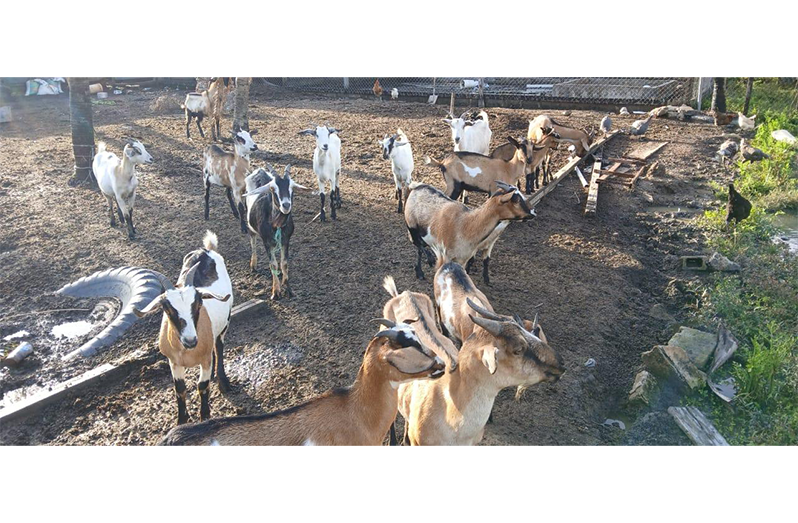
That decision marked the beginning of a more informed and structured phase of her farming journey. Today, Evans manages a diverse operation that includes approximately 74 sheep, 29 goats, six cows, four calves, turkeys, creole chickens, ducks, guinea birds and black giant poultry. Her cattle are reared strictly for breeding, reflecting a strategic shift towards sustainability rather than short-term gain.
Central to her progress has been the support of Guyana’s evolving agricultural policy framework, particularly initiatives aimed at strengthening livestock production and empowering small-scale and women farmers. Through the Ministry of Agriculture (MoA) and its implementing agency, the Guyana Livestock Development Authority (GLDA), Evans has received technical, material and advisory assistance that has significantly improved her capacity as a farmer.
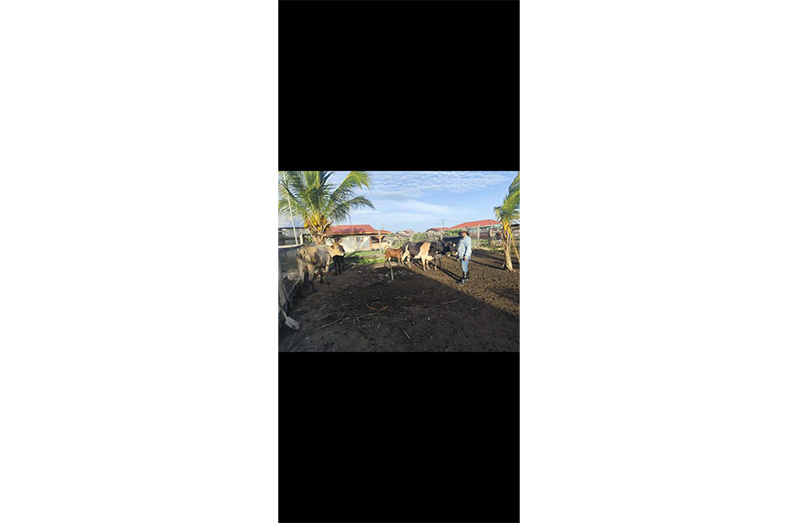
She credits the Region Five Livestock Extension team, led by Coordinator Dr Joel Dilchand, for boosting her confidence and competence. Regular farm visits by extension officers have guided on animal nutrition, disease management and overall husbandry practices, transforming what was once trial-and-error learning into evidence-based decision-making.
One notable intervention was the provision of a high-quality Barbados Black Belly ram by GLDA to improve the genetic stock of her flock, along with a nutrition and vitamin supplementation hamper. These inputs, while modest, reflect a broader policy emphasis on improving productivity through genetics, extension services and farmer education, which are key pillars of Guyana’s agricultural-diversification strategy.
Evans has also embraced innovation in farm design. She constructed elevated pens for her sheep and goats, a system increasingly promoted by GLDA extension officers for the management of small ruminants. Elevated housing reduces parasite load, minimises contact with floodwater and enhances overall animal health, a critical consideration in low-lying coastal regions prone to flooding. Although her animals initially preferred to remain at ground level, the design has already proven beneficial during heavy rains, reinforcing Evans’ commitment to adopting best practices, even when adaptation takes time.
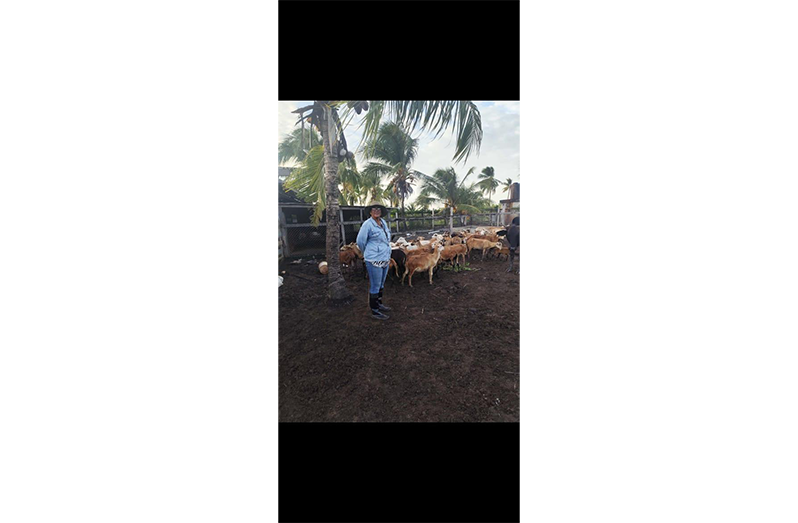
Land access has further strengthened her prospects. As a beneficiary of the government’s land-distribution programme in Region Five, Evans received five acres earmarked for agricultural development. The plot is currently being prepared and fenced, and she intends to utilise it fully for expanded livestock housing and production.
She is also hopeful that the Agriculture Development Bank’s interest-free loan facility will enable her to venture into pig rearing, with plans already underway to construct a pig pen capable of accommodating 20 sows.
Despite these advances, structural challenges persist. Poor road construction has contributed to yard-flooding during periods of heavy rainfall, resulting in the loss of some livestock. Yet, Evans remains cautiously optimistic, believing that continued infrastructural improvements and institutional support will yield better outcomes.
Though separated from her husband, Evans notes that he still assists with animal care, underscoring the informal networks that often sustain small farmers. Still, she is candid about the isolation she has faced as a woman farmer without strong family backing. In this context, the role of public agricultural institutions such as GLDA has been especially significant, not only in providing resources, but also in validating her place within the sector.
“I am trying my best to become the best version of myself in caring for these animals,” Evans says. Her story is emblematic of a broader transformation underway in Guyana’s agricultural landscape, where policy-driven support, gender inclusion and grassroots resilience are converging. For women like Monica Evans, farming is no longer merely an act of survival; it is a statement of agency, empowerment and enduring faith in the land.