





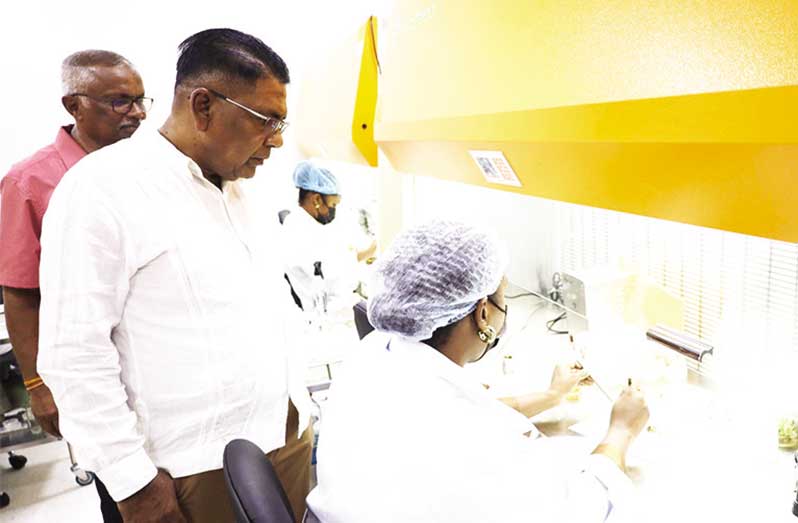
AGRICULTURE Minister Zulfikar Mustapha recently visited the Ministry of Agriculture’s biotechnology plant tissue laboratory located within the National Agricultural Research and Extension Institute (NAREI) compound at Mon Repos, East Coast Demerara.
During the visit, the minister engaged with laboratory technicians, and observed the process of dividing plant cuttings used in the development of plantlets.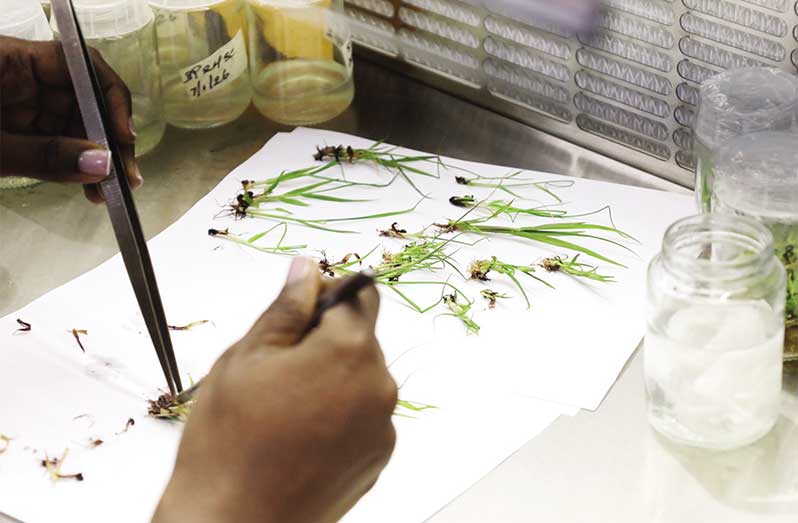
The facility, which was established at an estimated cost of $450 million, is designed to supply farmers and researchers with clean, disease-free and high-quality planting material.
According to Minister Mustapha, the laboratory supports the government’s vision for the transformation and modernisation of the agriculture sector, and is projected to produce approximately one million plantlets by the end of the year.
The laboratory was developed in collaboration with The Energy and Resources Institute (TERI) of India, and was financed through the Inter-American Development Bank under the Sustainable Agricultural Development Programme (SADP).
The facility will provide high-yielding, disease-free planting material for a range of crops, including pineapple, citrus, plantain, sweet potato, breadfruit, sugarcane and several exotic fruits such as strawberries and blackberries.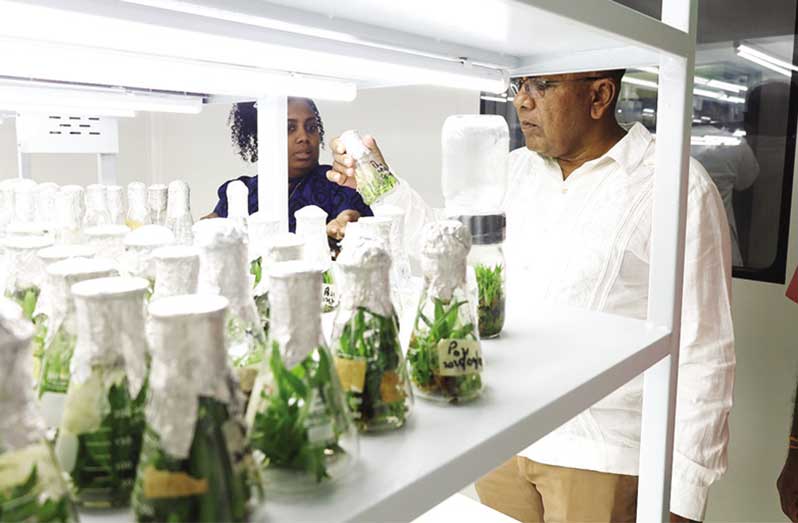
Minister Mustapha was accompanied by Director-General Dhaneshwar Deonarine, NAREI’s Chief Executive Officer Jagnarine Singh, and other technical officers during the visit.
The facility, which officially opened back in October, is designed to produce over one million plantlets annually, a significant leap from the previous output of 15,000.
These plantlets will be clean, high-yielding, and disease-free, supporting crops such as pineapple, citrus, plantain, sweet potato, breadfruit, sugarcane, and even exotic fruits such as strawberries and blackberries.
The biotechnology ‘lab’ marked a major milestone in Guyana’s efforts to enhance food security, agricultural innovation, and sustainable economic growth, laying the foundation for a more resilient and diversified agricultural future.





