

A journey of loss, resilience, and renewal
TEFFON Telford always dreamed of owning a business. It didn’t have to be large-scale, just something he could build with his own hands and grow over time.
At 33, the former chef turned poultry farmer pursued that vision with determination. But just as his dream began to unfold, an unexpected catastrophe brought everything crashing down.
Four years ago, Telford made a major life decision: He invested all his savings, secured a hefty loan, and acquired agricultural land at Garden of Eden, East Bank Demerara, to establish a poultry farm.

The father of one recalled waking up one morning and telling his wife that it was time to do something meaningful with the land.
He had always reared a few chickens for personal use, so the idea felt natural. “I had a lot of ideas swirling in my head,” he said, describing the excitement of moving from hobbyist to farmer. After conducting his own research, he decided to rear layer birds, which he found to be more resilient than broilers.
Telford’s transition into agriculture was also influenced by his years as a professional chef. Having worked in top hotels and restaurants, he had crossed paths with President Dr. Irfaan Ali on several occasions.
When he sought guidance to develop his farm, he reached out to the President’s Office. But progress was slow in the early post-pandemic period.
Disheartened, Telford briefly migrated to the British Virgin Islands (BVI), where he remained unemployed for four months before returning home.
Back in Guyana, he revived his culinary career by launching a home-based catering business, a venture that quickly regained traction due to his strong reputation in the food industry.
Still, the dream of building a thriving poultry farm lingered. After another meeting with President Ali, he was advised on securing financing, and soon after, he obtained a substantial loan.
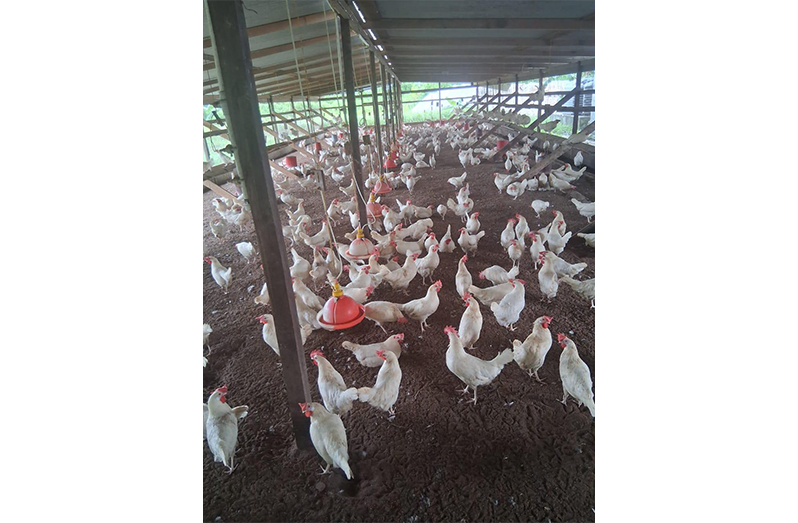
With renewed hope, Telford constructed three large pens, each costing $6 million, and prepared to house 9,000 to 10,000 layer birds.
Through the Guyana Livestock Development Authority (GLDA), he received 1,000 layer birds as his initial stock.
He later purchased another 1,000 birds through a private overseas supplier, trusting that all importation, quarantine, and biosecurity protocols had been properly followed.
Two months into laying, disaster struck. Birds from the imported batch began dying rapidly. After consultations with GLDA’s technical team, the cause was confirmed: Inclusion Body Hepatitis (IBH), a viral disease in poultry.
The loss was devastating. Telford had invested $7 million in acquiring birds, preparing the farm, and establishing operations. “Watching them die one after the other, it broke me,” he recalled.
The experience opened his eyes to the importance of adhering strictly to GLDA’s importation and quarantine protocols.
While the process may seem lengthy, he now describes it as seamless, supported by knowledgeable staff, including Dr. Dwight Walrond, Dr. Tihul, and the Region Four Livestock Extension team.
“GLDA has always been there. Their team is willing to provide advice, field support, and technical guidance whenever needed,” he said, adding that training from Dr. Nauth and Mr. Bhagwandin strengthened his knowledge of biosecurity and best farming practices.
He now considers record-keeping, feeding protocols, and strict biosecurity measures to be the lifelines of his operation.
Despite the enormity of his financial losses, Telford did not give up. During a community meeting with President Ali, he shared his ordeal, and once again, help came.
He received 500 locally sourced birds from GLDA in February 2025, supplied through Edun Hatchery.
“These birds are robust and healthy,” he noted, praising the pre-vaccination protocols and continuous monitoring by GLDA’s Region Four team, led by Ms. Ava Klass. “Every call I made was answered by Dr. Nauth, Mr. Bhagwandin, everyone at GLDA HQ.”
As his new flock matured, a friend invested in the venture, purchasing an additional 500 birds. Today, Telford manages 1,400 layers. However, two of his three large pens remain empty due to limited financial resources.
Being cash-strapped remains a significant challenge, especially given the weekly feed costs. Like many farmers, he is eagerly awaiting the establishment of the Agriculture Development Bank, which promises no-collateral, interest-free loans to help farmers operate at full capacity.
On his four-acre plot at Garden of Eden, the three large pens built with high hopes stand mostly empty. Yet, hope continues to drive his efforts.
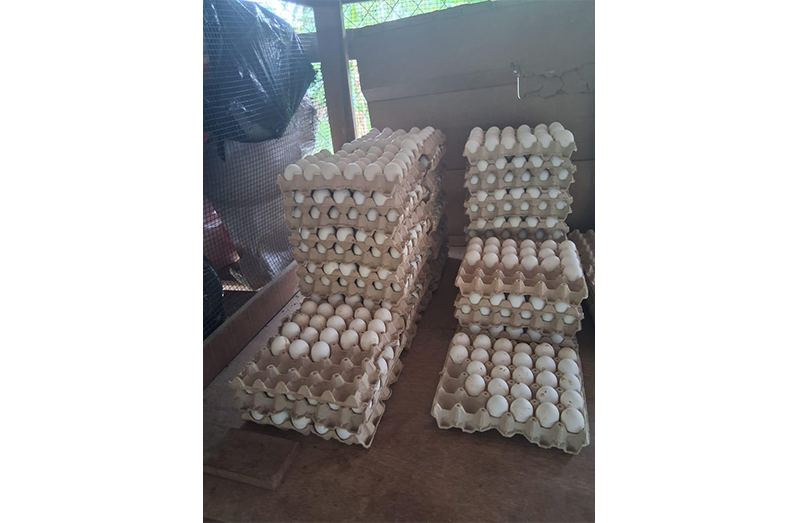
His 1,400 birds currently produce approximately 25 trays of eggs per day, and with the festive season approaching, demand has surged.
Despite this, Telford refuses to raise his prices. “Some people increase their prices when demand is high, but I remain principled,” he said.
Over the last 30 days, his farm produced 258 trays of eggs; far below the current market demand. His facility can house up to 3,500 birds, but for now, he must wait for financing before expanding again.
His journey from chef to farmer, from success to devastating loss, and now towards recovery has been marked by resilience and faith.
Telford credits government support, GLDA’s guidance, and his own determination for keeping his dream alive.
And despite the setbacks, his vision remains the same: a thriving poultry farm built with persistence, integrity, and hope.