







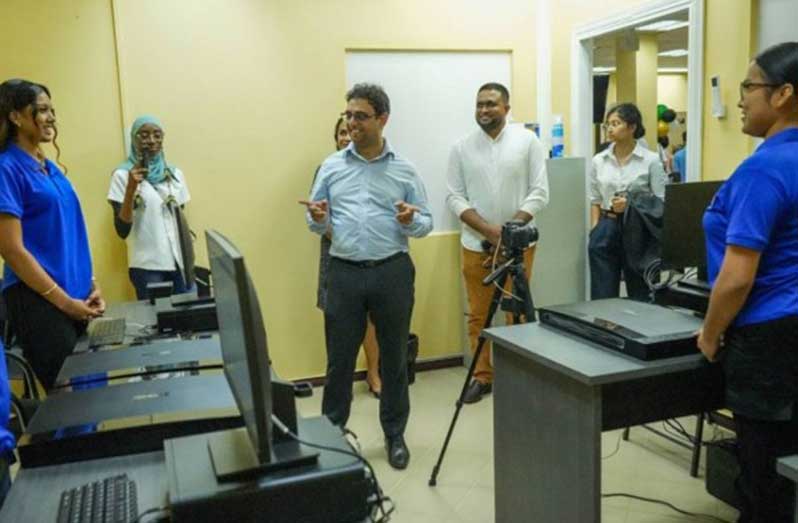
WITHIN one year, Guyana has accelerated its transition from paper records and processes towards the broader digitalisation of public services.
At the centre of that transformation is Ministry of the Public Service, Government Efficiency and Implementation led by Minister Zulfikar Ally.
He has been driving reforms designed to change how citizens access services, interact with agencies and receive responses, in keeping with President, Dr Mohamed Irfaan Ali’s new mandate.
DIGITAL APPLICATIONS
Among the clearest examples are GovConnect, SkillsConnect and Citizens Connect, three digital applications. These address different dimensions of the citizen-government relationship.
GovConnect is changing how citizens access government offices. They enable appointments to be booked online. Instead of relying solely on walk-in systems, citizens can select services, available dates and times, and receive appointment confirmations and notifications.
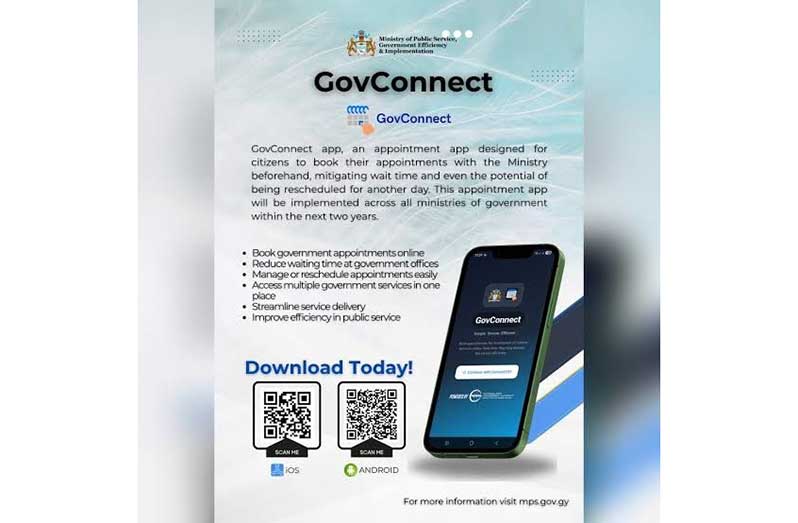
The system is intended to reduce queues, waiting times and uncertainty, while creating a more organised and predictable experience across government agencies. (GovConnect)
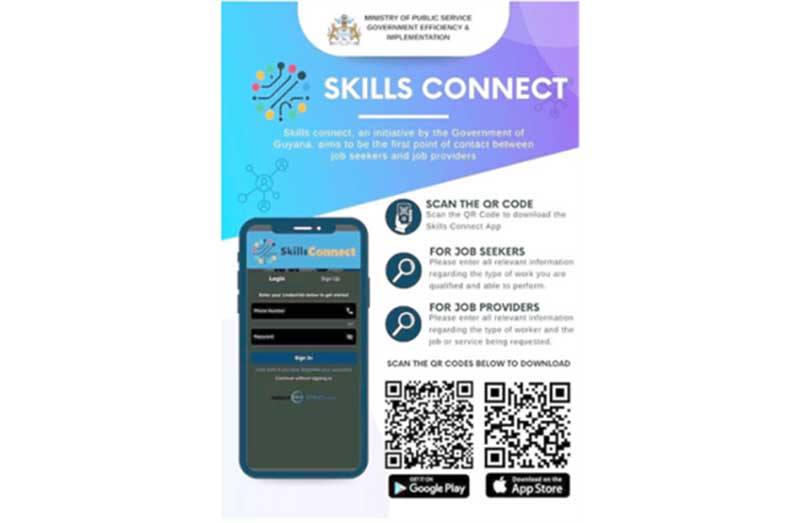
SkillsConnect, meanwhile, extends digital transformation into economic opportunity. The locally developed platform connects skilled and semi-skilled workers, including electricians, plumbers, carpenters, mechanics and other service providers, directly with individuals and businesses requiring their skills.
By April, the platform had recorded 1,872 profiles and facilitated 438 job connections, demonstrating how technology is also being used to strengthen Guyana’s labour market and support entrepreneurship.
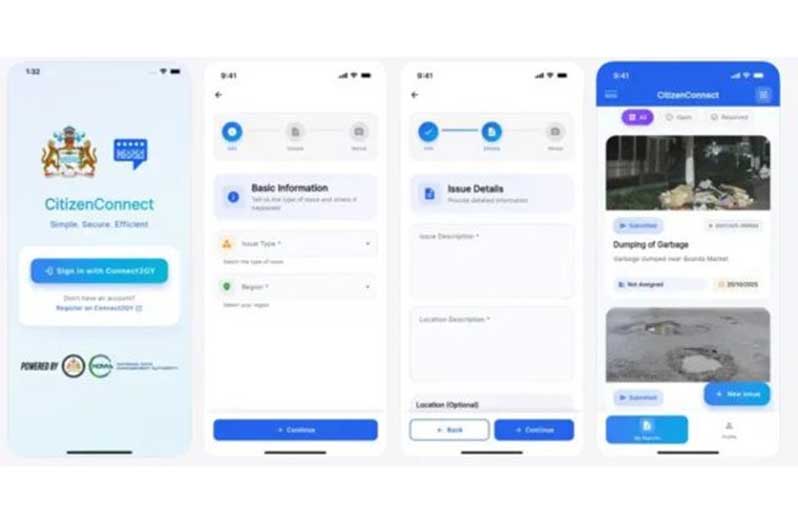
The Citizens Connect App represents another major shift, creating a direct channel through which citizens could report community and government-related issues and follow their resolution.

“[The Citizens connect app] is [really] what President Mohamed Irfaan Ali wants to see of government,” Minister Ally said, “which is responding in real time to the issues and the concerns of the citizens of Guyana.”
Since its launch, more than 1,800 issues have been submitted. Approximately 1,400 have been resolved. The ministry’s objective is for agencies to respond rapidly, with citizens informed as their reports move through the system.
PASSPORT APPOINTMENTS ONLINE FROM OCTOBER 1
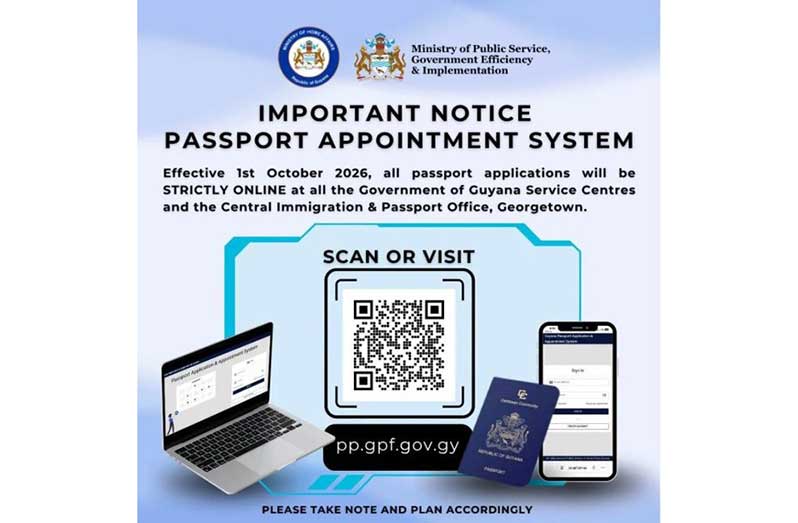
Another major milestone in government’s digitalisation drive will take effect from October 1, 2026, when passport appointments become fully online. Citizens will be able to book an appointment, select a time, and access passport services without the uncertainty and lengthy lines traditionally associated with the process.
These applications form part of a wider digital ecosystem being built across government.
NIS DIGITALISATION
The digitalisation of the National Insurance Scheme (NIS) is another major component of the government’s drive to make essential public services more accessible and convenient.
By October 15, 2026, NIS registration and contribution services are expected to be fully online, allowing citizens to complete these transactions digitally without visiting an NIS office.
During the next phase, compliance and benefits services will be digitalised by the end of the year. This further expands the range of services citizens can access from their homes using a mobile phone, tablet or computer.
PUBLIC SERVICE PORTAL
The ministry itself is moving away from predominantly paper-based processes through a new digital portal and dashboard. Transactions, including employment requests, contract renewals, scholarships and other human-resource matters are expected to move through the system, with a September 30-go-live date.
“Instead of people taking a while to get their employment approved, to get into the financial system…that could be done within a matter of a week or two,” the minister revealed.
E-PROCUREMENT
Government has also launched the eProcure platform, creating a central online location for Expressions of Interest, Requests for Proposals and other procurement opportunities, while further reforms are intended to facilitate fully electronic bidding and greater transparency in tracking procurement processes.
DECENTRALISATION | GOVERNMENT SERVICE CENTRES
Digitalisation is being accompanied by decentralisation. Integrated Government Service Centres established across Regions Two, Three, Five, Six, Seven and Nine have already processed more than 205,000 transactions, allowing citizens to access essential services closer to their communities instead of travelling long distances or to Georgetown.
For communities where connectivity remains a challenge, more than 175 ICT hubs are operational across hinterland regions, with another 25 being developed.
Physical service centres and Neighbourhood Democratic Councils (NDC) help desks also support elderly citizens and persons who may need assistance navigating digital services.
MONITORING DASHBOARD
Technology is also strengthening the machinery of government itself. A real-time oversight dashboard now enables ministers, permanent secretaries, engineers and project managers to monitor capital projects, expenditure and implementation progress, helping agencies identify delays and intervene more quickly.
PUBLIC SERVANTS TRAINING
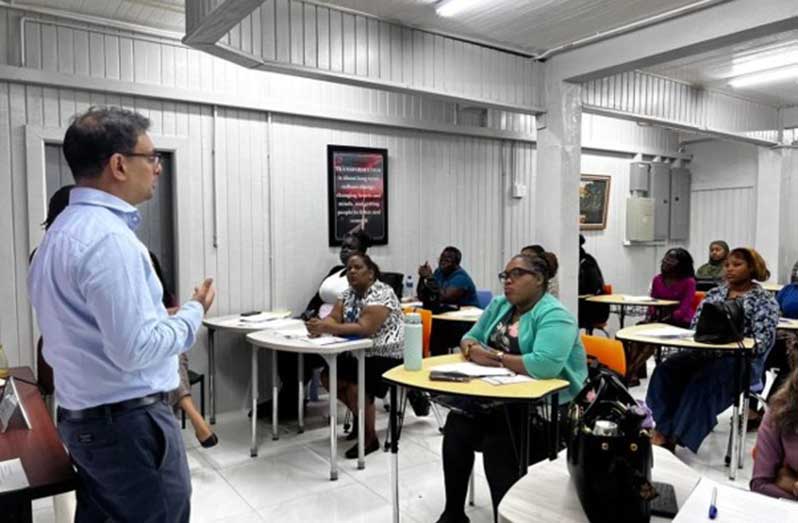
But digital transformation requires people as much as platforms. Over the past year, approximately 3,481 public servants have been trained in areas including customer service, professionalism and ethics, ICT literacy, project management and digital transformation.
Another 857 persons have received training through the Centre for Excellence in Information Technology, while public servants have completed more than 2,753 courses through Coursera.
One year into the government’s second term, the trajectory is therefore moving beyond simply putting existing processes online.
The emerging objective is a fully digitalised, citizen-centred government in which services are integrated, are accessible across regions, measurable in real time and increasingly available at the touch of a button.(DPI)



