






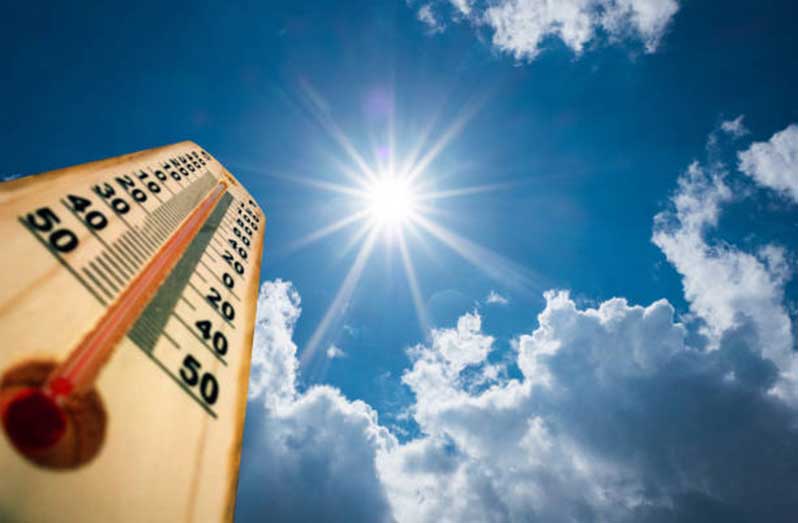
GUYANESE should brace for a punishing stretch of heat over the coming months, with the number of hot-spell days this year projected to nearly triple the historical norm, the Guyana Hydrometeorological Service (Hydromet) has warned.
In its latest Seasonal Outlook, Hydromet, in a press release, said the country is moving out of the rainy season and into a period of strengthening El Niño conditions that will bring hotter-than-normal temperatures and a sharp rise in hot spells from now through at least October.
El Niño, the periodic warming of ocean-surface temperatures in the central and eastern equatorial Pacific accompanied by weaker trade winds, is known to trigger drier, hotter weather patterns across Guyana.
This year’s effect, according to Hydromet, could be unusually severe: while the country typically records up to 30 hot-spell days annually, forecasters now expect as many as 80 — a hot spell being defined as two or more consecutive days of extreme temperatures.
Regions Four, Five, Six, Eight and 10 are expected to bear the brunt of the heat, with Hydromet forecasting that all parts of the country will see fewer wet days alongside above-normal day and night temperatures.
Hydromet cautioned that the extended dry, hot conditions could ripple across several areas of national life if residents and authorities are not prepared.
Farmers face the most immediate risk, with crops likely to come under moisture stress, pastures deteriorating in quality, and livestock requiring more water to stay healthy.
That strain is expected to extend to the country’s broader water resources, with the dry spell likely to reduce water availability for households, agriculture and other economic activities.
The heat is also expected to drive up electricity demand, as more households and businesses turn to fans and air conditioning, adding pressure to the national power grid.
In schools, Hydromet warned that prolonged extreme heat raises the risk of heat stress and uncomfortable classroom conditions for students.
Hinterland transportation networks could feel the effects too, with low river levels threatening to disrupt the movement of people and goods, while unpaved roads are expected to grow dustier, cutting down visibility for travellers.
The dry vegetation brought on by the extended heat also raises the likelihood of bush and forest fires, particularly in forested and savannah regions.
Perhaps most pressing is the public-health risk. Hydromet warned that prolonged exposure to extreme heat can lead to dehydration, heat exhaustion and heat stroke, with children, older adults, people with underlying medical conditions, and outdoor workers most at risk.
With the hotter months ahead, Hydromet is urging Guyanese to take precautions, including:
• Staying hydrated throughout the day
• Conserving water wherever possible during the prolonged dry period
• Avoiding strenuous outdoor activity during peak midday hours, between 11 a.m. and 2 p.m.
• Wearing light, loose-fitting clothing
• Ensuring schools have adequate drinking water and promote heat safety, while monitoring official weather advisories
• Refraining from burning rubbish or vegetation, which could spark fires
• Keeping close watch on crops and livestock to ensure continued access to quality water
Despite the outlook, Hydromet noted that El Niño does not rule out rainfall entirely, and days of significant rain remain possible, even during this warmer, drier period.
The agency said it will continue monitoring conditions closely and will issue further updates to help the public and relevant sectors prepare and make informed decisions in the months ahead.




