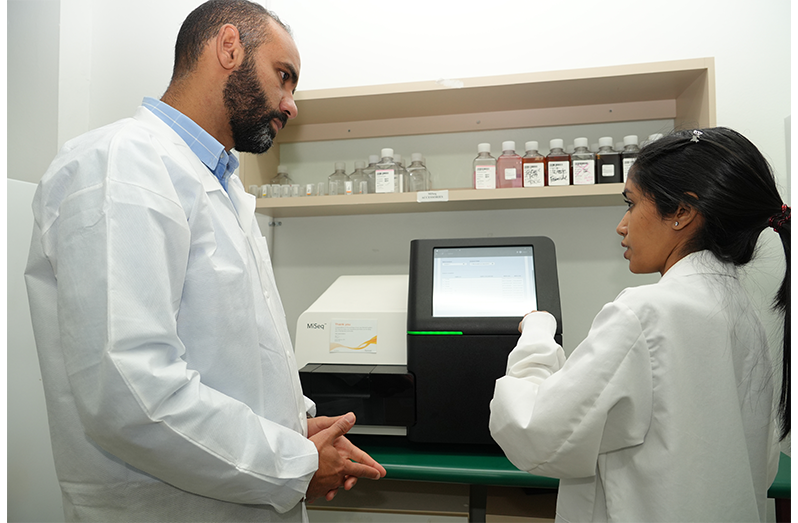
THE Caribbean Public Health Agency (CARPHA) has expanded the region’s capacity to detect, monitor and respond to antimicrobial resistance (AMR) with the introduction of whole-genome sequencing (WGS) at its Medical Microbiology Laboratory (CMML) in Port of Spain, Trinidad and Tobago.
The new service, which is now operational at the CARPHA campus in Port of Spain, is expected to improve the identification and characterisation of drug-resistant organisms of public-health concern, while strengthening disease surveillance, outbreak investigations and regional preparedness for current and emerging infectious disease threats.
As part of CARPHA’s regional reference laboratory network, the CMML provides laboratory and public health support to member states across the Caribbean. The introduction of WGS is expected to enhance the agency’s ability to track resistance patterns, identify emerging threats and support timely, evidence-based public-health interventions.
Antimicrobial resistance occurs when bacteria and other microorganisms develop the ability to withstand medicines designed to treat them, reducing the effectiveness of essential treatments and making infections more difficult to manage.
The growing prevalence of multidrug-resistant organisms in hospitals and communities has increased the need for stronger surveillance systems, particularly in regions where access to advanced molecular diagnostic technologies has been limited.
CARPHA said whole genome sequencing will provide a comprehensive analysis of the complete genetic material of microorganisms, allowing scientists to identify specific antimicrobial-resistance genes and mutations, detect emerging resistance mechanisms and distinguish high-risk strains.
The technology will also support investigations into hospital and community outbreaks, help identify transmission pathways and improve the monitoring of resistant organisms as they spread across national borders.
Unlike conventional antimicrobial susceptibility testing, WGS generates detailed genetic information that can provide a more precise understanding of how resistant organisms evolve, spread and contribute to public-health risks within and among countries.
The initiative is being implemented in partnership with the United Kingdom Health Security Agency (UKHSA) through the Caribbean Antimicrobial Resistance Alliance (CARA), with support from the United Kingdom Department of Health and Social Care’s Fleming Fund.
The expansion also supports CARPHA’s Pandemic Fund Project, which focuses on strengthening laboratory systems and improving the Caribbean’s capacity to prevent, detect and respond to infectious disease threats.
CARPHA Executive Director, Dr Lisa Indar, described the introduction of WGS as an important advancement in the region’s efforts to combat antimicrobial resistance.
“The introduction of whole-genome sequencing marks an important step forward in strengthening the Caribbean’s capacity to detect and respond to antimicrobial resistance,” Dr Indar said.
She added that the enhanced laboratory capability would support more timely and evidence-based public-health action, while reinforcing CARPHA’s commitment to laboratory innovation and regional health security.
Head of the CARPHA Medical Microbiology Laboratory, Dr Gabriel Escobar, said the technology would provide a deeper understanding of resistant organisms than conventional testing methods alone.
“By strengthening our ability to detect resistance genes, track transmission patterns and support outbreak investigations, this technology will significantly improve the quality of AMR surveillance and the public-health support CARPHA provides to countries across the region,” Dr Escobar said.
CARPHA said it will continue strengthening regional genomic-surveillance networks and supporting member states in improving AMR detection and reporting.
The agency added that the integration of whole-genome sequencing will help establish a more resilient and data-driven public health system while advancing the Caribbean’s collective ability to prevent, detect and respond to infectious disease threats.
CARPHA member states can now refer laboratory isolates through any CARPHA campus to access the WGS service.