By Romella Dasratt
FOR many women rebuilding their lives after experiencing domestic violence, recovery involves much more than securing a safe place to stay. It requires restoring confidence, rebuilding self-worth, strengthening mental health, and developing the financial independence necessary to create a new future.
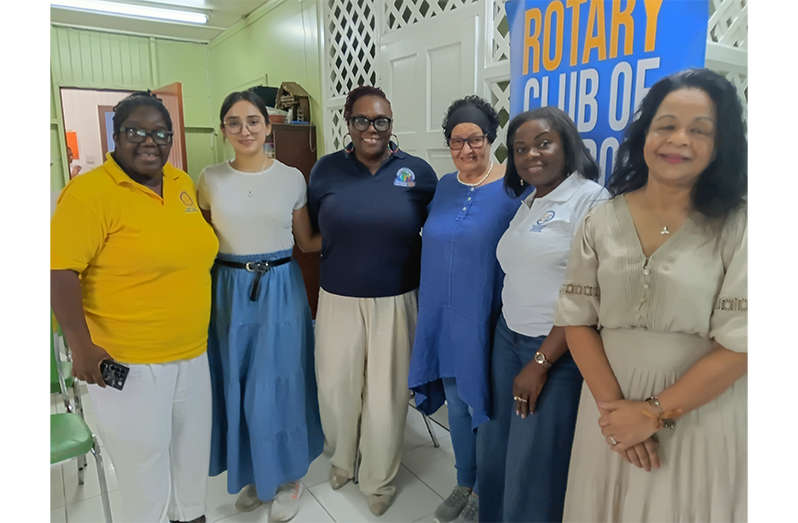
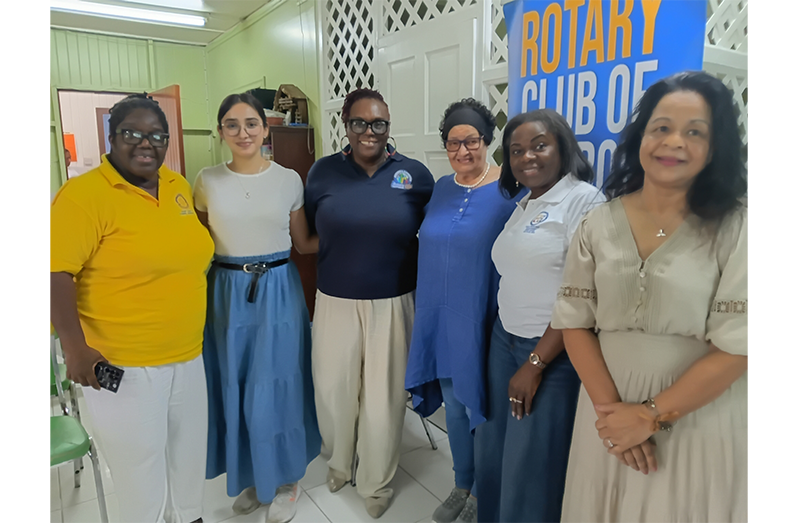
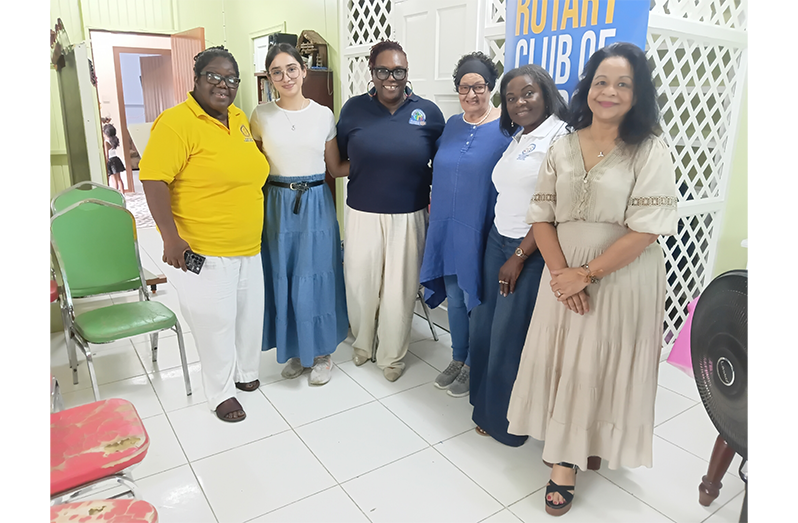
Recognising these realities, the Rotary Club of Stabroek recently facilitated a two-day workshop on self-care and financial independence at Help and Shelter, bringing together women residents and participants for practical training designed to support personal growth, healing, and economic empowerment.
The initiative formed part of the club’s ongoing commitment to community development and social impact, particularly in areas affecting women and vulnerable populations.
Leading the programme was outgoing President of the Rotary Club of Stabroek, Dr Karen Boyle, whose longstanding passion for women’s health and women’s rights helped shape the intervention.
“Independence is the backbone for a woman to be able to rebuild her life when she finds herself in a situation where she has lost and had to walk away from everything,” Dr Boyle said during an interview.
“For her to get back out there and rebuild her life, she has to have financial independence, at least to some degree.”
A Legacy of Service
Rotary is one of the world’s largest and most respected humanitarian service organisations.
Founded in 1905 by attorney Paul Harris in Chicago, the movement began as a small gathering of professionals who wanted to use their skills, resources, and influence to improve their communities.
Over the decades, Rotary has grown into a global network comprising thousands of clubs and more than one million members worldwide.
Guided by the motto “Service Above Self,” Rotary clubs address pressing social challenges through volunteerism, partnerships, fundraising, and community-based projects.
Rotary’s areas of focus include promoting peace, fighting disease, providing clean water and sanitation, supporting maternal and child health, advancing education, protecting the environment, and strengthening local economies.
In Guyana, Rotary clubs have become synonymous with community service. Through health outreach programmes, educational initiatives, youth development projects, environmental campaigns, and infrastructure support, clubs across the country have consistently sought to improve the lives of ordinary citizens.
The Rotary Club of Stabroek has been no exception.
Throughout the years, the club has implemented projects focused on health, education, youth empowerment, social welfare, and community development.
Its members have worked alongside government agencies, civil society organisations, and community groups to identify needs and provide sustainable solutions.
For Dr Boyle, however, one issue has remained especially close to her heart: supporting women affected by domestic violence.
Creating Spaces for Healing
Dr Boyle’s connection with Help and Shelter did not begin with this workshop.
She explained that years earlier, while serving as President of the Inner Wheel Club of Georgetown Central, she had been involved in improvement work at the facility, including refurbishing furniture, enhancing the living room, and carrying out electrical upgrades.
The experience left a lasting impression.
“One of the things that I’ve always been passionate about is women’s health and women’s rights,” she said.
“I’ve always wanted to come back.”
That opportunity emerged through collaboration with a fellow Rotarian, who maintained connections with the facility and helped facilitate renewed engagement.
Following a walkthrough of the building, members of the Rotary Club of Stabroek identified several areas requiring attention.
Renovations and improvements were subsequently undertaken in the kitchen, bathrooms, stairways, and living spaces.
The club also addressed practical issues affecting residents’ quality of life, including the lack of wardrobes and storage facilities in bedrooms.
Yet, for Dr Boyle, the improvements extended beyond physical repairs.
She believed the environment itself played an important role in healing.
“As we shared, for you to be mentally healthy, you have to be in a healthy, vibrant environment. A woman needs to have a home-like environment to feel valued and whole,” Dr Boyle explained.
This philosophy guided many of the renovation decisions. Even details such as colours, furnishings, and finishes were selected to create a brighter, more uplifting atmosphere for residents.
“It’s the little things that make the place feel more like a home. My dream is to leave with you guys a place that feels like home,” she noted.
Focusing on Self-Care
The workshop itself reflected a holistic approach to empowerment.
Rather than beginning with business planning or income generation, facilitators first focused on personal wellness and self-care.
Participants explored topics including sleep habits, exercise, nutrition, stress management, social support systems, sunlight exposure, and overall mental well-being.
The goal was to help women recognise that rebuilding their lives begins with rebuilding themselves.
“The very first thing we did was focus on yourself and your own mental health, looking inwardly and asking yourself, ‘What do I need to become whole again?’” Dr Boyle said.
The sessions emphasised that self-care should not be viewed as a luxury but as a necessity.
Women are often socialised to prioritise the needs of spouses, children, relatives, and others before their own.
While caring for loved ones remains important, the workshop challenged participants to recognise the value of caring for themselves first.
“I think as women we’re brought up to take care of everybody else. You keep giving and giving and giving, and at the end of the day, you have nothing left to give. You have to fill your own cup first, and from that overflow you can take care of everybody else.”
Participants were encouraged to view adequate sleep, exercise, social interaction, and personal wellness as essential building blocks of recovery and resilience.
Facilitators also discussed the connection between physical health and mental well-being, highlighting how regular exercise can improve mood, strengthen posture, boost confidence, and support overall health.
Building Financial Independence
The second major focus of the workshop centred on financial independence.
For women leaving abusive relationships, financial vulnerability often represents one of the greatest barriers to achieving long-term stability.
Without income or access to economic opportunities, many women find themselves trapped in cycles of dependency.
To address this challenge, participants were encouraged to identify existing talents, skills, and interests that could potentially be transformed into income-generating activities.
Whether through entrepreneurship, freelance work, vocational skills, or small business development, the training aimed to help women recognise their own potential.
The objective was not merely employment but empowerment.
Participants examined ways to generate additional income, manage finances responsibly, save for future goals, and begin rebuilding economic security.
According to Dr Boyle, true recovery involves both emotional and financial restoration.
“If I see one of these ladies a year from now, I want a smile on her face. And I want her to be able to tell me that she has some amount of financial independence, that she can generate her own funds and manage them herself.”
Sustainable Impact
One recurring theme throughout the programme was sustainability.
Dr Boyle emphasised that meaningful change cannot be achieved through one-time interventions alone.
Community organisations, she said, must remain engaged long after projects are completed.
“You don’t get to be impactful from a one-off intervention. You have to keep coming back.”
This philosophy has shaped the Rotary Club of Stabroek’s broader approach to service.
Rather than viewing projects as isolated acts of charity, the club seeks to build relationships, monitor outcomes, and respond to evolving community needs.
The workshop itself provided another opportunity for members to spend time at the facility, observe daily realities, and identify additional improvements that may be required.
Among the issues noted were maintenance concerns affecting restroom facilities, as well as the need for further upgrades to furnishings and equipment.
The club has also facilitated the purchase of an industrial washing machine and dryer for the centre, demonstrating its commitment to improving residents’ living conditions.
Looking Ahead
As Dr Boyle prepares to hand over leadership responsibilities to a new president, she remains hopeful that support for Help and Shelter and similar initiatives will continue.
While future club leaders may choose different areas of focus, she believes the values underpinning Rotary’s mission will endure.
For the women who participated, the programme offered more than information.
It provided encouragement, practical tools, and a reminder that rebuilding is possible.
For the Rotary Club of Stabroek, it represented another step in its ongoing mission to strengthen communities and improve lives.
And for Dr Boyle, success can be measured in simple but meaningful ways: women who feel valued, women who feel whole, and women who possess the confidence and financial independence to shape their own futures.
“The mere fact that the ladies are willing to listen and learn,” she reflected, “that’s all I need to give me hope.”