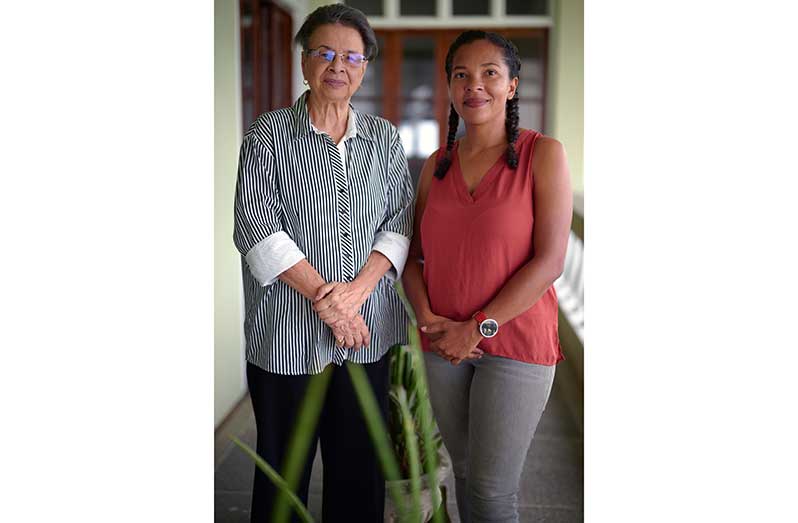
– Longstanding members reflect on the Baháʼí teachings of unity and equality, shaping community life in Guyana
By Shaniya Harding
IN a world often divided by race, class and creed, the Baháʼí Faith promotes a simple but powerful idea: the oneness of humanity. Established in Guyana in the 1950s, the small but active religious community emphasises unity, service and the equality of women and men, principles that members say remain central to its growth and relevance today. Long-time believer Jennifer Dewar and third-generation Baháʼí Louisa Mancey-Rooplall say that from its earliest teachings to its modern community work, women have played a key role in shaping the faith’s presence both globally and locally.
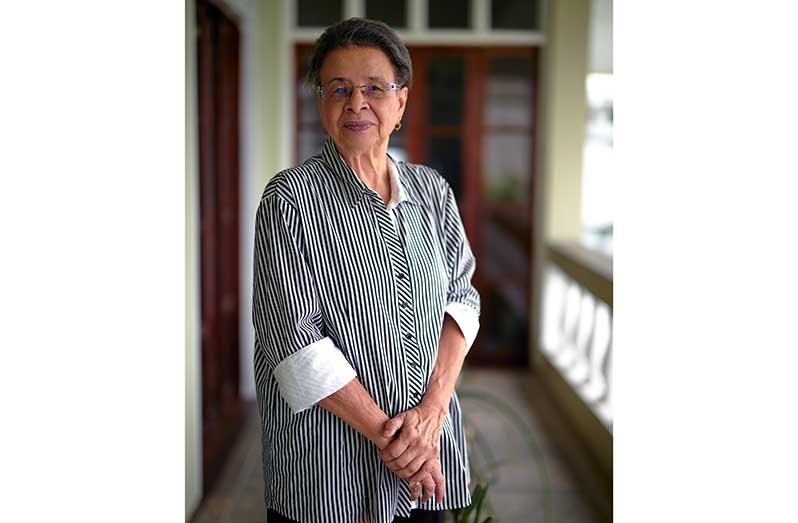
Jennifer Dewar has been a part of the Baháʼí Faith for more than five decades. In an interview with the Pepperpot Magazine this week, Dewar explained that the faith, like many others, aims to unite humanity through the teachings of its prophet. Sharing insight into the faith’s core beliefs, she said, “The Baháʼí Faith is a world religion whose purpose is to unite humanity. Baháʼís are the followers of Bahá’u’lláh, who we believe is the promised one of all ages. The traditions of almost every religion include a promise of a future when peace and harmony will be established on earth, and humankind will live in prosperity. We believe that the promised time has come and that Bahá’u’lláh is the person whose teachings will enable humanity to build a new world.”
The Baháʼí Faith has its origins in 1844 in Persia, now Iran. This is when the faith recounts the Báb’s declaration, in which he announced that he was the herald of a greater divine messenger who would follow him. For this age, Baháʼís believe that God sent twin manifestations, divine messengers or prophets, the Báb and Bahá’u’lláh. The Báb’s ministry lasted just six short years before he was imprisoned and executed. Immediately after his martyrdom, about 20,000 of his followers were put to death. Bahá’u’lláh was also imprisoned, and it was there, in the Black Pit prison, that he received the revelation of his mission in 1853. He was later exiled to Baghdad, Constantinople, and Adrianople, and eventually imprisoned in Acre, now in present-day Israel.
Bahá’u’lláh appointed his eldest son, ‘Abdu’l-Bahá, as his successor and the authorised interpreter of the writings. This prevented the emergence of sects and schisms, which is very significant in the Baháʼí Faith. When ‘Abdu’l-Bahá passed away in 1921, he appointed his grandson as the Guardian of the Faith. During his ministry, he helped establish the administrative framework of the Baháʼí Faith, including local and national spiritual assemblies. The faith is administered by elected bodies of nine people. In every city or town where there are at least nine adult Baháʼís, they elect a Local Spiritual Assembly, which consults on the affairs of the community. At the international level, there is the Universal House of Justice, which sits in Haifa and is elected every five years.
While the faith has deep roots across various parts of the world, it reached the shores of Guyana only in the 1950s. As Dewar explained, the faith had eventually spread to 128 countries. It was in response to this that Dr Malcolm King, a Jamaican who had studied and practised in the United States, came to then British Guiana in October 1953. “The first two believers in Georgetown declared their belief in Bahá’u’lláh in July 1954. Soon after that, the first Local Spiritual Assembly of the Baháʼís of Georgetown was elected,” Dewar shared.
and community work.
Dewar, who has been a part of the faith for more than fifty years, said she only joined in her twenties. The ideas of oneness and equality, she said, drew her to the faith. After giving up on religion at just 14, she stated that, “Later I read my father’s Baháʼí books and learned about the Báb. In my twenties, I reflected on my life and felt it had become superficial. Because I already had knowledge of the faith, I knew which direction to turn.”
The faith has many core values, with particular focus on equality, service, openness and progressive revelation. Baháʼís believe that there is one God and one religion that unfolds over time, like chapters in a book, with every 600 to 1,000 years bringing a divine messenger to guide humanity according to the needs of that age. While some common truths remain, some of the faith’s social teachings change over time, as Dewar shared, “There are eternal truths that repeat, like loving your neighbour, but the social teachings change depending on what society needs,” she added. “Some of the principles Bahá’u’lláh brought include the equality of men and women, universal education, the harmony of science and religion, and the elimination of prejudice of every kind.”
While present in other religions, the Baháʼí Faith teaches equality as a central pillar. In the religious teachings, gender equality is cited as an important part of holistic development, not just for a people, but for humankind. As Dewar shared, “The equality of the sexes is one of the principles of the Baháʼí Faith. The analogy used in the teachings is that humanity is like a bird with two wings, one male and one female, and the bird cannot fly unless both wings are equally strong.” This was particularly unique given the time period in which these beliefs were established, as Dewar added, “When Bahá’u’lláh came in the 1800s, women were often not permitted to be educated, so universal education was a significant teaching.”
While it is not what drew her to the faith in the first place, Dewar shared that the role of women in the faith, both locally and internationally, has been significant, with a majority of the faith being practised by women. As she stated, “In Guyana, there are actually more women who are Baháʼís than men. In the National Assembly, there are only two men, and the chairperson is a woman.” This, Dewar added, is the case in many religions, but while in other sects they may be cited as background players, for the Baháʼís this is not the case. “Women tend to be the workers in many religions but remain in the background. That is not so in the Baháʼí Faith.”
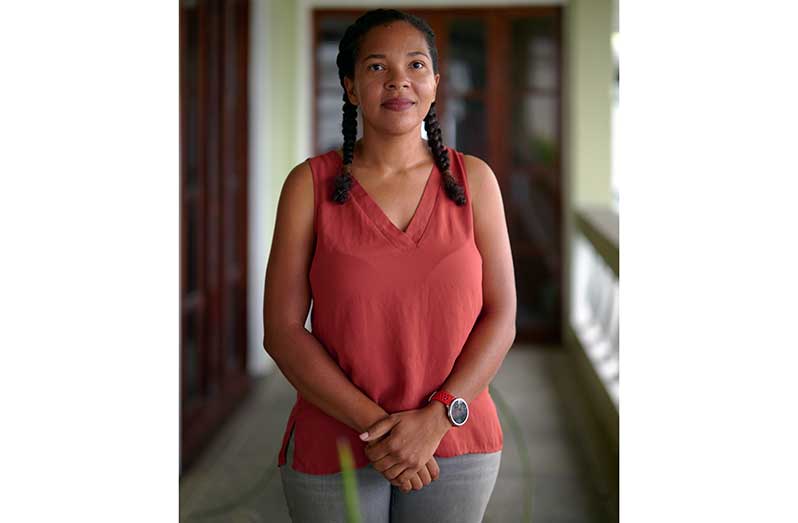
For third-generation Baháʼí Louisa Mancey-Rooplall, the ideas of the Baháʼí Faith were not only familiar to her, but remain progressively relevant in a changing society. As she shared, growing up, Mancey said she was never aware of her family’s faith, but was captivated by their work and knew that when she got older, she too would carry on the work of service. “As a child you don’t really think that you’re different from other people. You just think that’s how life is,” she added. “Growing up in a home where service was part of everyday life, both my parents and my older siblings were constantly involved in Baháʼí activities, studying, deepening, and doing projects in different communities. It was something I couldn’t wait to do when it was my turn.”
For her, Mancey-Rooplall, being a Baháʼí meant accepting Jesus Christ, Muhammad and the other teachers of the past as part of the revelation of God. The Baháʼí Faith, like most other faiths, has core values which are taught and practised on a day-to-day basis. Apart from prayers and periods of collective worship, the Baháʼí Faith teaches service in everyday activities. This is a vital part of Mancey-Rooplall’s work as a Baháʼí, as she explained, “A big concept in my life as a Baháʼí is service. Personal development is inseparable from the development of our community and environment. Personal salvation is not enough. We have to work on our own character and at the same time contribute to the growth of our neighbourhood and community,” she added. “When I was 12, I graduated as a literacy facilitator with my mum as part of a programme the Baháʼís were doing to help with literacy. That was simply part of community life, looking at the needs of the community and seeing what we could do to help.”
Although small, the Baháʼí Faith has had a far-reaching impact, with some 600 to 700 members nationwide. “Baháʼís engage with the wider population, not just the Baháʼí community. In Guyana, there are about 600 Baháʼís, but more than 1,100 people are involved in the community programmes,” she further added. “There are children’s classes, junior youth groups and other activities that help young people develop qualities like honesty, truthfulness and spirituality.” At its core, the Baháʼí Faith is focused on helping humanity become the best it can be through the values of progressive change, unity and equality. “It’s more about sharing the teachings and values, that God is one, that we should pray, and that we should live by principles like truthfulness, unity and equality.”