






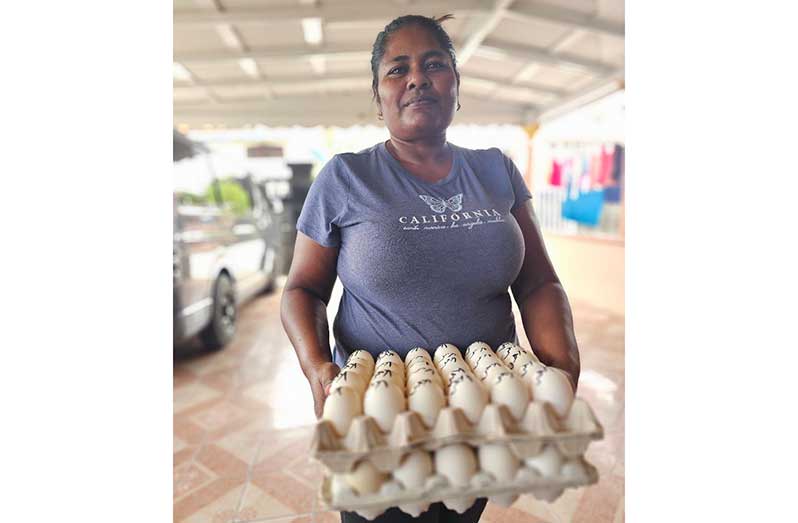
– Empowering women through duck breeding in rural Guyana
By Michel Outridge
AS Guyana joins the global community in observing ‘International Women’s Day’ today on March 8, 2026, under the theme “Give to Gain”, this campaign underscores a profound truth: when societies invest in women through education, access to resources and meaningful economic opportunities, the benefits extend far beyond the individual, strengthening families, communities and national development.
In the quiet agricultural enclave of Guava Bush Village, Region 6, this message finds tangible expression in the life and work of Kalawattie “Devika” Mangal.
A devoted mother of one and a determined entrepreneur, Devika has transformed a modest home-based initiative into a thriving duck-breeding enterprise, and is an example of how rural women are increasingly carving out economic space within Guyana’s evolving agricultural landscape.
Duck breeding in Guyana has emerged as one of the fastest-growing sectors within the livestock industry, largely supported by the Ministry of Agriculture through the Guyana Livestock Development Authority (GLDA).
As part of a national strategy to strengthen food security, reduce poultry imports and promote youth and women’s employment, the sector has expanded rapidly, creating new opportunities for small-scale producers to participate in commercial agriculture.
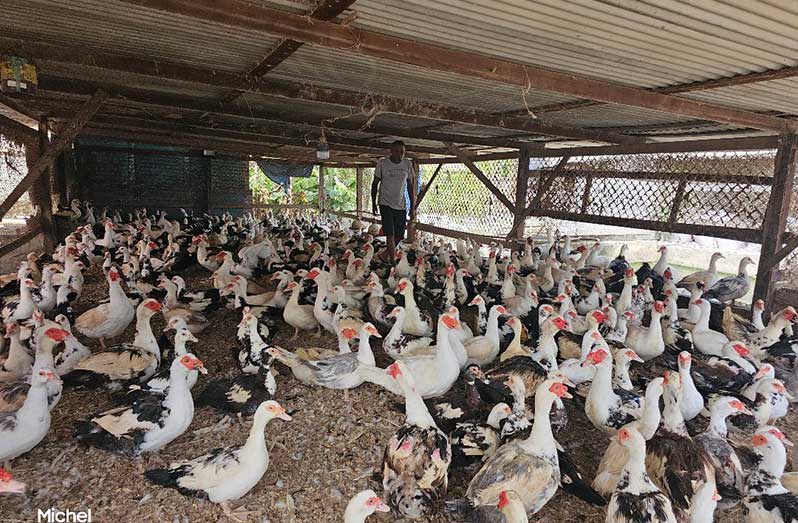
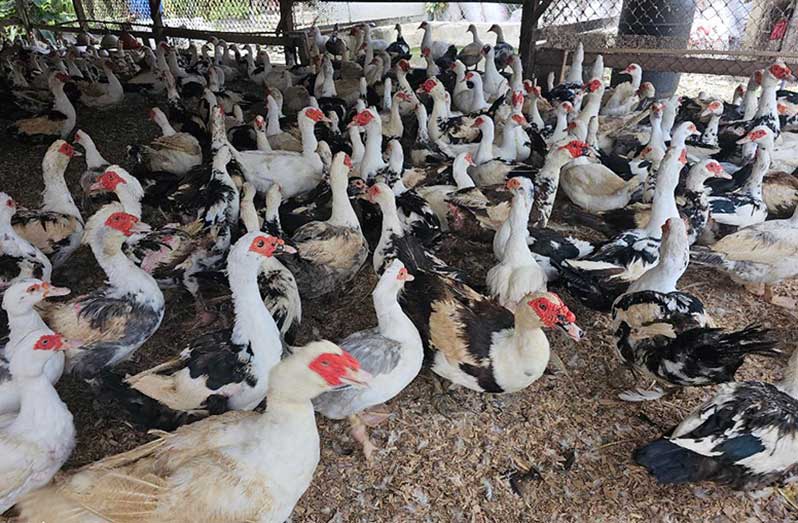
At the heart of this growth is the Muscovy duck, prized locally for its lean, less fatty meat. Through technical training, extension services and the importation of high-quality breeding stock, the GLDA has worked to improve local production capacity and strengthen genetics, enabling farmers to meet growing domestic demand.
Devika’s journey into duck rearing began modestly some 24 years ago, shortly after her marriage to Haseeb Husain.
“When we started to rear ducks, we had exactly 12, and we had some more, but we stopped and resumed with a different concept, that is, duck breeding instead, and that is what we are still doing for a living,” she recalled.
From these humble beginnings, the couple’s enterprise has grown steadily, reflecting both persistence and strategic support from government programmes.
Guava Bush lies close to one of the country’s largest sugar-producing estates, the Albion Sugar Estate, where Husain continues to work as a planter despite the mechanisation of sugar production over the years.
Beyond his full-time employment, he provides critical support for Devika’s duck breeding operation, assisting with daily management and encouraging her entrepreneurial growth.
“He helps me a lot, and I am thankful. He is happy to support my business and encourages others to do the same,” she said.
Initially, the couple focused on raising ducks for meat, but over time, Devika transitioned to breeding, a move that elevated her role within the poultry value chain.
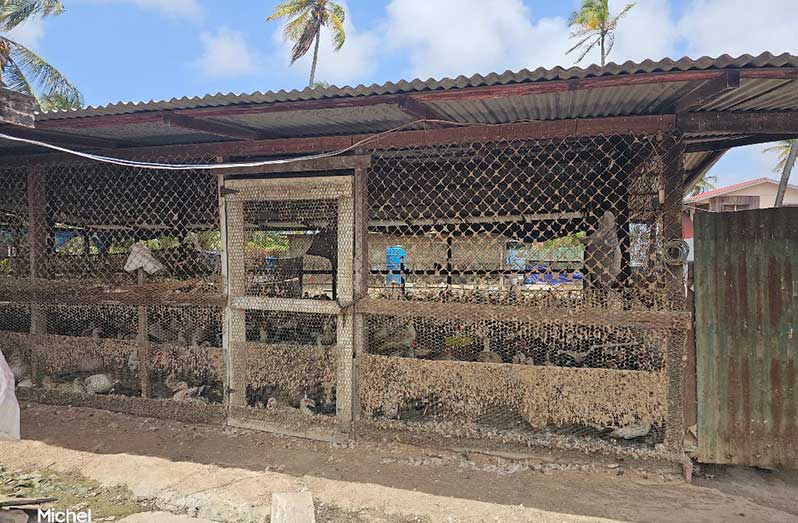
Today, her farm houses roughly 2,000 French Muscovy duck breeding birds in three meticulously maintained pens behind her home.
This transformation has allowed her to supply fertile eggs and ducklings to farmers across Region Six, contributing to the resurgence of duck production in Berbice.
Central to her success has been the GLDA’s consistent technical support. Field officers regularly visit her farm to offer guidance on breeding management, biosecurity and husbandry practices. Devika specifically acknowledges the role of GLDA veterinarian Dr Susan Farley.
“I must thank GLDA employees because they would visit the farm, answer my questions and give me guidance when needed to boost productivity and assist me with paperwork and best practices all the time,” she said.
Biosecurity measures and disciplined farm management are pivotal to her operation. The duck pens are cleaned daily before 08:00 hours, and detailed records are meticulously maintained to monitor egg production, fertility and flock performance, ensuring traceability and the quality of the ducklings she sells.
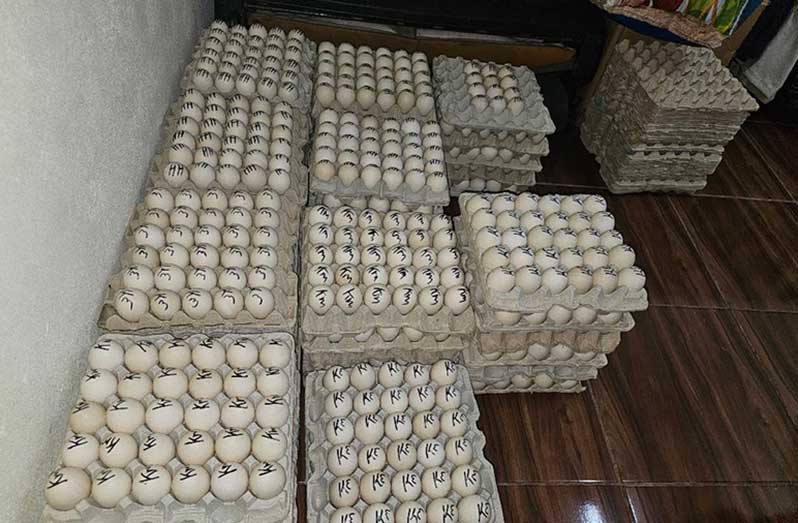
A critical element of her operation is access to the GLDA Hatchery Department’s specialised incubation services. Each week, Devika collects, marks and sanitises her eggs before transporting them to Mon Repos, where they are fumigated and incubated.
The hatchery offers services at a subsidised cost, providing access to state-of-the-art incubation technology while keeping ducklings affordable for small-scale farmers.
Looking ahead, the government’s plans to construct modern incubation and hatchery facilities in Regions Two and Six during 2026 are welcome developments.
For Devika, the Region Six facility under the administration of President Irfaan Ali and the People’s Progressive Party/Civic government represents a major boost.
“Having a hatchery closer to home will reduce travel time and costs, and it will encourage more women, especially single mothers, to enter duck rearing as a source of income,” she said.
Infrastructure improvements have already eased operational challenges.
The opening of the Berbice River Bridge and the subsequent removal of tolls have significantly reduced transportation costs, making it easier for her to deliver eggs and ducklings across regions.
Devika’s journey from a modest flock of twelve ducks to a large-scale breeding operation illustrates the transformative power of support, knowledge and family partnership.
“As a woman, a mother, I have my own business which takes up a lot of my time, but I don’t mind because this is my daily bread and it puts money in my pockets, and having my own money is very encouraging and empowering at the same time,” she reflected.



