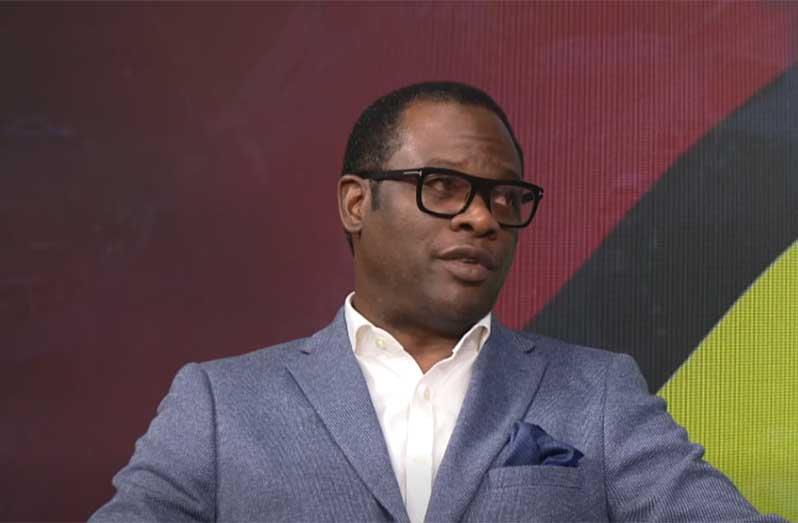
MINISTER of Foreign Affairs and International Cooperation, Hugh Todd, has said that Budget 2026 makes clear provision to support Guyana’s legal and diplomatic efforts in the ongoing border controversy case before the International Court of Justice (ICJ).
The case before the ICJ concerns Venezuela’s contention that the 1899 Arbitral Award, which established the boundary between the two countries, is null and void.
Guyana has maintained that the award is a valid and binding legal instrument that settled the border over a century ago.
In accordance with the Geneva Agreement, Guyana and Venezuela engaged in over two decades of Good Offices efforts on the border controversy under the United Nations’ (UN) Secretary-General’s auspices, in an attempt to find a peaceful diplomatic resolution.
However, on January 30, 2018, after the process failed to produce meaningful progress, the UN Secretary-General concluded that the Good Offices initiative had run its course.
In accordance with Article IV (2) of the Geneva Agreement, he exercised his authority and selected judicial settlement by the ICJ as the next method of resolution.
Guyana, in accordance with the Secretary-General’s decision, filed an application with the ICJ on March 29, 2018, seeking a ruling on the validity of the 1899 Arbitral Award and the boundary it established.
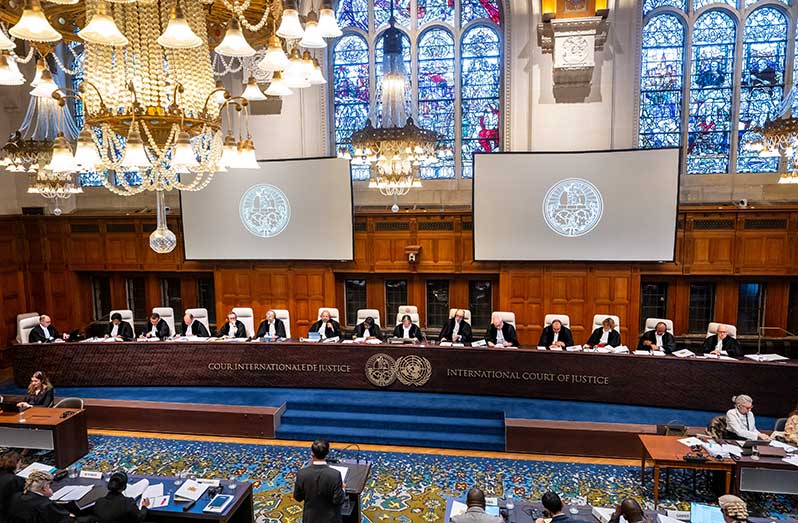
Minister Todd described the country’s legal team as “very capable” and expressed confidence that Guyana stands on firm ground under international law.
During a Budget in Focus 2026 programme aired on the National Communications Network (NCN), Minister Todd explained that a portion of the $1.558 trillion national budget will be directed toward financing Guyana’s case at the ICJ, where hearings are scheduled to begin on May 4.
“So, we have an allocation to finance our efforts in terms of the legal case itself before the International Court of Justice,” Todd said. “We have a very well-capable legal team. We have a very capable in-house team at the foreign ministry, as well as a committee, which includes all the senior… diplomats, some still serving, some who have retired and are back with us, and other senior retired officials who have had exposure to frontiers.”
He noted that Guyana’s preparations involve both local and international expertise, supported by resources from the Ministry of Foreign Affairs and International Co-operation.
“What we have today is a very, very capable team, locally and internationally,” the minister said. “We are going to be in the court from the 4th of May. The hearings begin. We are preparing for that now.”
Todd emphasised that Budget 2026 ensures sufficient resources are available not only for legal representation but also for the logistical and technical requirements associated with the case.
“And we have sufficient allocation to support the team here in Guyana, and to support our legal team, and to support all of the logistics that will be required to give effect to an outcome that we believe will be in our favour,” he stated.
While expressing confidence in Guyana’s position, the minister acknowledged the complexity of the international environment in which the case is being heard.
“Of course, we are still cautious because we are dealing with an international system and international politics,” Todd said. “But on the legal side, we think that we are on the right side of international law.”
He added that Guyana continues to receive backing from a wide range of international partners.
“We have very good support on the side of international law from our traditional partners and from other friends and partners globally, including international and regional organisations,” he said.
The minister also linked the country’s ICJ efforts to Guyana’s broader foreign policy agenda, which he said is guided by President Dr Irfaan Ali and focused on energy security, food security and climate security.
“Our national policies, when we get them right, we’re able to formulate a foreign policy agenda, which is led by His Excellency the President, that we can actually promote,” Todd explained. “And that is why we’ve been so effective over the last five years.”
Todd concluded that Budget 2026 reflects the government’s commitment to ensuring that Guyana’s case before the ICJ is fully supported and professionally managed, while continuing to project the country as a responsible member of the international community.
“And to do that, you have to be prudent, you have to be serious about policymaking, you have to put people first, and you have to have a budget that aligns with the wishes of the people,” he said. “And I think that is what we have been able to deliver once again for the people of Guyana.”
The ICJ, based in The Hague, Netherlands, is the principal judicial organ of the UN, established in 1945 to settle legal disputes between states and provide advisory opinions on international legal questions. Decisions of the court are final and binding on the parties.