A much-anticipated religious event
DIWALI (Deepavali)—known as the Festival of Lights—is a major national and cultural holiday in Guyana, where people of all backgrounds come together to celebrate the victory of light over darkness and good over evil.
It is celebrated on Sunday, November 8, 2026, and is tentatively a public holiday on Monday, November 9, 2026, making it a national holiday.
Locally, lighting diyas and illuminating homes are significant on the night of Diwali; thousands of hand-crafted clay diyas (filled with ghee or coconut oil), along with electric fairy lights and decorative displays, light up homes, fences, and temples nationwide.
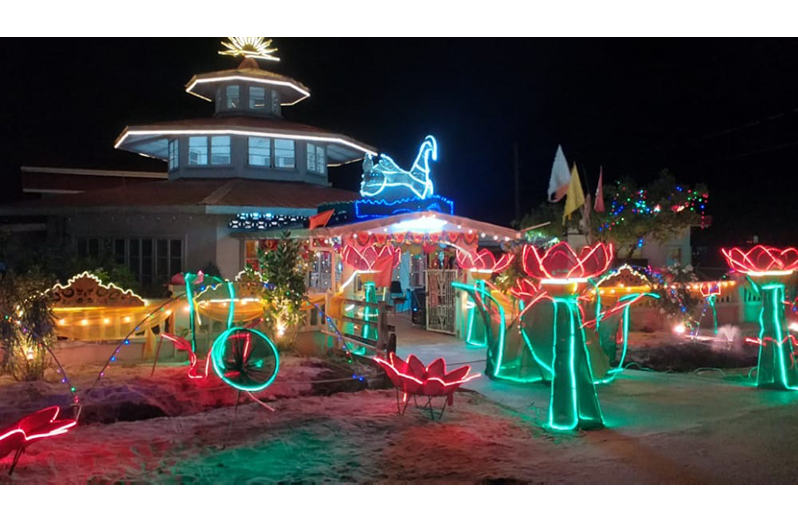
It is a time when Hindus clean out the house, affix new curtains, get everything ready and organised to usher in Diwali, which is a ‘big thing’, and make all the preparations to celebrate.
Diyas, ghee, coconut oil and wicks are bought; handmade wicks will go into the diyas before the oil or ghee is poured in, and the wicks are then lit and the diyas placed in the house, outside and every other spot for the perfect illumination on Diwali night, said to be the darkest night ever.
Diwali in Guyana is a time for togetherness and sharing, and locals prepare well in advance for this holiday.
Preparing sweet treats to share in the neighbourhood is a top priority for many families, and it is a tradition practised for many years that has not changed over time.
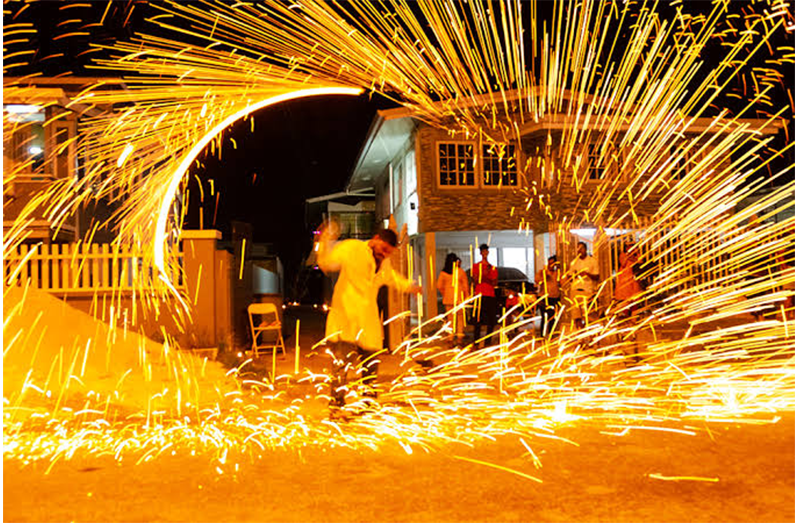
Lighting diyas at night is a family affair in which everyone in the household participates, and once that is done, the ‘spinning of steel wool’ on the road usually takes place, especially for the children.
Children would light sparklers and play in the village streets well after dark until they were called in for bedtime.
When night falls, it is lovely to see the diyas lit at homes and placed on fences, balconies, verandahs, and everywhere possible.
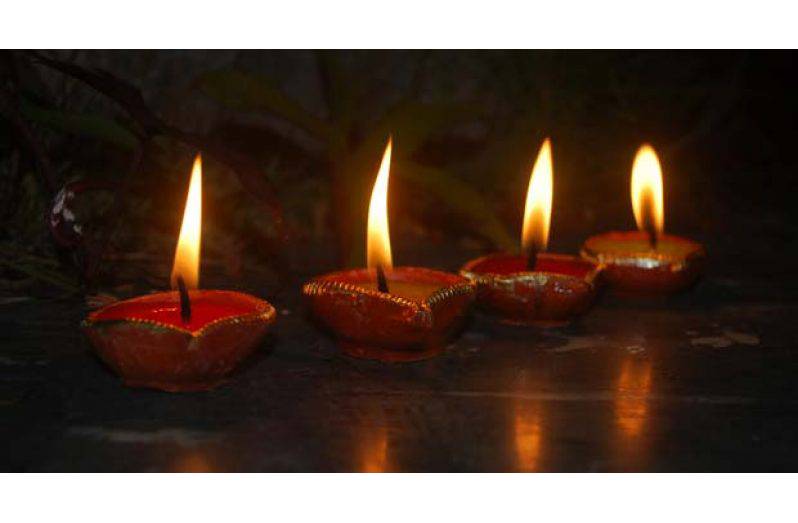
Some people affix fairy lights and other solar- or electric-powered lights to ensure the place is sufficiently illuminated, and battery lamps and diyas are also sold and used for this occasion.
Diwali is a special time in Guyana, and it reminds us of the significance of the religious holiday and why members of the Hindu community, and others, observe it.
Traditional sweets and foods include seven curries and sweet treats such as parsad, mettai, gulab jamun, goja, para, bara and baignee, among others, which are usually prepared.
Families prepare and exchange traditional sweets such as gulab jamun, ladoo, vermicelli, sweet rice, and barfi, sharing meals and community hospitality across neighbourhoods.
Diwali celebrations also include the Grand Diwali Motorcade, organised annually by the Guyana Hindu Dharmic Sabha; the signature event is a massive night-time street procession featuring elaborately decorated, illuminated floats depicting Hindu deities such as Goddess Lakshmi seated on a lotus, Lord Rama, Sita, and Lakshmana.
The motorcade is scheduled for Saturday, November 7, 2026, and usually runs from the mandir in Campbellville, Georgetown, to La Bonne Intention (LBI) Community Centre Ground, East Coast Demerara, but the event hasn’t been officially confirmed yet.
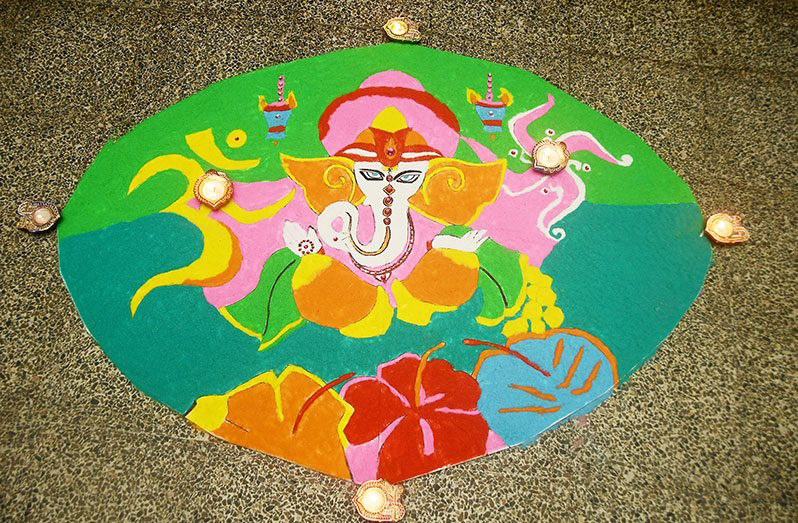
Rangoli competitions are held in schools and cultural organisations, and community groups craft intricate, colourful floor art (Rangoli) using coloured powders and coloured rice.
This year, the Ministry of Youth, Culture and Sports will host its Annual Diwali Rangoli Exhibition and Competition, scheduled for Friday, 6 November 2026, on Main Street Avenue, Georgetown, with the Ministry providing all the raw materials for the event.