





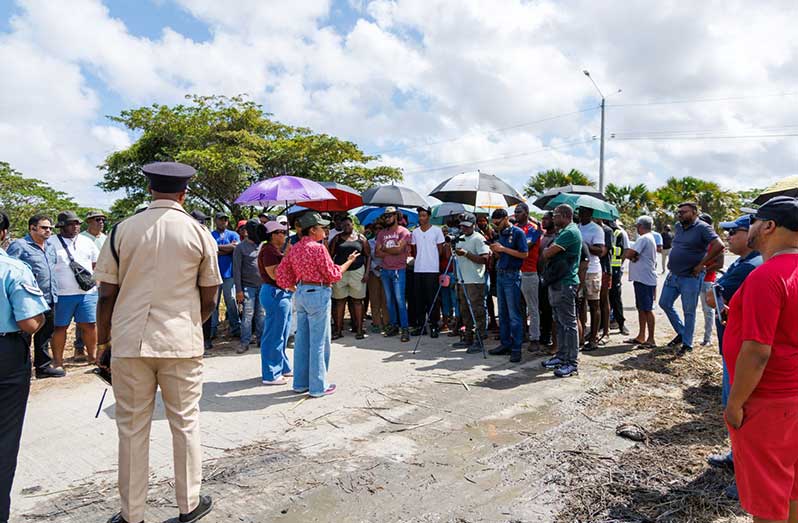
MINISTER of Local Government and Regional Development, Priya Manickchand, on Saturday, visited the Le Repentir Cemetery, where she announced that contractors found breaching their agreement with the ministry in the renewing of the cemetery will be laid off.
In a Facebook post on her ministry’s page, Minister Manickchand had said that 92 contractors were hired, after they would have submitted registrations for the Le Repentir clean-up project. These 92 persons came from across multiple backgrounds.
“However, some people will be fired today, because instead of weeding with a cutlass or a slasher, they decided they were going to light fires across this burial ground so that they could finish this easy.
“That caused a lot of inconvenience and harm to some residents who live here and road users; and it’s very dangerous in this El Nino time when everything is dry, bone dry, and it’s so easy to catch a fire, to be that dishonest, to breach your contract, and to be that lazy,” the minister said.
She stated in the video that the ministry has been very clear to the contractors to not light fires, only use the slasher, cutlass, hose, rakes and other tools, to complete the job.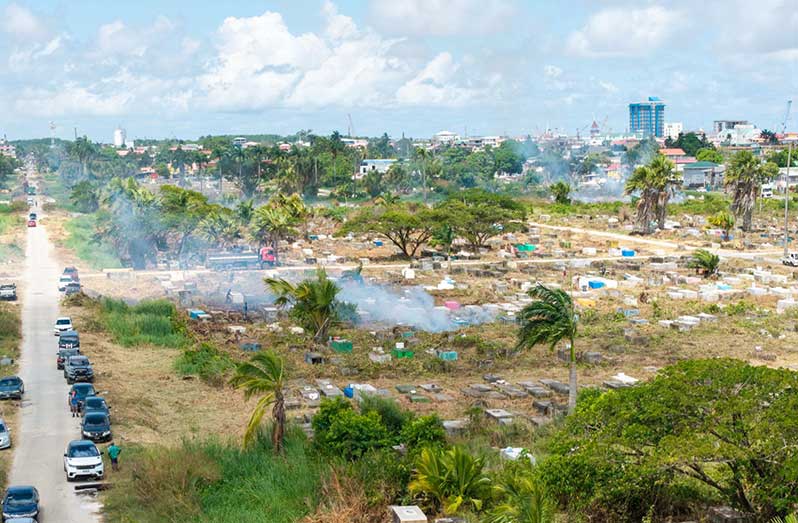
“We specifically had those meetings. Everybody said they understood, and still people came here and did the opposite of what we asked. They cannot stay on the project. They will not be paid for the project, and so I gave a little warning to the contractors who are still out here: you light a fire, today will be your last day again, like the last day for some people was yesterday,” she candidly expressed.
She pleaded with those residing nearby and those who use the road, to understand that ministry is taking action, putting out fires where they can see them, and also ensuring that they do their job to keep residents comfortable by ensuring the people who were hired do what they were hired to do.
The Le Repentir served as the final resting place for thousands. The overgrown, and sadly poorly cared for conditions have made it difficult for family members, and friends to visit their deceased loved ones. Through the Ministry of Local Government and Regional Development (MLGRD), this is being changed.
Teams of contractors are working as the ministry undertakes a major clean-up effort, clearing the vegetation, opening up spaces, and making access to grave sites easier and also safer for families.
Additionally, the ministry said that for those persons visiting the burial site to remember their loved ones who would have passed on, a clean and accessible cemetery means being able to pay respects with greater dignity.
Minister Manickchand has made accessibility and safety to the cemetery essential parts of the project, and has stressed that contractors must have the work completed quickly, properly and with the utmost consideration for the people who will utilise this space.
At the centre of this project is restoring access, dignity and care to one of the nation’s most historic places of rest, ensuring that the people buried there, as well as those who go to remember them, are treated with respect.
Just over a year ago, the Daily Chronicle reported that after years of decay and public outcry, rehabilitation works were to commence as part of the government’s broader capital city enhancement agenda.
These plans to restore the cemetery were first announced in February of 2024, by Vice President Dr Bharrat Jagdeo, signalling the government’s intention to restore the site under a wider push to modernise infrastructure across the capital city.
Over the years, citizens witnessed the degradation of the many acres of land, which resulted in tombs falling into canals, cracking or even breaking.
The Le Repentir isn’t the only Cemetery being restored. In August, Minister Manickchand announced the rehabilitation of the Bourda Burial Ground on Regent Street, stating that it is all part of the beautification and restoration of Guyana, and our public spaces.
The restoration and rehabilitation of these sites are among a number of initiatives being tackled by the ministry to improve public spaces while also preserving sites of historical, cultural and community significance.





